

Lower Back Pain Treatment: Causes, Relief and When to See a Physiotherapist
Practical, evidence-informed guidance on lower back pain causes, symptoms, self-care, movement, treatment and when to seek professional advice.
Lower back pain is one of the most common musculoskeletal complaints, but knowing when to manage it at home and when to seek professional help is not always straightforward. This guide explains common causes, symptoms, self-care tips, red flags and how physiotherapy may support recovery with confidence.
Lower Back Pain Does Not Always Mean Something Serious
Lower back pain is one of the most common musculoskeletal complaints. It can develop after lifting, prolonged sitting, a change in activity, or sometimes without an obvious cause.
Many episodes improve with time, gentle movement and appropriate self-care. However, if your pain is not improving, keeps returning, or begins affecting your sleep, work or daily activities, a physiotherapy assessment may help clarify what is contributing to your symptoms.
This article explains common lower back pain causes, what you can do at home, when to see a physiotherapist and the warning signs you should never ignore.
If your symptoms are stopping you from walking comfortably, exercising, working or sleeping well, it is worth getting assessed before they become a longer-term problem.
What Causes Lower Back Pain?
Most lower back pain is not caused by a single injury. More often, it can be associated with everyday stresses on the muscles, joints and soft tissues of the back.
Common causes include:
- Sitting for long periods without regular movement.
- Poor lifting technique.
- Muscle strain.
- Sudden increases in physical activity.
- Weak core muscles or reduced flexibility.
- Poor posture over time.
- Stress, which can increase muscle tension.
- Age-related changes in the spine.
In many cases, healthcare professionals refer to this as non-specific lower back pain, meaning there is no single identifiable cause.
That is why understanding how your pain behaves, what makes it better or worse, and how it affects your movement is often more useful than relying on scans alone.
Lower Back Pain Symptoms: What Is Normal and What Is Not?
Not every episode of lower back pain needs treatment. Some mild symptoms settle with time, movement and self-care, while persistent or recurring symptoms may benefit from professional advice.
| Usually Normal | Worth Getting Checked |
|---|---|
| Mild stiffness after sitting | Pain lasting longer than 1–2 weeks |
| Muscle soreness after lifting | Pain spreading into the hip or leg |
| Pain that improves with movement | Numbness, tingling or weakness |
| Temporary flare-ups after activity | Pain affecting sleep or work |
| Mild discomfort that is improving | Pain that keeps coming back |
If your pain is persistent, recurring or affecting your normal activities, consider seeking professional advice.
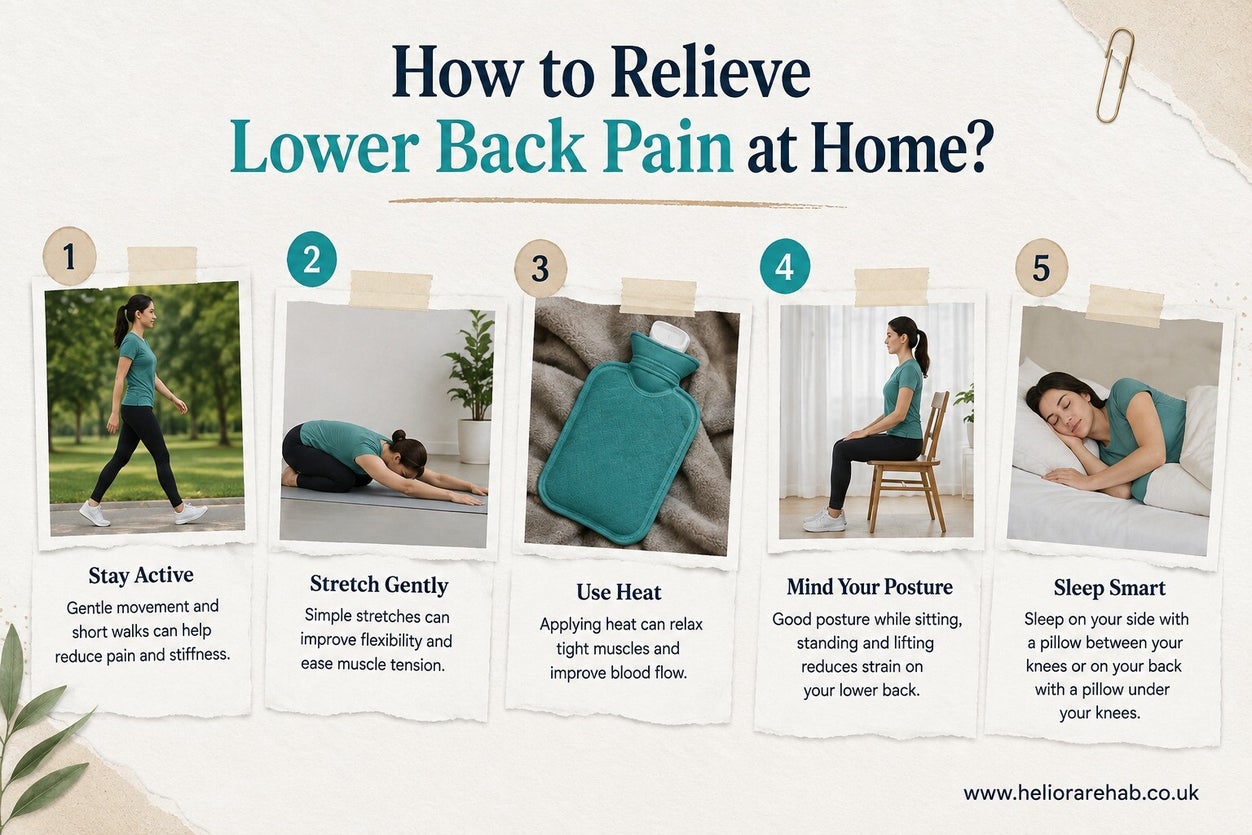
How to Relieve Lower Back Pain at Home
Most cases of lower back pain improve with time, movement and a few simple self-care strategies.
For lower back pain relief, focus first on gentle, tolerable movement rather than complete rest. Short walks, regular position changes and light daily activity can help reduce stiffness. If you are considering lower back pain stretches or exercises, choose movements that feel comfortable and stop if they cause sharp, spreading or worsening pain.
Heat or Ice for Lower Back Pain?
Heat or ice may provide short-term relief, depending on what feels more comfortable.
A wrapped cold pack may help after a recent strain, while heat may feel more helpful for stiffness or muscle spasm.
Use either for around 10–15 minutes, protect your skin and stop if your symptoms worsen.
How to Sleep with Lower Back Pain
Small changes to your sleeping position can make a big difference.
- Sleep on your back with a pillow under your knees.
- If you sleep on your side, place a pillow between your knees to help keep your spine aligned.
- Try to avoid sleeping on your stomach if it increases your discomfort.
- The best sleeping position is the one that allows you to wake feeling more comfortable.
Should You Keep Walking with Lower Back Pain?
In most cases, gentle movement is encouraged.
Gentle movement can help reduce stiffness, improve circulation and support recovery. Short walks and light daily activities are usually more helpful than prolonged bed rest.
However, if walking significantly worsens your pain or you notice increasing numbness or weakness in your leg, seek professional advice.
When Should You See a Physiotherapist for Lower Back Pain?
Most lower back pain improves within a few weeks with self-care and staying active. However, if your symptoms are not improving or are affecting your quality of life, it is time to seek professional advice.
Physiotherapy for lower back pain may be particularly helpful if symptoms have lasted for several weeks, keep returning or are becoming chronic. A physiotherapist can assess your movement, discuss aggravating factors and provide a personalised lower back pain treatment plan, including appropriate exercises where suitable.
Consider seeing a physiotherapist if:
- Your lower back pain is not improving after a couple of weeks.
- The pain keeps returning.
- Sitting, walking, sleeping, working or exercising has become difficult.
- Pain travels into your hip, buttock or leg.
- You have persistent pins and needles, numbness or weakness.
- You are avoiding normal activities because you are worried about making the pain worse.
A physiotherapist can assess how your symptoms behave, how you move and which factors may be contributing to the problem. They can then help you choose an appropriate recovery plan.
Back Pain Red Flags: When to Seek Urgent Medical Attention
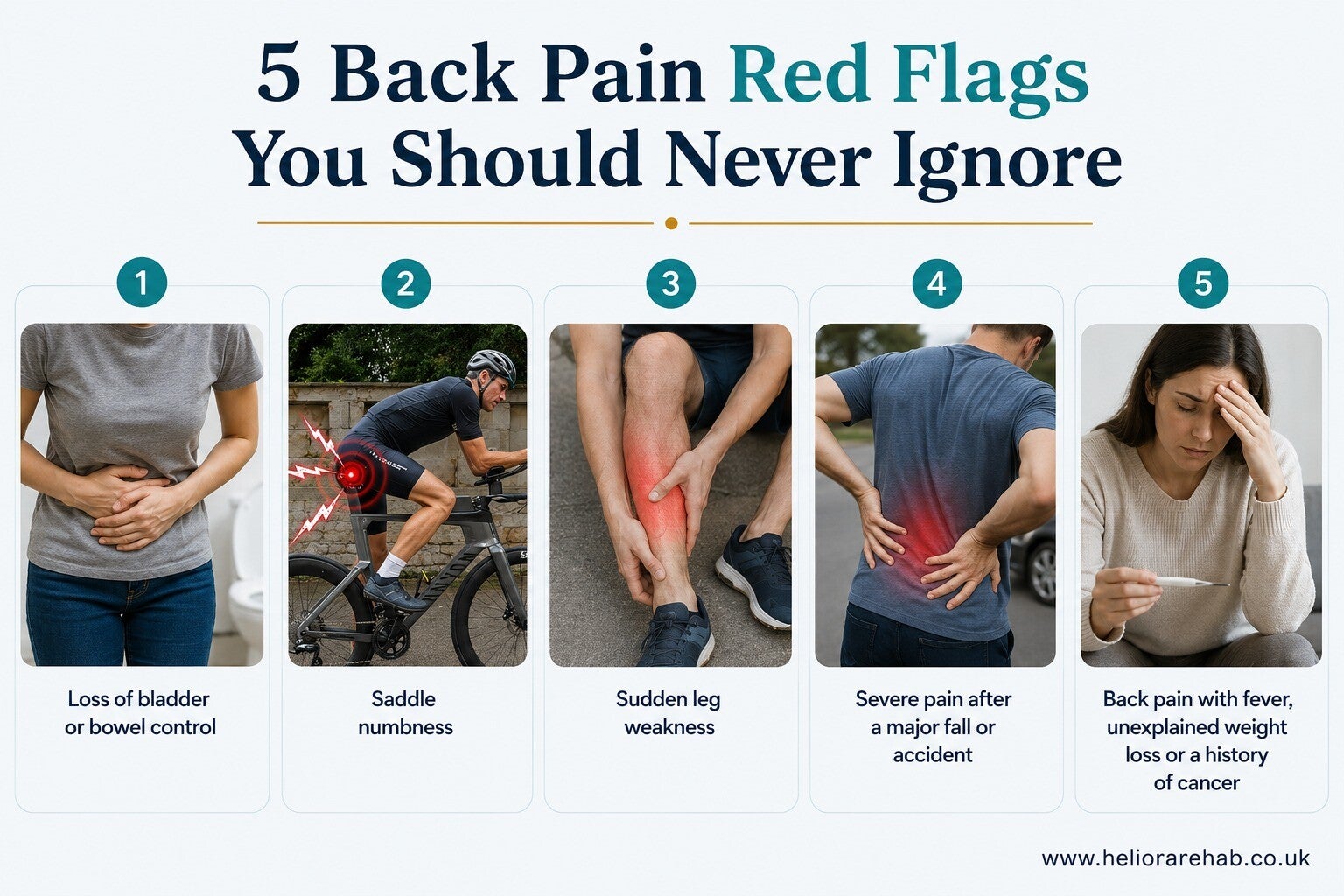
Most lower back pain is not caused by a serious condition. However, seek immediate medical help if your back pain is accompanied by:
- New difficulty passing urine or loss of bladder control.
- Loss of bowel control.
- Numbness around the genitals, inner thighs, buttocks or anus.
- New or worsening weakness or numbness in both legs.
- Severe pain following a serious accident.
You should also seek urgent medical advice if you feel feverish or generally unwell, your pain is severe and worsening quickly, or you have unexplained weight loss or a history of cancer.
Call 999 or go to A&E for emergency symptoms. Contact NHS 111 for urgent advice where appropriate.
How Does Physiotherapy Help Lower Back Pain?
At Heliora Rehab, treatment starts with understanding why you are in pain, not just where it hurts.
During your assessment, your physiotherapist will look at your symptoms, movement, lifestyle and medical history to identify factors that may be contributing to your pain.
This allows us to create a personalised treatment plan that addresses the factors contributing to your symptoms rather than simply managing the pain.
Depending on your needs, treatment may include:
- Hands-on physiotherapy.
- Personalised lower back pain exercises and rehabilitation.
- Movement and posture advice.
- Acupuncture, where clinically appropriate.
Our goal is simple: restore movement, reduce pain and help you get back to doing the things you enjoy with confidence.
Key Takeaways
- Most lower back pain improves with time, movement and the right advice.
- Staying active is usually better than prolonged bed rest.
- Pain lasting longer than 1–2 weeks, recurring episodes or pain affecting daily life should be assessed.
- New or worsening leg weakness, numbness in both legs, numbness around the genitals or anus, or changes to bladder or bowel control require urgent medical attention.
- Physiotherapy focuses on understanding contributing factors and supporting long-term recovery.
Do Not Let Back Pain Become Your New Normal
If your lower back pain is not improving or keeps coming back, booking a physiotherapy appointment can help identify contributing factors and guide your recovery with a personalised treatment plan.
Book a Physiotherapy AppointmentFrequently Asked Questions
Should I see a GP or a physiotherapist for lower back pain?
If your lower back pain is not improving, keeps coming back or is affecting your daily life, a physiotherapist is a good place to start. However, if you have severe pain after an injury or any red-flag symptoms, seek urgent medical attention.
Do I need an MRI or X-ray for lower back pain?
Not usually. Many cases of lower back pain can be assessed without scans. Imaging may be considered when a serious condition is suspected or when the results would change your treatment.
Why does my lower back pain keep coming back?
Recurring lower back pain can be associated with factors such as muscle weakness, poor movement habits, prolonged sitting or previous injuries. An assessment can help identify factors that may be contributing to repeated flare-ups.
Why is my lower back pain worse in the morning but better as I move?
This can be related to stiffness after staying in one position overnight. Gentle movement may help. If the stiffness is severe, lasts for hours or keeps getting worse, it is worth getting assessed.
Can stress make lower back pain feel worse?
Stress can increase muscle tension and make your body more sensitive to pain. While it does not necessarily mean there is an injury, it can make existing lower back pain feel worse.
Why does my lower back hurt when I sit for too long?
Lower back pain when sitting for long periods can be linked to staying in one position, reduced movement, sensitivity after a previous episode of pain or workstation setup. Try taking regular movement breaks and changing position frequently. If sitting pain persists, spreads into the leg or affects your work and daily activities, a physiotherapy assessment may help.
How do I know if my back pain is muscular or something more serious?
Many cases of lower back pain improve with time. However, if your pain is getting worse, spreads into your leg, or is accompanied by numbness, weakness or bladder or bowel changes, seek medical advice promptly.
Can physiotherapy help prevent lower back pain from coming back?
Physiotherapy can help identify contributing factors and support a personalised treatment plan to improve movement, reduce pain and help prevent future flare-ups.