

Types of Physiotherapy Treatment: A Complete Guide to Different Treatments, Techniques & Specialisms
Explore the different types of physiotherapy, treatment approaches and specialisms, including musculoskeletal, sports, neurological, orthopaedic and post-surgical physiotherapy.
When you hear the word physiotherapy, what comes to mind? Perhaps exercises, massage or someone telling you to stretch more. Physiotherapy covers far more than that. This guide explains the different types of physiotherapy, treatment techniques and specialisms, so you can better understand which approach may be appropriate for your needs.
Types of Physiotherapy Treatment Explained
There are different types of physiotherapy depending on the condition being treated, the body system involved and the stage of recovery. Your physiotherapist may use several approaches during your care.
If you are wondering, “What type of physiotherapy do I actually need?”, this guide will help you understand the options.
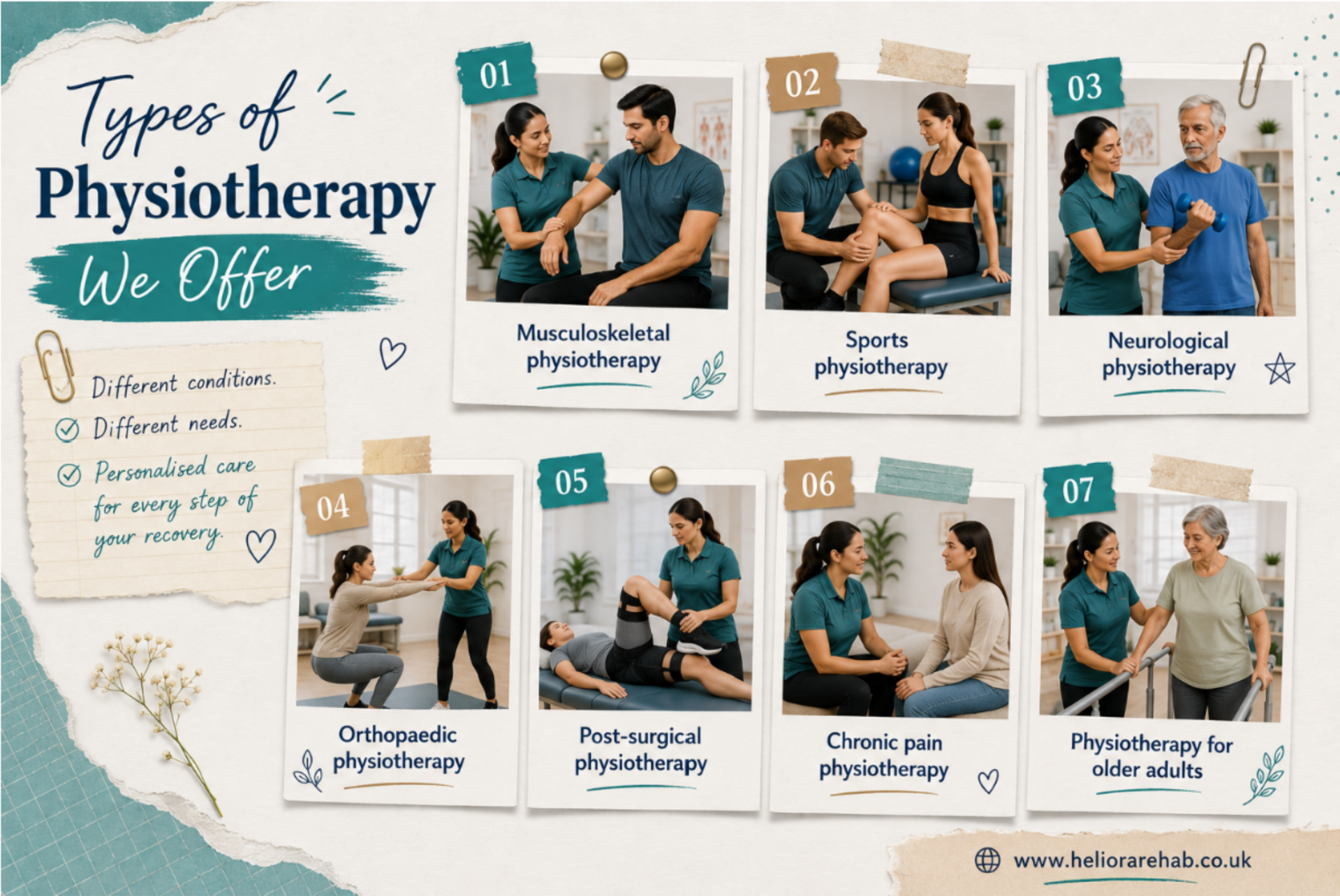
What Are the Different Types of Physiotherapy?
The different types of physiotherapy generally relate to the condition, body system or stage of recovery being treated. For example, someone with a sports injury may need sports physiotherapy, while someone recovering from a stroke may need neurological physiotherapy.
| Type of Physiotherapy | What It May Help With |
|---|---|
| Musculoskeletal physiotherapy | Back, neck, joint, muscle and soft-tissue problems. |
| Sports physiotherapy | Sports injuries, strains, sprains and returning to activity. |
| Neurological physiotherapy | Conditions affecting movement, balance and physical function. |
| Orthopaedic physiotherapy | Bone, joint and musculoskeletal conditions. |
| Post-surgical physiotherapy | Recovery following surgery. |
| Chronic pain physiotherapy | Persistent pain and difficulties with physical function. |
| Physiotherapy for older adults | Strength, mobility, balance and falls prevention. |
These categories can overlap. What matters most is not finding the “perfect” label, but having your symptoms properly assessed and receiving treatment that fits your needs.
Musculoskeletal Physiotherapy
If your problem affects your muscles, joints, bones or soft tissues, musculoskeletal physiotherapy may help.
It commonly treats:
- Back and neck pain.
- Shoulder, knee and hip problems.
- Arthritis.
- Tendon problems.
- Sprains and strains.
- Sports-related injuries.
Treatment may include exercise, manual therapy, movement advice and other appropriate physiotherapy treatments.
Sports Physiotherapy
You do not have to be a professional athlete to need sports physiotherapy.
It can help with injuries from running, football, cycling, the gym and other activities. Your physiotherapist may assess your strength, movement, balance and fitness to help you return safely to the activities you enjoy.
Neurological Physiotherapy
Neurological physiotherapy supports people whose movement or physical function has been affected by conditions involving the brain, spinal cord or nervous system.
It may form part of rehabilitation for:
- Stroke.
- Parkinson’s disease.
- Multiple sclerosis.
- Spinal cord injuries.
- Balance and mobility problems.
Treatment can focus on walking, coordination, strength, balance and maintaining independence.
Orthopaedic Physiotherapy
Orthopaedic physiotherapy focuses on conditions affecting the bones, joints and surrounding tissues.
It may be recommended after a joint replacement, fracture, ligament injury or orthopaedic surgery, as well as for ongoing hip, knee, shoulder or spinal problems.
Treatment is tailored to what you need to regain movement and function.
Post-Surgical Physiotherapy
Recovery does not necessarily end when surgery is over.
Post-surgical physiotherapy can help you rebuild movement, strength and confidence following an operation. Your programme will take into account your surgery, healing stage and any restrictions given by your surgical team.
Physiotherapy for Chronic Pain
When pain has been around for months, the answer is not always more rest.
Chronic pain physiotherapy takes a broader look at how persistent pain is affecting your movement and everyday life. Treatment may include exercise, education, movement strategies and hands-on techniques.
The focus is on helping you improve function and feel more confident managing your symptoms over time.
Physiotherapy for Older Adults and Falls Prevention
Physiotherapy can be useful well beyond injury recovery. Physiotherapy for older adults can help people maintain strength, mobility and independence as they age.
It may be appropriate if someone is:
- Feeling less steady when walking.
- Worried about falling.
- Recovering after a fall or fracture.
- Finding stairs more difficult.
- Losing strength or confidence.
- Struggling with everyday movement.
Sometimes the goal is simply to make everyday life feel easier and safer. Physiotherapy is suitable for people of all ages, including older adults.
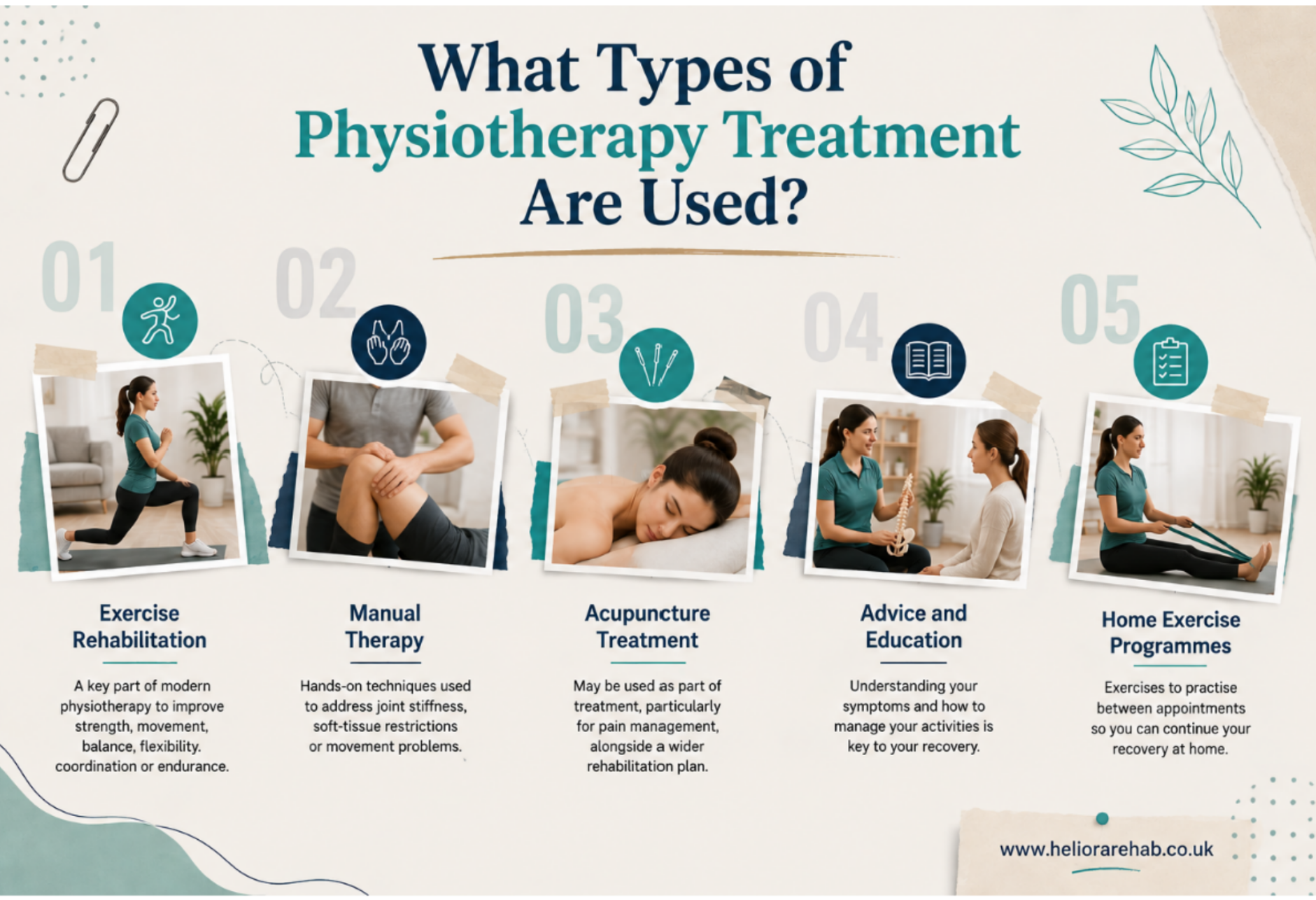
What Types of Physiotherapy Treatment Are Used?
The type of physiotherapy refers to the area or condition being treated. Physiotherapy treatments are the techniques or approaches your physiotherapist may use as part of your care.
You may have one treatment approach or a combination of several.
Exercise Rehabilitation
Exercise rehabilitation is a major part of modern physiotherapy. The exercises you are given should have a reason behind them. They might be designed to improve strength, joint movement, balance, flexibility, coordination or endurance.
Your programme should not necessarily look like someone else’s. A person recovering from knee surgery will have very different exercise needs from someone trying to return to running after an ankle injury.
Manual Therapy
Manual therapy involves hands-on techniques performed by a physiotherapist. Depending on your condition, this may be used to address joint stiffness, soft-tissue restrictions or movement problems.
It is usually one part of a wider treatment plan rather than something you have to rely on indefinitely.
Acupuncture Treatment
Acupuncture treatment may be considered for some patients, particularly where pain management is one of the goals. It should be considered alongside a proper assessment and wider rehabilitation plan rather than as a standalone answer to every problem.
Heliora Rehab offers acupuncture alongside physiotherapy and rehabilitation services.
Advice and Education
Sometimes you need someone to explain what is happening. Your physiotherapist may talk through your symptoms, help you understand what could be contributing to them and discuss how to manage your activities.
This can be particularly useful when you are unsure whether you should rest, keep moving, exercise or change the way you are doing something.
Home Exercise Programmes
Your treatment does not stop when you leave the clinic. You may be given exercises to practise between appointments so that you can continue working on your recovery at home.
| Physiotherapy Treatment | Possible Purpose |
|---|---|
| Exercise rehabilitation | Strength, mobility, balance, flexibility, coordination and endurance. |
| Manual therapy | Support for joint stiffness, soft-tissue restrictions and movement problems. |
| Acupuncture treatment | An additional option that may support pain management where appropriate. |
| Advice and education | Understanding symptoms and managing activity with greater confidence. |
| Home exercise programme | Continuing appropriate rehabilitation between appointments. |
The most suitable combination depends on your assessment, condition, goals, preferences and progress.
So, Which Type of Physiotherapy Do You Need?
You do not necessarily need to choose the answer yourself. A physiotherapist can assess your symptoms, medical history, movement and goals before deciding which approach is appropriate.
For example, knee pain could be related to a sports injury, arthritis, an operation or another musculoskeletal problem. The treatment would not automatically be the same in each case.
That is why a good assessment comes before deciding what treatment you need.
Why Choose Personalised Physiotherapy?
A diagnosis is useful, but it does not tell your whole story. Two people can have the same condition and very different levels of pain, strength, mobility and confidence.
At Heliora Rehab, treatment is built around the individual rather than a standard programme. The approach combines clinical experience with evidence-based physiotherapy and rehabilitation, with attention to factors that may be contributing to your symptoms.
Heliora Rehab’s Clinical Director and Chartered Physiotherapist, Naresh Naidu, has more than 20 years of experience across NHS and private practice, including experience in musculoskeletal, orthopaedic and neurological rehabilitation.
The clinic provides physiotherapy, rehabilitation and acupuncture, with services available in Aylesbury, through home visits and online consultations.
Physiotherapy in Aylesbury
If you are searching for physiotherapy treatment near me or physiotherapy in Aylesbury, Heliora Rehab provides personalised care focused on your symptoms, goals and recovery.
Appointments are available at Aylesbury Therapy Centre and The Belmore Centre in Stoke Mandeville, as well as through home visits and online consultations.
Book a physiotherapy appointmentKey Takeaways
- Different types of physiotherapy relate to different conditions, body systems and recovery needs.
- Musculoskeletal, sports, neurological, orthopaedic and post-surgical physiotherapy may overlap.
- Physiotherapy treatment can include exercise rehabilitation, manual therapy, education, acupuncture and home exercises.
- You do not need to know the exact type of physiotherapy before booking an assessment.
- Personalised treatment should reflect your symptoms, goals, preferences and progress.
Frequently Asked Questions
What is the most common type of physiotherapy?
Musculoskeletal physiotherapy is one of the most common areas and includes problems affecting the muscles, joints and bones, such as back pain, neck pain, joint pain and sports injuries.
How do I know which type of physiotherapy I need?
You do not need to work this out before booking. A physiotherapist can assess your symptoms and recommend the most appropriate treatment based on your condition, movement and goals.
What does a physiotherapist actually do?
They assess your symptoms and physical function, discuss what may be contributing to your problem and recommend appropriate treatment. This can include exercise, manual therapy, advice, education and other treatments where appropriate.
Is physiotherapy just exercises?
No. Exercise is an important part of many physiotherapy programmes, but treatment can also include manual therapy, education, advice and other appropriate interventions.
Can physiotherapy make an injury worse?
Some exercises or treatments can cause temporary soreness, particularly when you are starting rehabilitation. However, treatment should be appropriate to your condition and tolerance. If your symptoms are worsening or something feels wrong, speak to your physiotherapist.
How many physiotherapy sessions will I need?
There is no standard number. It depends on the problem being treated, your goals and how you respond to treatment. Your physiotherapist should review your progress and discuss how much support you are likely to need.
Can I see a physiotherapist without seeing my GP?
For private physiotherapy, you can generally book directly without a GP referral. NHS access varies by area and service, with some services allowing self-referral.
Not Sure What Treatment You Need?
You do not need to arrive at your appointment knowing which type of physiotherapy you need. If pain, an injury, stiffness, reduced mobility or another physical problem is affecting your everyday life, an assessment can help you understand what is happening and what treatment may be appropriate.
If you are looking for physiotherapy in Aylesbury, Heliora Rehab provides personalised physiotherapy, rehabilitation and acupuncture, with clinic appointments, home visits and online consultations available.
Book a Physiotherapy Appointment