

World Physiotherapy Day 2026: How Physiotherapy Has Evolved in the UK
Discover how physiotherapy has evolved in the UK and its role in cardiovascular health, stroke rehabilitation, and helping people stay active.
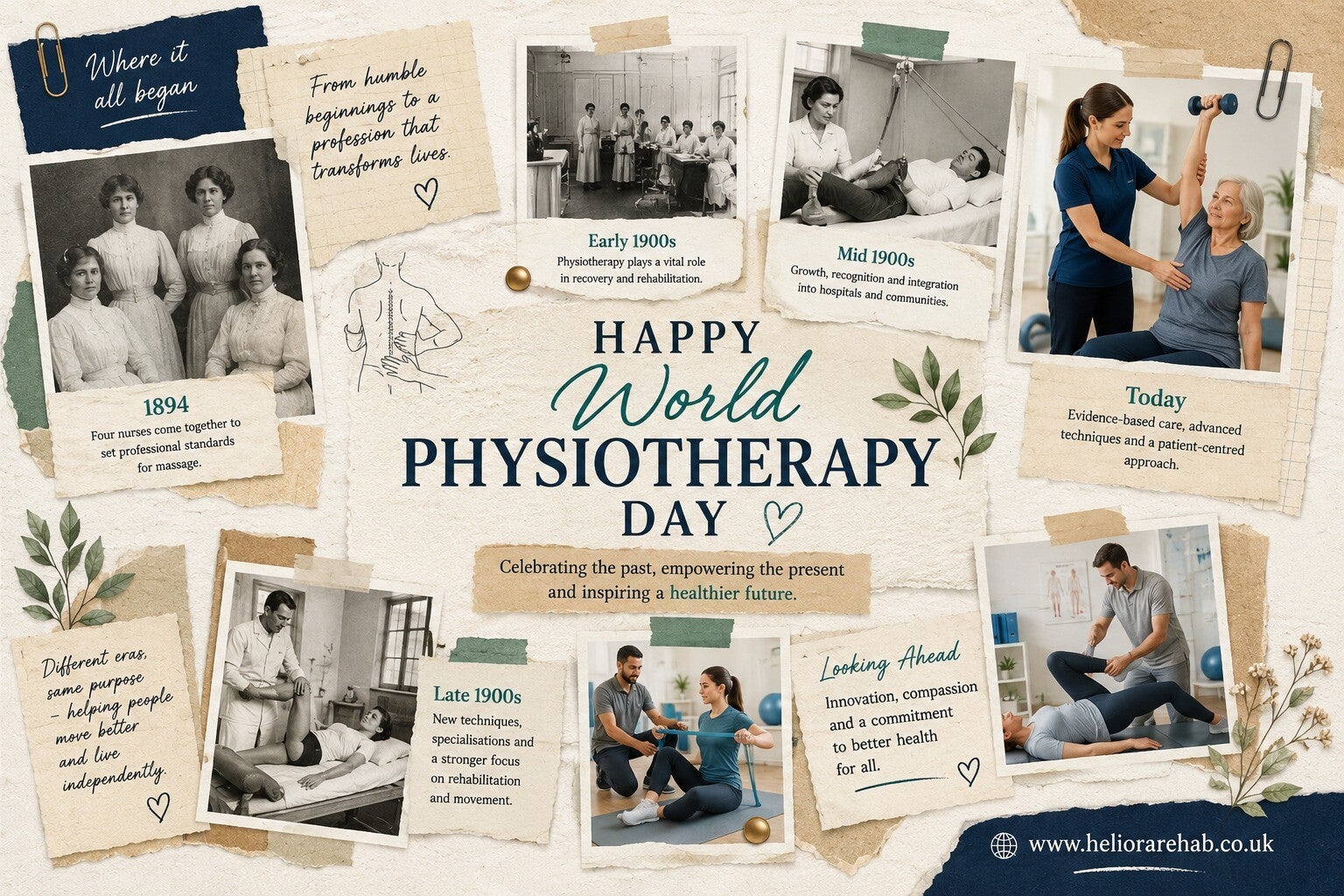
Every year on 8 September, World Physiotherapy Day shines a light on the role physiotherapists play in helping people move, recover and stay independent. But physiotherapy hasn't always looked the way it does today — the profession has evolved significantly over more than a century.
The profession has evolved significantly over more than a century — from its early roots in massage and therapeutic exercise to the highly trained, regulated and evidence-based profession we know today.
This year's World Physiotherapy Day is particularly relevant. The 2026 theme focuses on the role of physiotherapy and physical activity in the prevention, management and rehabilitation of cardiovascular disease and stroke.
So, how did physiotherapy get here? And what does its history tell us about the role it plays in healthcare today? Let's dive in!
Why Do We Celebrate World Physiotherapy Day?
World Physiotherapy Day takes place on 8 September each year. The date marks the founding of World Physiotherapy in 1951, and 8 September was designated as World PT Day in 1996.
It is an opportunity to recognise the contribution physiotherapists make to health and wellbeing around the world, while raising awareness of how physiotherapy can support people at different stages of life, health and recovery.
World Physiotherapy Day 2026
The 2026 theme is cardiovascular disease and stroke. It highlights the role of physiotherapy and physical activity in prevention, management and rehabilitation.
The Story of Physiotherapy in the UK Begins in 1894
The roots of professional physiotherapy in the UK can be traced back to 1894, when four nurses founded the Society of Trained Masseuses.
At the time, the organisation was created partly to establish professional standards around massage and protect the emerging profession.
But the work didn't stop at massage.
Over time, therapeutic exercise, medical gymnastics and rehabilitation became increasingly important. The profession began to play a growing role in helping people recover movement and function, particularly during and after the First World War.
What started as a relatively small professional movement would eventually develop into a major part of modern healthcare.
A Brief History of Physiotherapy in the UK
Here's how some of the key milestones fit together:
The Society of Trained Masseuses is founded
Four nurses establish the organisation that would eventually become the Chartered Society of Physiotherapy.
A Royal Charter is granted
The organisation becomes the Chartered Society of Massage and Medical Gymnastics.
The Chartered Society of Physiotherapy is established
The organisation adopts the name it is known by today, reflecting the profession's continued development.
The NHS is created
Physiotherapy becomes increasingly integrated into hospital care and rehabilitation across the newly established NHS.
The UK becomes part of the global profession
The Chartered Society of Physiotherapy becomes a founding member of the World Confederation for Physical Therapy, now known as World Physiotherapy.
Physiotherapy becomes a statutorily regulated profession
The Professions Supplementary to Medicine Act introduces statutory regulation.
Greater professional autonomy
The profession gains greater autonomy, and physiotherapists are able to treat patients without prior medical referral.
All-graduate entry
Physiotherapy becomes an all-graduate-entry profession, reflecting the increasing level of education and expertise required.
HCPC regulation
Physiotherapists enter the register of the Health Professions Council, now the Health and Care Professions Council (HCPC).
Today, physiotherapists are regulated by the HCPC, and physiotherapist is a protected professional title in the UK.
From Massage to Modern Rehabilitation
Looking at that timeline, one thing becomes clear. Physiotherapy has changed considerably.
Early practice centred largely around massage, exercise and physical rehabilitation. Today, physiotherapists work across a much broader range of healthcare.
This includes:
- Musculoskeletal conditions and persistent pain
- Sports injuries and rehabilitation
- Neurological rehabilitation
- Cardiovascular rehabilitation
- Recovery following surgery or illness
- Mobility and balance problems
- Community and home-based rehabilitation
The focus has also shifted.
Physiotherapy isn't simply about treating the part of the body that hurts. It's increasingly about understanding how a person's symptoms affect their movement, daily activities and quality of life and helping them work towards meaningful, realistic goals.
Why Is Cardiovascular Health Part of Physiotherapy?
This brings us to the focus of World Physiotherapy Day 2026.
Cardiovascular disease affects the heart and circulatory system and includes conditions such as heart disease and stroke. Physical activity plays an important role in cardiovascular health, while rehabilitation can help people regain function and confidence following cardiovascular events.
Physiotherapists can be involved in this rehabilitation alongside other healthcare professionals.
For someone recovering from a heart-related event, for example, rehabilitation may involve gradually rebuilding physical fitness and confidence in movement.
Following a stroke, physiotherapy can help address difficulties with movement, strength, balance, coordination and mobility.
The exact approach depends on the individual, their health and their stage of recovery. The goal isn't simply to get someone moving again. It's to help them work towards greater function and independence.
Movement Matters Before and After Illness
One of the most important messages behind this year's campaign is that physical activity isn't only something to think about after a health problem occurs.
Moving more can be part of looking after your health in the first place.
That doesn't necessarily mean joining a gym or training for a marathon.
For one person, it might mean walking regularly. For another, it could mean improving strength, working on balance or gradually becoming more active after a period of illness.
And when pain, injury, illness or reduced mobility makes movement difficult, a physiotherapist can help identify ways to build activity back up safely and progressively.
What Does Modern Physiotherapy Look Like Today?
More than 130 years after the Society of Trained Masseuses was founded, physiotherapy is now a regulated healthcare profession with a role across NHS and private healthcare, community services and rehabilitation.
It has also become much more specialised.
Physiotherapists may work in areas such as musculoskeletal care, neurological rehabilitation, cardiovascular rehabilitation, post-operative recovery and long-term condition management.
The profession continues to evolve as research, clinical education and our understanding of movement and rehabilitation develop.
Yet its central purpose remains remarkably familiar.
Helping people move better, recover function and live as independently as possible.
Physiotherapy in Aylesbury
At Heliora Rehab in Aylesbury, we see physiotherapy as more than simply treating symptoms.
Our approach is personalised and evidence-based, with rehabilitation built around the individual, their symptoms, their goals and what they want to get back to doing.
Whether you're recovering from an injury, managing a physical condition or working towards better movement and function, understanding the factors contributing to the problem is an important part of the process.
World Physiotherapy Day is a useful reminder of just how far the profession has come and of the important role movement continues to play in our health.
Personalised Physiotherapy in Aylesbury
Heliora Rehab provides personalised physiotherapy, rehabilitation, acupuncture and flexible appointment options, including clinic appointments, home visits and online consultations.
Book a physiotherapy appointmentKey Takeaways
- World Physiotherapy Day takes place on 8 September each year.
- The 2026 theme focuses on physiotherapy and physical activity in cardiovascular disease and stroke.
- Professional physiotherapy in the UK can trace its roots back to 1894.
- The profession has evolved from its early focus on massage and medical gymnastics into a broad, regulated healthcare profession.
- Physiotherapy now plays a role in treatment, rehabilitation, prevention, and long-term health.
- Movement remains at the heart of physiotherapy, helping people recover, stay active, and maintain their independence.
Frequently Asked Questions
When is World Physiotherapy Day 2026?
World Physiotherapy Day is on 8 September 2026. The date marks the founding of World Physiotherapy in 1951, and 8 September was designated as World PT Day in 1996.
What is the theme of World Physiotherapy Day 2026?
The 2026 focus is on the role of physiotherapy and physical activity in the prevention, management, and rehabilitation of cardiovascular disease and stroke.
When did physiotherapy begin in the UK?
The professional history of physiotherapy in the UK can be traced back to 1894, when four nurses founded the Society of Trained Masseuses.
Is physiotherapy regulated in the UK?
Yes. Physiotherapists are regulated by the Health and Care Professions Council (HCPC). The title physiotherapist is protected in the UK.
Can physiotherapy help after a stroke?
Yes. Physiotherapy can form an important part of stroke rehabilitation, helping people work on areas such as movement, strength, balance, mobility and independence as part of an individual rehabilitation programme.
Do I need a GP referral to see a private physiotherapist?
You don't generally need a GP referral to see a private physiotherapist in the UK. You can contact a private physiotherapy clinic directly for an assessment.
Celebrate World Physiotherapy Day With Us
Whether you're recovering from an injury, managing a long-term condition or simply want to move better, we're here to help you build a personalised path forward.
Book a Physiotherapy Appointment