

5 Neck Pain Exercises to Relieve Stiffness
Try these gentle neck exercises at home to improve movement and reduce stiffness – and learn when it’s time to see a physiotherapist.
Neck pain and stiffness are common, especially after long days at a desk, poor sleep positions, or muscle tension. The good news is that gentle, regular movement can often help.
Do you usually wake up with a stiff neck? Spent hours at your desk and now turning your head feels uncomfortable? Or perhaps your neck simply feels tight after a long day?
Neck pain and stiffness are common, and in many cases, gentle movement can help improve mobility and reduce discomfort.
Staying in one position for too long, an awkward sleeping position, muscle tension, and injuries can all contribute to neck pain.
The good news is that you don’t always need complicated exercises. A few gentle neck pain exercises, done regularly and within your comfort level, can help keep your neck moving.
Here are five exercises you can try at home.
5 Exercises for Neck Pain and Stiffness
These exercises for neck pain are gentle movements designed to help maintain or improve your range of movement.
Gentle Neck Turns
This simple exercise helps work on your neck’s range of movement.
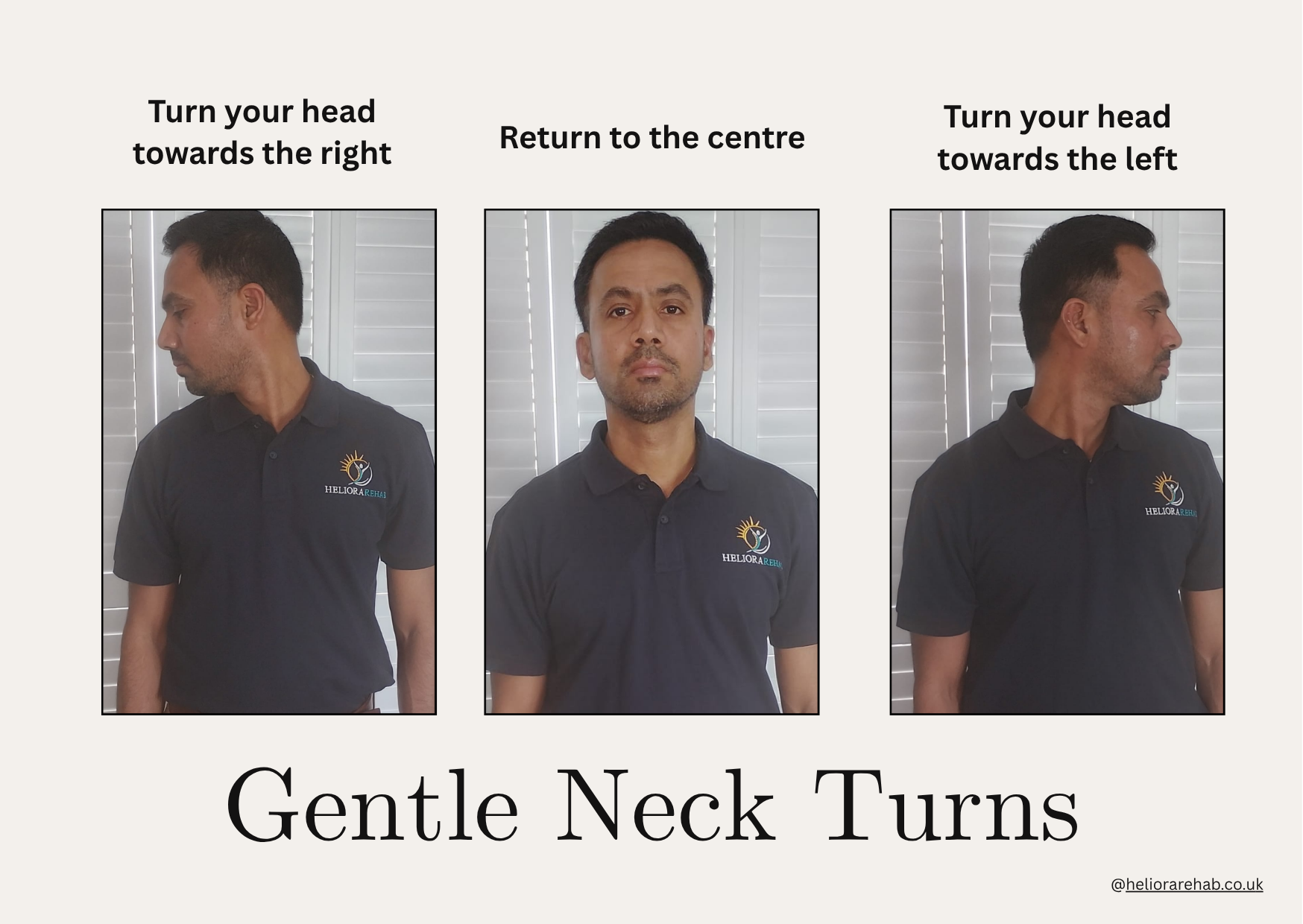
Gentle neck turns
How to do it:
- Sit or stand upright with your shoulders relaxed.
- Slowly turn your head towards the right, looking over your shoulder.
- Go only as far as feels comfortable.
- Return to the centre and repeat on the left.
- Try 5–10 repetitions on each side.
Don’t force the movement. The aim is to gradually improve movement rather than push through pain.
Side-to-Side Neck Stretch
If the muscles around your neck feel tight, this gentle stretch may help.
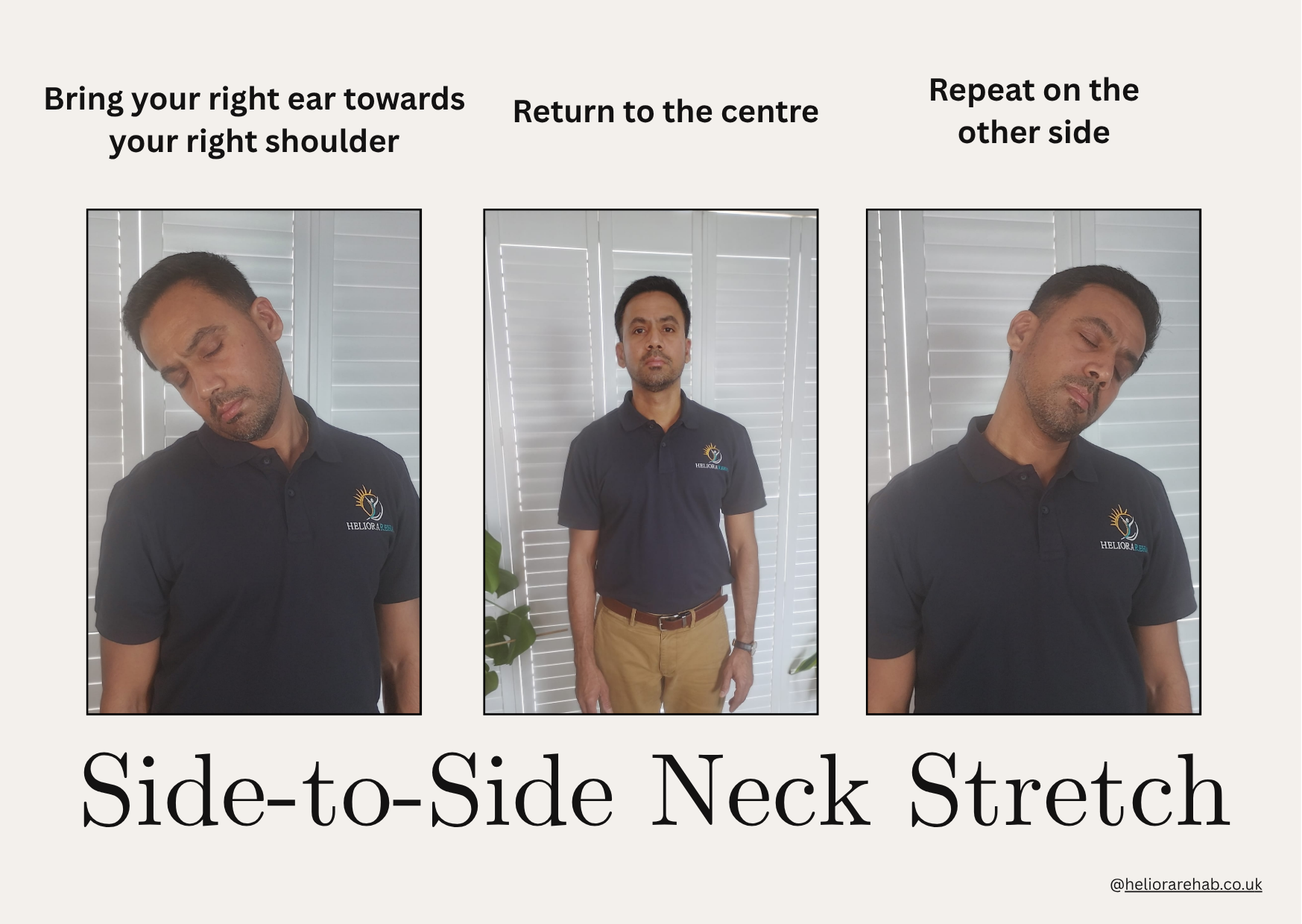
Side-to-side neck stretch
How to do it:
- Sit upright with your shoulders relaxed.
- Slowly bring your right ear towards your right shoulder.
- You should feel a gentle stretch along the left side of your neck.
- Hold for around 5–10 seconds.
- Return to the starting position and repeat on the other side.
Keep your shoulders relaxed rather than lifting them towards your ears.
Chin Tucks
If you spend a lot of time at a desk or looking at a screen, chin tucks can be a useful addition to your neck exercises.
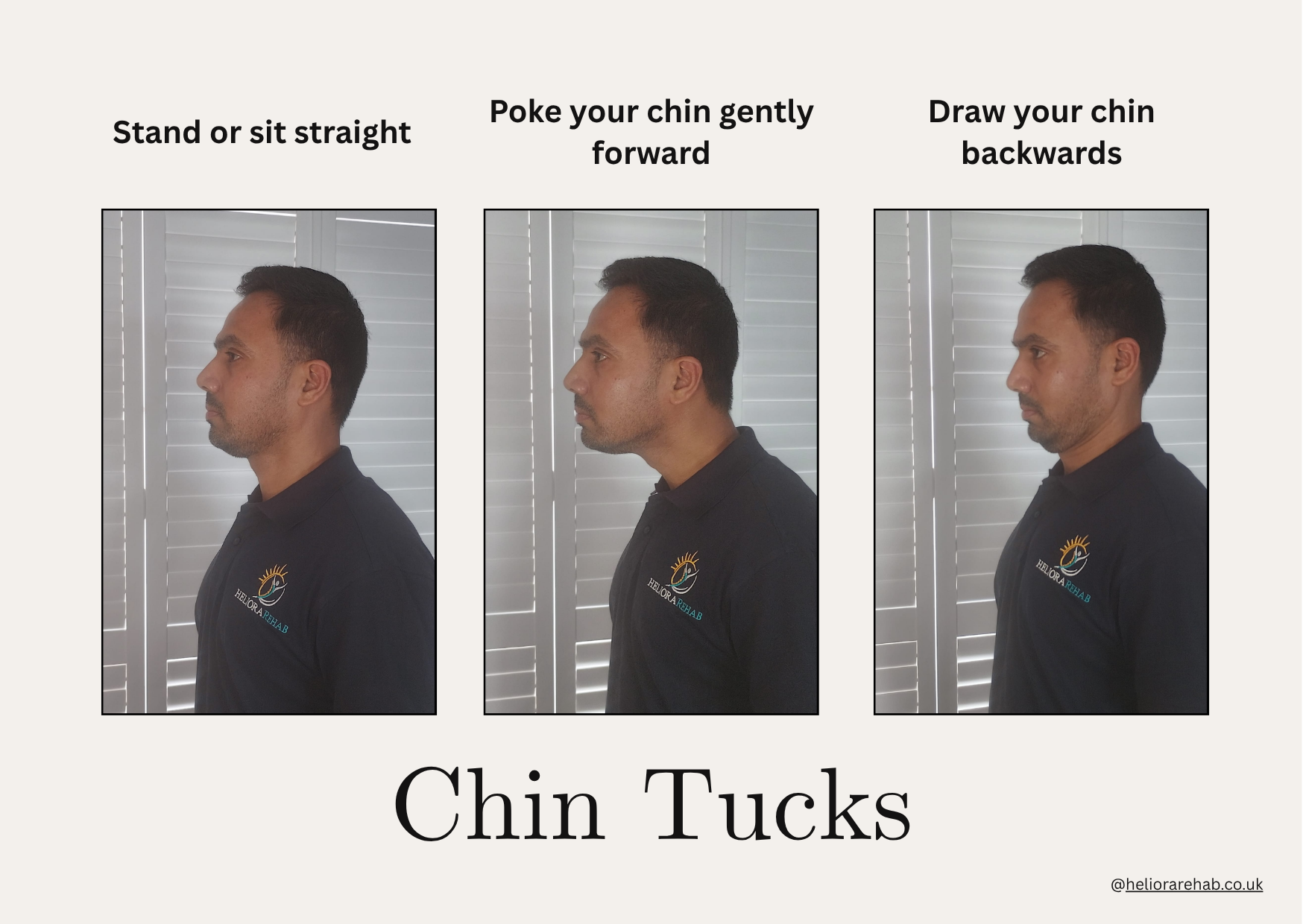
Chin tucks
How to do it:
- Sit or stand tall and look straight ahead.
- Gently draw your chin backwards, as though you’re making a small double chin.
- Keep your eyes facing forwards.
- Hold for around 5 seconds, then relax.
- Repeat 8–10 times.
Keep the movement small. You shouldn’t need to force your chin backwards.
Neck Flexion
This movement gently works through the forward range of your neck.
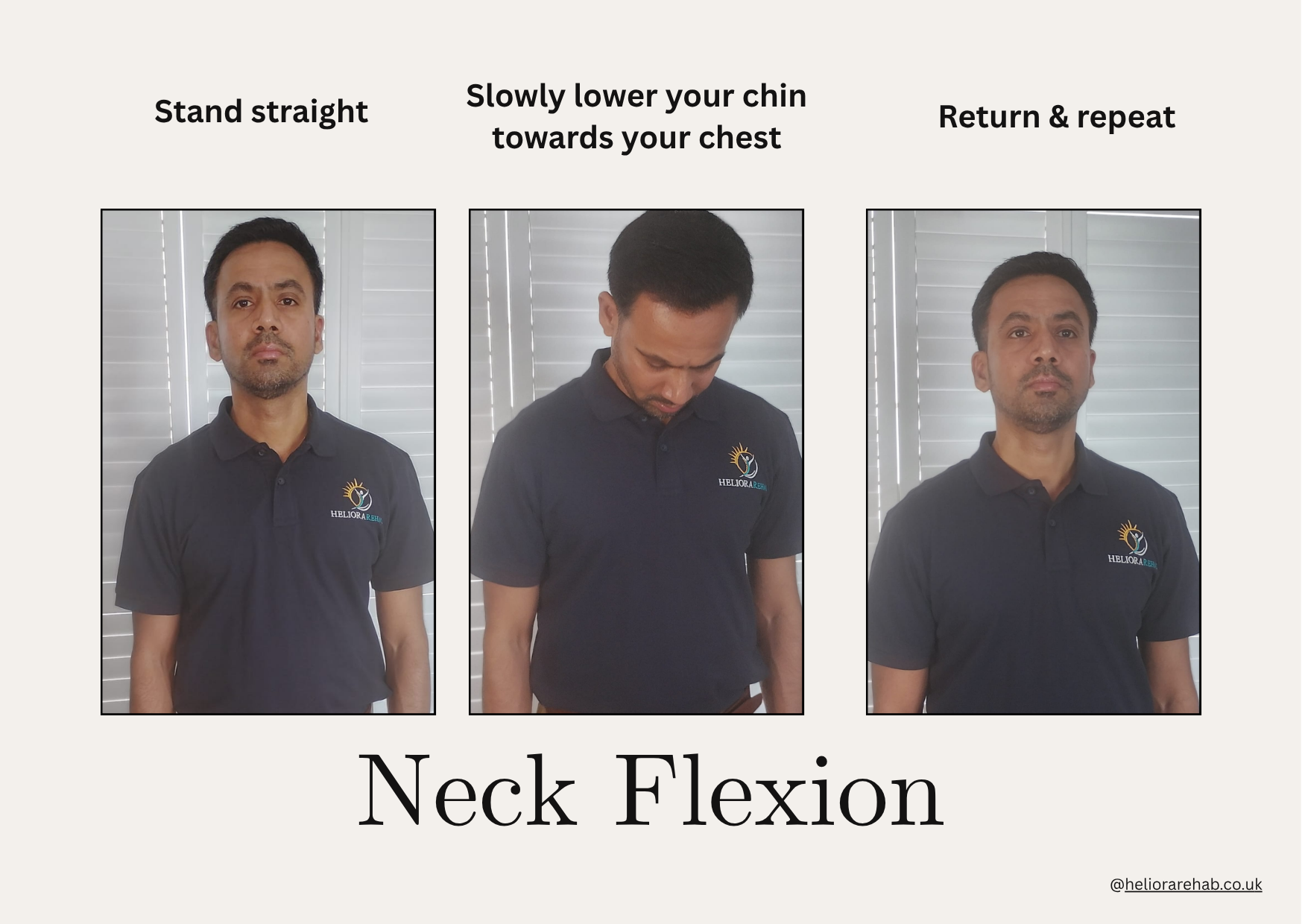
Neck flexion
How to do it:
- Sit or stand comfortably with your back straight.
- Slowly lower your chin towards your chest.
- Move only as far as feels comfortable.
- Hold for a few seconds.
- Slowly return your head to the starting position.
- Repeat 5–10 times.
Avoid pulling your head down with your hands. Let the movement come naturally from your neck.
Shoulder Blade Squeezes
Your neck doesn’t work in isolation. The muscles around your shoulders and upper back also play a role in how your neck moves and feels.
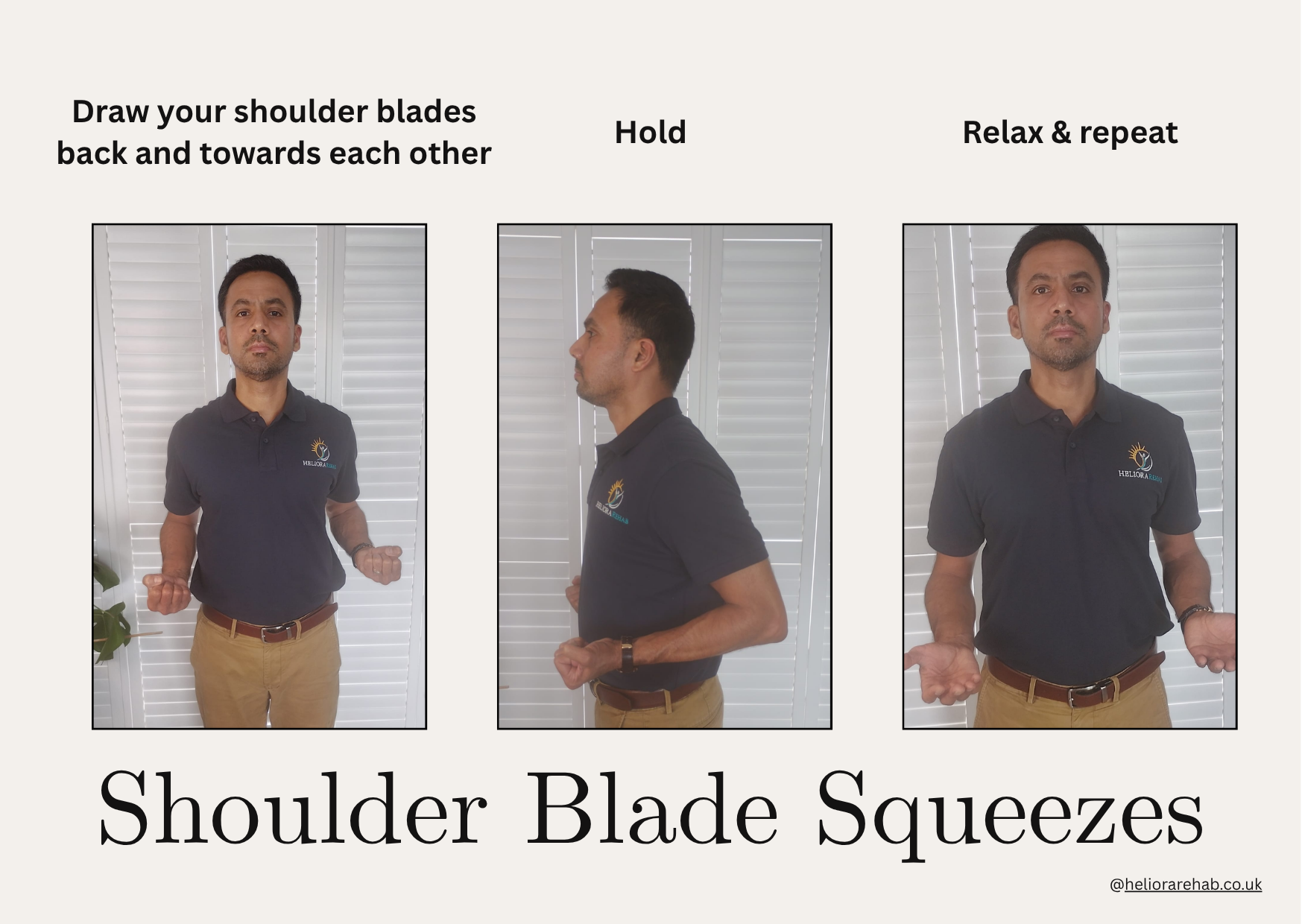
Shoulder blade squeezes
How to do it:
- Sit or stand upright.
- Let your arms rest comfortably by your sides.
- Gently draw your shoulder blades back and towards each other.
- Hold for 3–5 seconds.
- Relax completely.
- Repeat 8–10 times.
Think about creating a gentle squeeze rather than forcing your shoulders backwards.
What Causes Neck Stiffness and Pain?
Neck stiffness can happen for many reasons. You might notice it after sleeping in an awkward position, sitting at a desk for several hours or spending a lot of time looking down at your phone.
Other possible causes include muscle strain, an injury such as whiplash or irritation of a nerve.
Sometimes there isn’t one obvious cause. What matters is how your symptoms behave and whether they’re improving.
How Often Should You Do Neck Exercises?
You don’t need to spend 30 minutes exercising your neck.
Start gently and see how your body responds. You could begin with a few repetitions of each movement and gradually build up as they become more comfortable.
Regular movement throughout the day can also help.
If you’ve been sitting at a desk for several hours, getting up, changing position, and moving your neck and shoulders can be more helpful than staying in the same position for longer.
Some mild stretching or discomfort can occur when you start moving, but exercises shouldn’t significantly increase your symptoms.
If a particular movement makes your pain noticeably worse, stop and seek professional advice.
When Should You See a Physiotherapist for Neck Pain?
Exercises can be useful, but they aren’t the right solution for every type of neck pain.
Consider seeing a physiotherapist if your neck pain:
- Isn’t improving or keeps coming back
- Is affecting your sleep, work or everyday activities
- Started after an injury or accident
- Is accompanied by pins and needles, numbness or weakness in your arm
- Is becoming increasingly difficult to manage
The NHS advises seeking medical advice if neck pain or stiffness doesn’t settle after a few weeks, or if you develop symptoms such as pins and needles or a cold arm.
If your neck pain started suddenly after significant trauma, or you develop worsening weakness, problems with balance or changes to bladder or bowel function, seek urgent medical attention.
How Can Physiotherapy Help Neck Pain?
Rather than simply treating where it hurts, a physiotherapist can assess your neck movement, symptoms, lifestyle and contributing factors.
At Heliora Rehab, treatment is personalised to you and your goals.
Depending on your assessment, your treatment may include targeted exercises, hands-on physiotherapy, movement advice and rehabilitation.
The aim isn’t simply to make your neck feel better for a few days. It’s to help you understand what’s contributing to your symptoms and get back to moving comfortably and confidently.
Personalised Physiotherapy in Aylesbury
Heliora Rehab provides personalised physiotherapy, rehabilitation, acupuncture and flexible appointment options, including clinic appointments, home visits and online consultations.
Book a physiotherapy appointmentKey Takeaways
- Gentle neck pain exercises can help improve movement and reduce stiffness for some people.
- Avoid forcing movements or pushing through significant pain.
- Changing position regularly can help if you spend long periods sitting or working at a desk.
- Persistent, recurring or worsening neck pain may need professional assessment.
- Symptoms such as significant weakness, numbness, balance problems or pain following serious trauma need prompt medical attention.
Frequently Asked Questions
What is the best exercise for neck pain?
There isn’t one exercise that works for everyone. Gentle neck movements, stretches and exercises that improve movement and strengthen the surrounding muscles may help, depending on what’s causing your symptoms.
How can I relieve a stiff neck?
Gentle movement, regular changes of position and appropriate neck stiffness exercises may help. Avoid forcing painful movements, and seek professional advice if your symptoms aren’t improving.
Should I exercise with neck pain?
In many cases, gentle movement is encouraged rather than keeping your neck completely still. However, the right exercises depend on the cause of your pain.
When should I see a physiotherapist for neck pain?
Consider a physiotherapy assessment if your neck pain persists, keeps returning or starts affecting your sleep, work, exercise or everyday activities.
Can physiotherapy help neck stiffness?
Yes. Physiotherapy for neck pain can include an assessment of your movement and symptoms, followed by personalised exercises, rehabilitation and other appropriate treatment techniques.
Don’t Let Neck Pain Become Your Normal
If your neck stiffness or pain isn’t settling, you don’t have to simply work around it.
At Heliora Rehab, we take the time to understand what’s contributing to your symptoms and create a personalised plan to help you move better and get back to the things that matter.
Book an Appointment