

Sciatica: Symptoms, Causes & Treatment
Sciatica can cause pain, tingling, or numbness down the leg. Learn about sciatica symptoms, causes, treatment, and how physiotherapy can help.
Pain that travels from your lower back or buttock into your leg can feel very different from an ordinary backache. Sciatica can be painful and frustrating, but many people improve with time, staying active and the right approach to managing their symptoms.
Pain that travels from your lower back or buttock into your leg can feel very different from an ordinary backache.
You may notice a sharp or shooting pain when you move, or perhaps tingling, numbness or weakness in your leg or foot. Sometimes, the leg pain can be more noticeable than the back pain.
These can all be symptoms of sciatica.
Sciatica can be painful and frustrating, but it does not automatically mean that something serious is wrong. Many people improve with time, staying active and the right approach to managing their symptoms.
Key Points
- Sciatica can cause pain, tingling, numbness or weakness that travels from the lower back or buttock into the leg.
- Symptoms usually affect one side of the body.
- A disc problem is one possible cause, but there are several other possible causes.
- Sciatica often improves within a few weeks to a few months, although recovery can take longer for some people.
- Staying active and gradually returning to normal activities can help during recovery.
- There is no single exercise that is right for everyone with sciatica.
- New bladder or bowel problems, numbness around the genitals or bottom, or severe or worsening weakness require urgent medical assessment.
What Is Sciatica?
Sciatica describes symptoms caused by irritation or compression of nerves in the lower back that contribute to the sciatic nerve.
It can cause pain, tingling, numbness or weakness that travels from the lower back or buttock into the leg, usually on one side.
The symptoms can vary from person to person, and they may change over time.
Sciatica is not simply another name for lower back pain. The symptoms in the leg are often an important part of the condition.
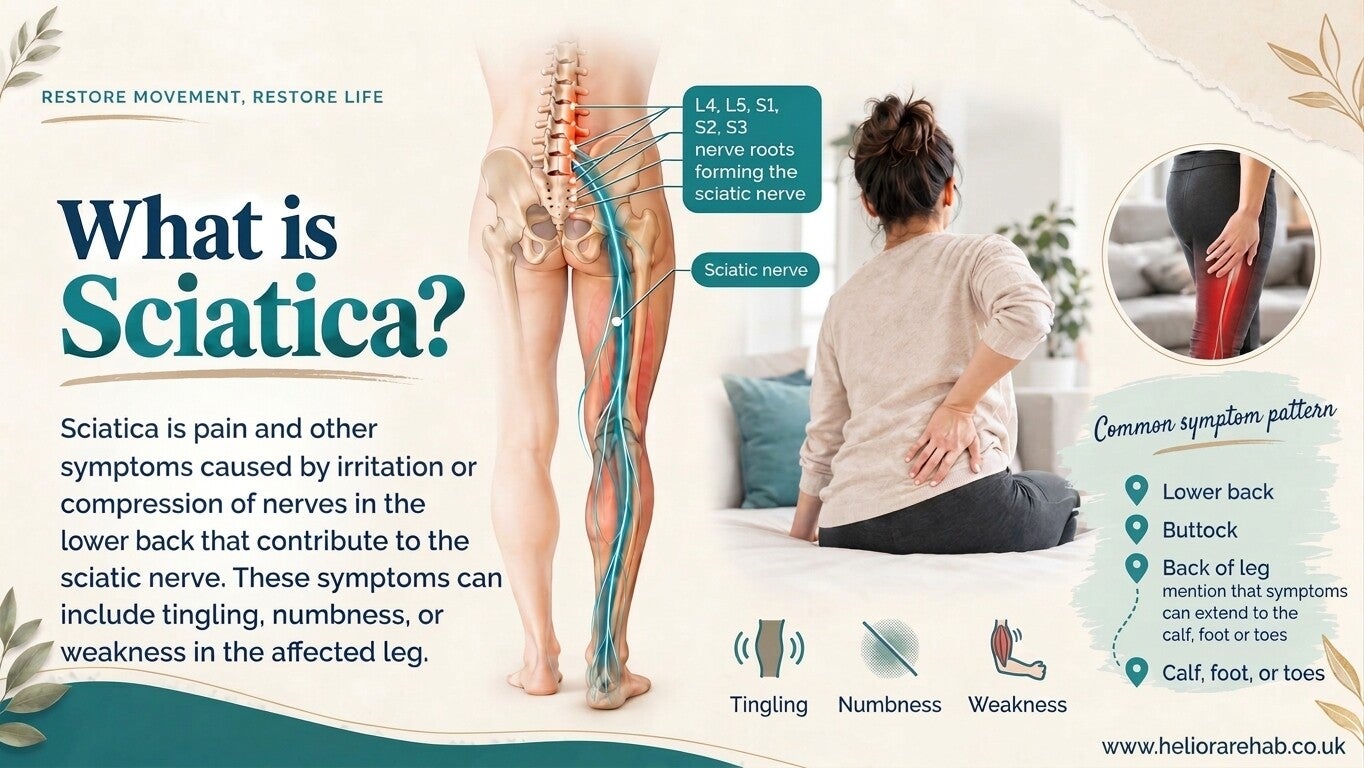
Sciatica symptoms can travel from the lower back or buttock down one leg.
Seek urgent medical help if you develop new problems controlling your bladder or bowels, or numbness around your genitals, bottom or inner thighs (the “saddle” area).
What Does Sciatica Feel Like?
Not everyone experiences sciatica in the same way.
Some people describe a sharp, shooting or burning pain. Others notice tingling, pins and needles or numbness. You may also experience weakness in your leg or foot.

Sciatica can feel like sharp pain, burning, tingling, numbness or weakness down the leg.
New bladder or bowel problems, numbness around your genitals, bottom or inner thighs (the “saddle” area), or severe or worsening weakness or numbness in both legs.
Common sciatica symptoms include:
- Pain travelling from the lower back or buttock into the leg
- Sharp, shooting or burning pain
- Tingling or pins and needles
- Numbness
- Weakness in the leg or foot
- Pain that changes with certain movements or positions
- Pain that may become worse when coughing or sneezing
You may have significant leg pain with very little lower back pain.
Your symptoms may also change depending on your activity, position and stage of recovery.
What Causes Sciatica?
Sciatica can have several possible causes.
One of the most common is a disc problem, where a disc in the lower spine irritates a nearby nerve. Other possible causes include changes that narrow the space around the nerves in the spine, changes in the position of the spinal bones, or an injury.
Sometimes, there is no single clear event or injury that explains why symptoms started.
An assessment can help understand your symptoms, identify factors that may be contributing to them and guide appropriate treatment.
Not everyone with sciatica needs a scan. Imaging such as an MRI is not routinely needed unless there is a clinical reason for it and the result is likely to change how your symptoms are managed.
How Long Does Sciatica Last?
Sciatica often improves within a few weeks to a few months, although recovery can take longer for some people.
Symptoms can fluctuate during recovery. You may have better days and more uncomfortable days as you gradually return to your usual activities.
Staying active within your limits and gradually building up your normal activities can be helpful. You generally do not need to stay in bed or avoid all movement.
If your symptoms are getting worse, are not improving, keep coming back or are significantly affecting your everyday life, it is worth getting them assessed.
What Can Help With Sciatica?
There is no single treatment or exercise programme that is right for everyone with sciatica.
The most appropriate approach depends on your symptoms, your current activity levels and how you respond to movement.
Some approaches that may help include:
| What you’re experiencing | What may help |
|---|---|
| Pain or discomfort with prolonged sitting | Change position regularly and take short movement breaks |
| Difficulty with everyday movement | Gradually return to normal activities |
| Reduced strength | A gradual strengthening programme appropriate to your symptoms |
| Stiffness or restricted movement | Individualised mobility exercises |
| Symptoms during exercise | Adjust the activity and gradually rebuild your tolerance |
The aim is not necessarily to avoid every movement that causes discomfort. Instead, your activity can often be adjusted and gradually increased as your symptoms allow.
Exercises for Sciatica
There is no single best exercise for sciatica.
The right exercises depend on your symptoms, your current level of activity and how your symptoms respond to movement.
Depending on the individual, an exercise programme may include walking, mobility exercises, strengthening exercises or other movements designed to gradually improve your strength, movement and tolerance.
Some exercises that feel helpful for one person may aggravate another person’s symptoms. This is why it is useful to consider your individual symptoms rather than following a generic list of sciatica exercises.
A physiotherapist can assess how your symptoms respond to different movements and help you choose exercises that are appropriate for you.
How Can Physiotherapy Help With Sciatica?
Physiotherapy for sciatica focuses on helping you understand your symptoms and gradually return to the activities that matter to you.
Your physiotherapist can assess your symptoms, movement, strength and functional abilities to develop an individual treatment plan.
Depending on your needs, sciatica physiotherapy may include:
- Exercise and strengthening
- Mobility exercises
- Advice about staying active
- Guidance on returning to work, exercise or everyday activities
- Advice about managing symptoms
- Hands-on treatment where appropriate
Hands-on treatment may be used alongside exercise and other active approaches rather than as a standalone treatment.
The goal is to help you move more comfortably, build your confidence and gradually return to your normal activities.
Personalised Physiotherapy in Aylesbury
Heliora Rehab provides personalised physiotherapy, rehabilitation, acupuncture and flexible appointment options, including clinic appointments, home visits and online consultations.
Book a physiotherapy appointmentWhen Should You Get Your Symptoms Checked?
Consider getting your symptoms assessed if:
- Your pain is not improving after a few weeks
- Your symptoms are getting worse
- Your symptoms keep coming back
- Pain is affecting your sleep or everyday activities
- You have persistent numbness
- You notice weakness in your leg or foot
- You are unsure what is causing your symptoms
A healthcare professional can assess your symptoms and help determine whether you need further investigation or a different approach to treatment.
When Is Sciatica an Emergency?
Most cases of sciatica are not emergencies. However, certain symptoms need urgent medical attention.
Seek urgent medical help if you develop:
- Numbness around your genitals, bottom or anus
- Difficulty starting to urinate or being unable to urinate
- New loss of bladder control
- Loss of bowel control or reduced awareness of needing to open your bowels
- Severe or worsening weakness or numbness affecting both legs
- Sciatica affecting both sides
These symptoms can sometimes indicate a serious problem affecting the nerves in the lower spine.
Key Takeaways
- Sciatica can cause pain, tingling, numbness or weakness travelling from the lower back or buttock into one leg.
- Symptoms can vary, and leg pain may be more noticeable than lower back pain.
- Disc problems are a common cause, but several different factors can contribute to sciatic nerve pain.
- Many people improve within weeks to months, although recovery can take longer for some.
- Staying active within your limits and gradually rebuilding activity can support recovery.
- Persistent, recurring or worsening symptoms should be assessed.
- Bladder or bowel changes, saddle numbness, bilateral symptoms or severe worsening weakness require urgent medical attention.
Frequently Asked Questions
How can I relieve sciatica?
Gentle movement, staying active within your limits and gradually returning to normal activities may help. Try to avoid staying in bed or sitting in one position for long periods. Changing position regularly and taking short movement breaks can make everyday activities more manageable. The most appropriate approach depends on your symptoms and how they respond to movement.
What is the best exercise for sciatica?
There isn’t one exercise that works for everyone. Depending on your symptoms and activity levels, your programme may include walking, mobility exercises, strengthening exercises or other movements that gradually improve your tolerance. A physiotherapist can assess your symptoms and help you choose exercises that are appropriate for you.
Can sciatica go away on its own?
Yes. Many cases of sciatica improve with time. Recovery often takes a few weeks to a few months, although some people experience symptoms for longer. If your symptoms are getting worse, are not improving or are significantly affecting your daily life, seek professional advice.
Does sciatica always cause back pain?
No. Sciatica can cause symptoms mainly in the buttock and leg, and you may have little or no lower back pain.
Can physiotherapy help sciatica?
Yes. Physiotherapy can help you understand your symptoms, identify factors that may be contributing to them and develop an appropriate plan to improve movement, strength and confidence. The aim is to help you gradually return to your usual activities.
Should I rest if I have sciatica?
Usually, prolonged bed rest is not recommended. Staying gently active and gradually returning to your normal activities can be helpful. You may need to temporarily modify certain activities depending on your symptoms. If you are unsure what level of activity is appropriate, a physiotherapist can help you work out a gradual plan.
Get Back to Moving With Confidence
Sciatica can make you second-guess movements that you normally wouldn’t think twice about.
Rather than constantly working around your symptoms, understanding what may be contributing to them can give you a clearer way forward.
At Heliora Rehab, we create personalised rehabilitation plans based on your symptoms, your goals and your everyday life.
Looking for physiotherapy for sciatica in Aylesbury? Book an appointment with Heliora Rehab and take the next step towards moving with greater confidence.
Book an Appointment