

Plantar Fasciitis: Causes, Symptoms & Treatment
Heel pain when walking? Learn about plantar fasciitis symptoms, causes and treatment, including exercises and how physiotherapy can help.
Sharp heel pain with your first steps in the morning, or after sitting for a while, can make walking and exercise difficult. Plantar fasciitis is one possible cause of this pattern of heel pain.
You take your first few steps in the morning and feel a sharp pain underneath your heel.
Perhaps it eases as you start moving, only to return after a long day on your feet. You may even find yourself avoiding walks, running or exercise because you know your heel will hurt afterwards.
If this sounds familiar, plantar fasciitis could be one possible cause.
But why does it happen, how long does it last, and what can you do about it?
What Is Plantar Fasciitis?
Plantar fasciitis is a common cause of plantar heel pain.
The plantar fascia is a strong band of tissue running along the bottom of your foot. It helps support the foot and is involved in walking and other weight-bearing activities.
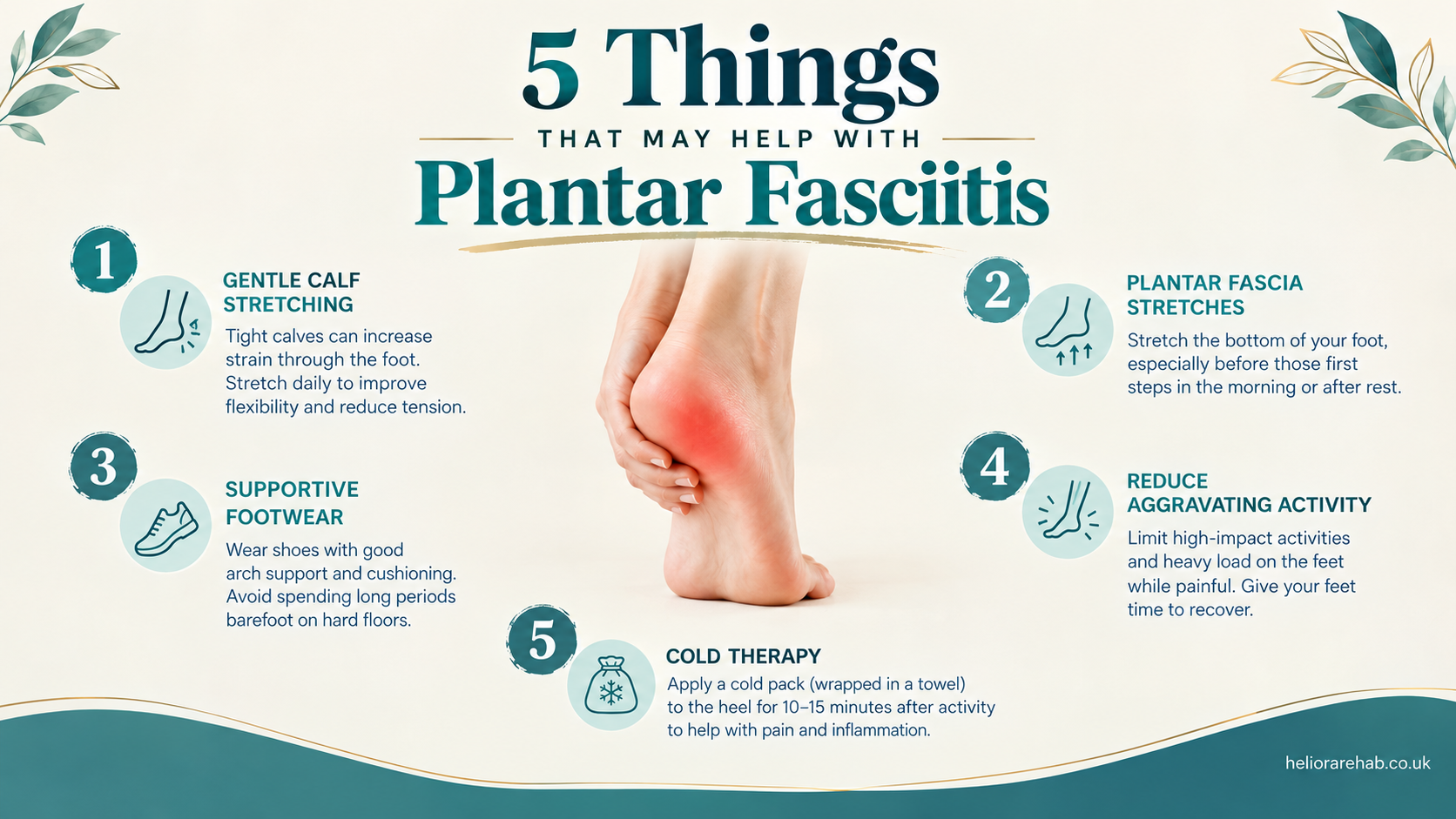
Plantar fasciitis commonly causes pain around the underside of the heel and along the bottom of the foot.
When the plantar fascia becomes painful, everyday activities such as walking, standing and exercising can become uncomfortable.
However, not all heel pain is plantar fasciitis. Other conditions can cause similar symptoms, so persistent or severe heel pain may need an assessment.
Why Does My Heel Hurt When I Walk?
One of the most common plantar fasciitis symptoms is pain underneath or around the heel.
You may notice it:
- When taking your first steps in the morning
- After sitting or resting for a while
- When standing for long periods
- During or after walking
- During running or other impact activities
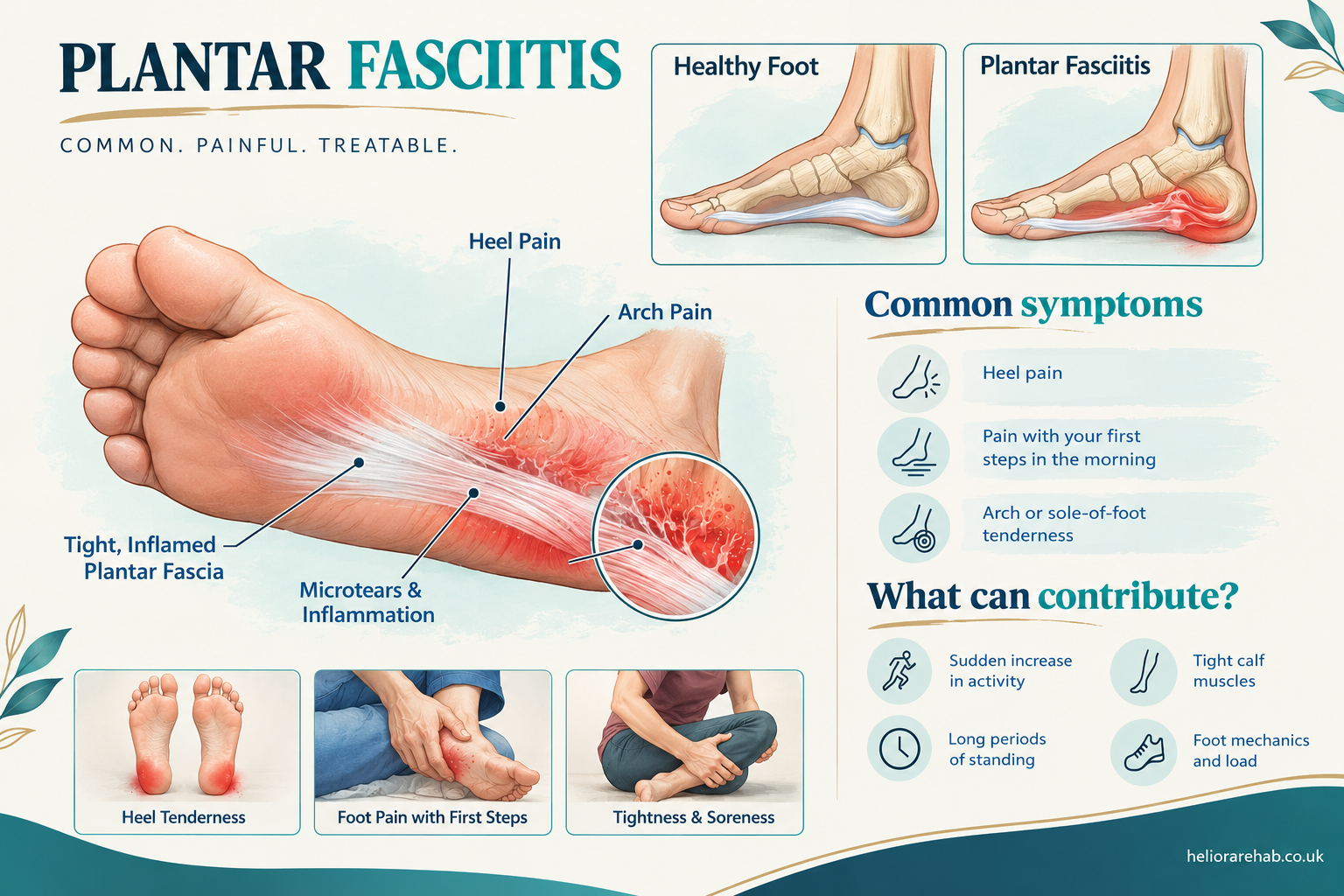
Heel pain with first steps after rest, walking or prolonged standing can occur with plantar fasciitis.
The pain may ease once you start moving but return after prolonged activity.
This pattern is common with plantar fasciitis, but it does not confirm the diagnosis on its own.
What Causes Plantar Fasciitis?
There is not always one obvious cause.
Plantar fasciitis causes can involve the amount of load going through your foot and how well your body is currently able to cope with it.
Symptoms may develop after:
- A sudden increase in walking or running
- Starting a new exercise programme
- Spending more time standing
- Returning to activity after a break
- Repeated impact from sport
- Changes in footwear or activity
- Changes in calf, ankle or foot strength and movement
You do not necessarily need to stop all activity. Often, the aim is to reduce activities that aggravate your symptoms while gradually building your foot's tolerance to load.
How Long Does Plantar Fasciitis Last?
One of the most common questions people ask is, “How long does plantar fasciitis last?”
There is no exact timeframe.
Some people improve relatively quickly, while others experience symptoms for several months.
Recovery can depend on how long you have had the problem, how much it is being aggravated and how well your foot is adapting to the demands placed on it.
If your heel pain is persistent, getting worse or stopping you from doing normal activities, an assessment can help identify what may be contributing to it.
What Can Help Plantar Fasciitis?
Treatment usually focuses on reducing aggravating factors and gradually improving your foot's ability to tolerate everyday and sporting activities.
Your plantar fasciitis treatment may include:
- Temporarily modifying activities that increase pain
- Gradually increasing walking or running
- Calf and foot exercises
- Stretching and mobility exercises
- Appropriate pain relief
- Reviewing footwear and activity levels
- Supportive measures where appropriate
NICE guidance recognises conservative treatment approaches such as pain relief, stretching and exercise, physiotherapy, and supportive devices where appropriate.
You do not necessarily need complete rest. The aim is usually to find a manageable level of activity and gradually build from there.
What about plantar fasciitis exercises?
Plantar fasciitis exercises can form an important part of rehabilitation.
These may include exercises for the calf, foot and lower limb, depending on your symptoms and physical assessment.
There is no single exercise that is right for everyone. The programme should be progressed according to how your foot responds.
Can Physiotherapy Help?
Yes. Plantar fasciitis physiotherapy can help you understand why your heel is painful and develop a rehabilitation plan around your individual needs.
Your physiotherapist may assess:
- Foot and ankle movement
- Calf strength and flexibility
- Foot strength
- Walking or running
- Recent changes in activity
- Your footwear and exercise habits
- How your symptoms respond to different loads
Your treatment may include:
- Strengthening exercises
- Mobility work
- A tailored home exercise programme
- Activity modification
- Advice about gradually returning to walking, running or sport
- Education about managing your symptoms
- Hands-on treatment where appropriate
The aim is not simply to reduce pain temporarily. It is to help your foot gradually become more capable of handling the activities you want to return to.
Personalised Physiotherapy in Aylesbury
Heliora Rehab provides personalised physiotherapy, rehabilitation, acupuncture and flexible appointment options, including clinic appointments, home visits and online consultations.
Book a physiotherapy appointmentWhen Should You Get Your Heel Pain Checked?
You may benefit from an assessment if:
- Your heel pain has continued for several weeks
- Walking is becoming difficult
- You are avoiding exercise because of the pain
- Symptoms keep returning
- Your pain started after a change in activity
- You are unsure what is causing your heel pain
If your pain started after a significant injury and you cannot walk normally, seek appropriate medical advice.
Persistent heel pain should not automatically be assumed to be plantar fasciitis. An assessment can help rule out other possible causes.
Key Takeaways
- Plantar fasciitis is a common cause of pain under or around the heel.
- Typical symptoms include sharp pain with first steps in the morning or after rest.
- Symptoms can be linked to changes in walking, running, standing, footwear, strength or activity levels.
- Recovery time varies and symptoms can last several months for some people.
- Management often includes modifying aggravating activity, building strength and mobility, and gradually increasing activity tolerance.
- Persistent, severe or unusual heel pain should be assessed to confirm the cause and guide treatment.
Frequently Asked Questions
How can I relieve plantar fasciitis?
Reducing activities that aggravate your symptoms, maintaining appropriate movement and gradually building your activity can help. Comfortable footwear, appropriate exercises and pain relief may also form part of your management plan.
What are the best plantar fasciitis exercises?
There is no single exercise that is best for everyone. Your programme may include calf, foot and lower-limb strengthening, stretching or mobility exercises depending on your symptoms and assessment.
Why does my heel hurt when I take my first steps in the morning?
Pain with the first few steps after getting out of bed or after resting is a common feature of plantar fasciitis. However, other conditions can cause similar symptoms, particularly if your pain is persistent or unusual.
Can plantar fasciitis go away on its own?
It can improve over time, although recovery may take several months for some people. If symptoms are persistent or interfering with your normal activities, getting appropriate advice can help.
Should I stop running if I have plantar fasciitis?
Not necessarily. You may need to temporarily reduce your running distance, frequency or intensity rather than stopping completely. The appropriate approach depends on your symptoms and how your heel responds to activity.
Can physiotherapy help plantar fasciitis?
Yes. Physiotherapy can help identify factors contributing to your heel pain and provide a personalised programme to improve strength, movement and tolerance to activity.
Get Back on Your Feet
Heel pain can gradually change your routine.
You may walk less, stop running or avoid the activities you enjoy because you are worried about how your foot will feel afterwards.
With the right advice, you can work towards gradually increasing what your foot can tolerate.
At Heliora Rehab, we look beyond the painful area and assess how your foot, ankle, strength, movement and activity levels may be contributing to your symptoms.
Looking for Plantar Fasciitis Physiotherapy in Aylesbury? If persistent heel pain is affecting your everyday life, an assessment can help you understand what may be causing it and what your next steps could be.
Book an Appointment