

Frozen Shoulder: Symptoms, Causes & Treatment
Learn about frozen shoulder symptoms, causes and treatment, including how long frozen shoulder can last and how physiotherapy can help.
Frozen shoulder can make everyday movements — such as dressing, reaching and sleeping on your side — increasingly difficult. Understanding the condition and knowing what may help can make recovery more manageable.
You may first notice a frozen shoulder when everyday movements become difficult.
Getting dressed takes longer. Reaching into a cupboard becomes uncomfortable. Putting your arm behind your back may feel almost impossible, and sleeping on the affected shoulder can be painful.
Over time, your shoulder may become increasingly painful and stiff.
If this sounds familiar, you may be wondering whether you have a frozen shoulder, also known as adhesive capsulitis.
Frozen shoulder can take time to recover, but the right treatment can help manage pain, maintain movement and support your return to normal activities.
What Is Frozen Shoulder?
Frozen shoulder, medically known as adhesive capsulitis, causes pain and significant stiffness around the shoulder joint.
The capsule surrounding the shoulder becomes inflamed and tightens, gradually restricting how much you can move your arm.
It is more than simply having a stiff shoulder after sleeping awkwardly or doing too much exercise.
With frozen shoulder, movement usually becomes progressively restricted. Everyday activities such as the following can become surprisingly difficult:
- Putting on a coat
- Washing or brushing your hair
- Reaching overhead
- Reaching behind your back
- Getting dressed
- Sleeping comfortably
An assessment is important because other shoulder problems can cause similar symptoms.
What Are the Symptoms?
Frozen shoulder symptoms usually develop gradually.
You may experience:
- Frozen shoulder pain, often worse at night
- Increasing stiffness
- Difficulty raising your arm
- Difficulty reaching behind your back
- Reduced shoulder mobility
- Difficulty dressing or washing
- Problems sleeping
- Difficulty with work, exercise or everyday activities
Pain is often more noticeable in the early stages. As the condition progresses, stiffness and loss of movement may become the main problem.
A key feature is that both active and passive shoulder movement can become restricted.
What Causes Frozen Shoulder?
Sometimes there is no obvious cause. This is often called primary or idiopathic frozen shoulder.
It can also develop after a shoulder injury, surgery or a period when the shoulder has not been moving normally. This is known as secondary frozen shoulder.
Certain health conditions, particularly diabetes, are also associated with a higher risk of developing frozen shoulder.
However, shoulder pain and stiffness do not automatically mean you have frozen shoulder. An assessment can help distinguish it from other conditions such as rotator cuff problems or arthritis.
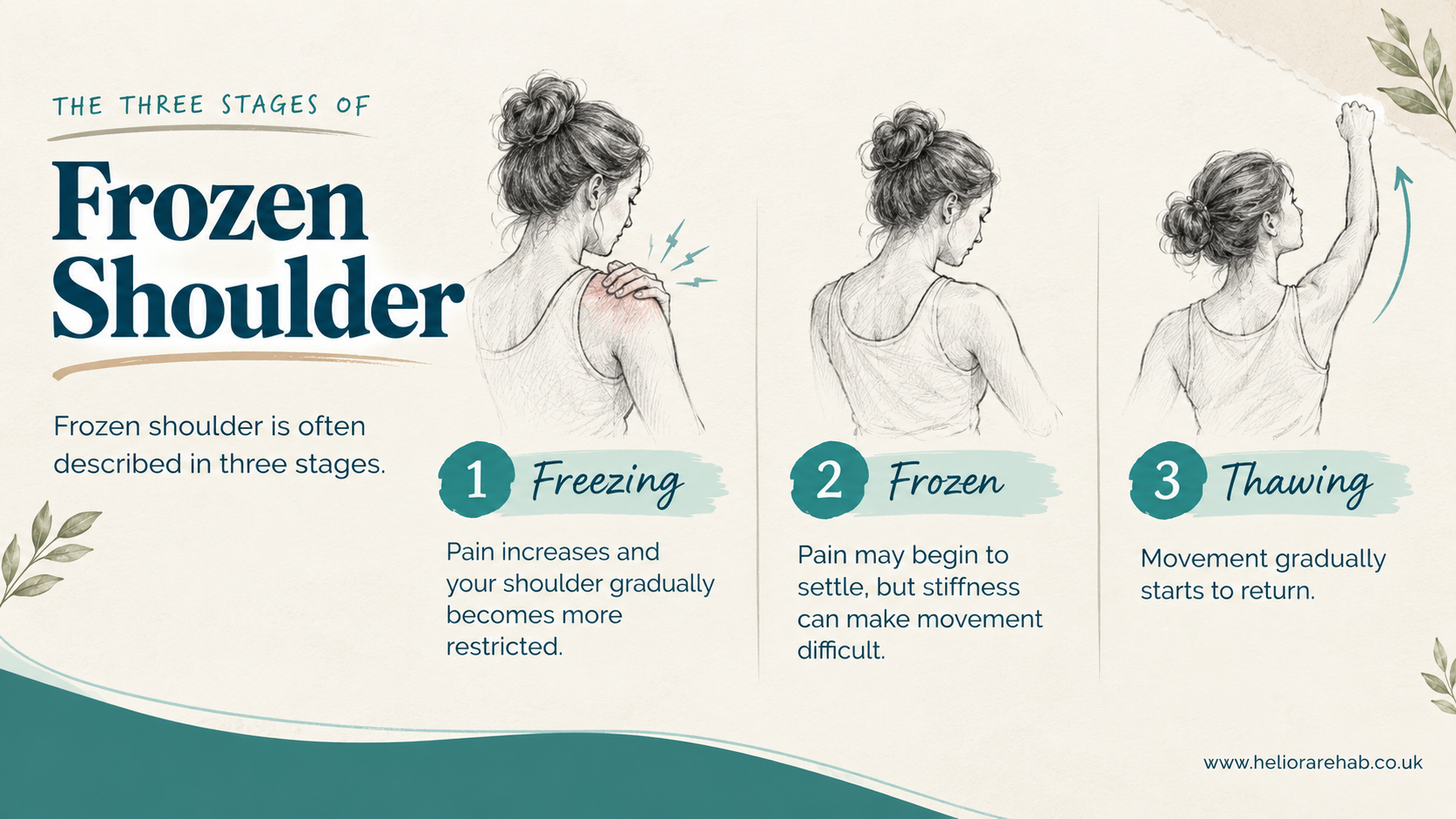
Frozen shoulder is often described as progressing through freezing, frozen and thawing stages.
The Three Stages of Frozen Shoulder
Frozen shoulder is commonly described in three stages:
1. Freezing
Pain gradually increases and shoulder movement starts to become restricted. Night pain can be particularly troublesome.
2. Frozen
Pain may begin to settle, but stiffness can become more noticeable. Everyday movements may remain difficult.
3. Thawing
Shoulder movement gradually starts to return.
Not everyone experiences these stages in exactly the same way, and the duration can vary.
How Long Does Frozen Shoulder Last?
One of the most common questions is: how long does frozen shoulder last?
Unfortunately, there is no exact answer.
Frozen shoulder can take many months to improve and, for some people, recovery can take considerably longer. The NHS notes that it can sometimes take months or even years to fully settle.
The good news is that most people eventually improve.
Treatment is therefore usually focused on managing pain, maintaining useful movement and gradually restoring shoulder function while the condition recovers.
What Can Help a Frozen Shoulder?
UK guidance supports a phased, non-surgical approach to frozen shoulder.
Depending on your symptoms, treatment may include:
- Appropriate pain relief
- Gentle movement and home exercises
- Corticosteroid injection where appropriate
- Structured physiotherapy
- Gradual restoration of movement and strength
Pain Relief
Managing pain can be particularly important during the early, more painful stage.
Your GP, pharmacist or another healthcare professional can advise you about suitable pain relief based on your health and medication history.
Keeping the shoulder gently moving is generally preferable to completely immobilising it.
Corticosteroid Injections
A corticosteroid injection into the shoulder joint may be considered, particularly when pain is significantly limiting movement and rehabilitation.
Reducing pain can make it easier to move the shoulder and participate in rehabilitation.
Whether an injection is appropriate depends on your individual circumstances and should be discussed with an appropriately trained healthcare professional.
Exercise
Exercise can help maintain and gradually improve shoulder movement.
However, more exercise is not necessarily better.
Forcing a very painful shoulder can sometimes make symptoms more difficult to manage. Your exercises should be appropriate for your pain levels, movement and stage of recovery.
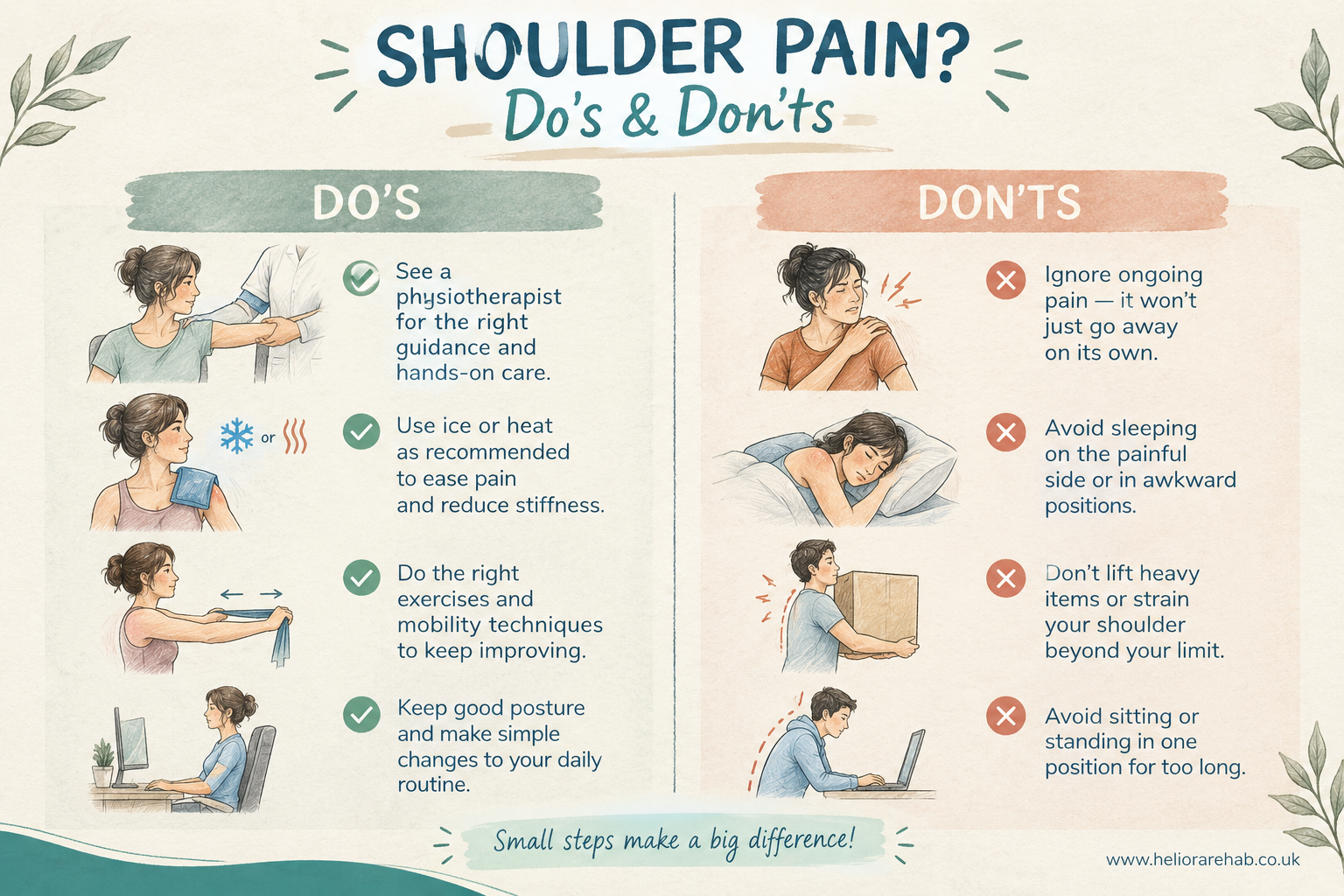
Physiotherapy can help manage frozen shoulder pain, maintain movement and support gradual recovery.
Can Physiotherapy Help Frozen Shoulder?
Yes. Physiotherapy for frozen shoulder can help manage pain, maintain movement and gradually restore shoulder function.
Your physiotherapist may assess:
- Your shoulder movement
- Which directions are restricted
- Your pain and irritability
- Your strength and function
- How symptoms affect sleep and everyday activities
- Whether another condition could be causing your symptoms
Your treatment may include:
- Mobility exercises
- A tailored home exercise programme
- Stretching where appropriate
- Strengthening as movement improves
- Advice about modifying activities
- Pain-management strategies
- Manual therapy where appropriate
- A gradual return to normal activities
The aim is not to force the shoulder to move as quickly as possible. Instead, treatment should progress according to how your shoulder responds.
Personalised Physiotherapy in Aylesbury
Heliora Rehab provides personalised physiotherapy, rehabilitation, acupuncture and flexible appointment options, including clinic appointments, home visits and online consultations.
Book a physiotherapy appointmentWhat Does UK Guidance Say?
The British Elbow and Shoulder Society (BESS), together with the British Orthopaedic Association (BOA), supports a non-surgical pathway involving appropriate pain relief, exercise, physiotherapy and consideration of intra-articular corticosteroid injection.
UK FROST Trial
The UK FROST trial, a large UK study of 503 people with frozen shoulder, compared different treatment approaches.
It found that early structured physiotherapy combined with a steroid injection was a reasonable non-surgical treatment option. The study did not find a clinically important overall advantage of the surgical treatments at 12 months.
This does not mean surgery is never appropriate. Specialist referral may be considered when symptoms remain severe or do not improve with appropriate non-surgical treatment.
When Should You See a Physiotherapist?
Consider getting your shoulder assessed if pain or stiffness is affecting:
- Sleep
- Getting dressed
- Washing or grooming
- Work
- Driving
- Exercise or sport
- Everyday activities
It is also worth seeking advice if your shoulder movement is getting progressively worse or you are unsure what is causing your symptoms.
If your symptoms started after a significant injury, or you suddenly cannot move your arm, seek medical advice rather than assuming it is frozen shoulder.
Key Takeaways
- Frozen shoulder causes progressive pain and stiffness around the shoulder joint.
- Symptoms often develop gradually and can make dressing, reaching, sleeping and everyday activities difficult.
- Frozen shoulder can occur without an obvious cause or after injury, surgery or a period of reduced shoulder movement.
- Diabetes is associated with an increased risk of developing frozen shoulder.
- Recovery can take many months and, for some people, longer.
- Management commonly includes pain relief, appropriate movement and exercise, physiotherapy and consideration of corticosteroid injection where appropriate.
- If symptoms are severe, worsening or do not improve with appropriate care, further medical or specialist assessment may be needed.
Frequently Asked Questions
What is usually the first sign of frozen shoulder?
Pain and stiffness are common early symptoms. You may gradually notice that reaching overhead or behind your back is becoming more difficult. Night pain can also occur.
What exercises are good for frozen shoulder?
The best frozen shoulder exercises depend on your pain, available movement and stage of recovery. Gentle mobility exercises and a structured home programme are commonly used. A physiotherapist can help you determine what is appropriate.
Can frozen shoulder get better without treatment?
Yes. Frozen shoulder can improve naturally over time, although recovery may be slow. Treatment can help manage symptoms and support movement while the shoulder recovers.
Can physiotherapy help frozen shoulder?
Yes. Physiotherapy can help manage pain, maintain movement and gradually restore shoulder function. Your programme should be tailored to your symptoms rather than based on a one-size-fits-all exercise plan.
Is a steroid injection used for frozen shoulder?
A corticosteroid injection may be considered, particularly when pain is significantly affecting movement. It is one part of a wider treatment approach and is not suitable for everyone.
When is surgery considered?
Surgery is generally not the first treatment for frozen shoulder. If symptoms remain severe or fail to improve despite appropriate non-surgical treatment, you may be referred to a specialist shoulder service for further assessment.
Your Shoulder Shouldn't Have to Dictate Your Day
Frozen shoulder can make simple activities surprisingly difficult.
Getting dressed, reaching overhead, washing your hair or sleeping comfortably can all become a challenge when your shoulder is painful and stiff.
Although recovery can take time, most people eventually improve.
The most appropriate frozen shoulder treatment depends on your symptoms and stage of recovery. This may include pain relief, appropriate movement and exercise, physiotherapy and, where clinically appropriate, a corticosteroid injection.
Looking for Frozen Shoulder Physiotherapy in Aylesbury? At Heliora Rehab, we assess your shoulder to understand what may be causing your pain and stiffness, then create a personalised rehabilitation plan based on your symptoms, movement and goals.
If frozen shoulder is affecting your sleep, work or everyday activities, an assessment can help you understand your condition and the most appropriate next steps.
Book an Appointment