

Plantar Fasciitis Treatment: 11 Ways to Relieve Heel Pain
Discover 11 plantar fasciitis treatments, from home remedies and stretching to physiotherapy and specialist options, to help manage heel pain.
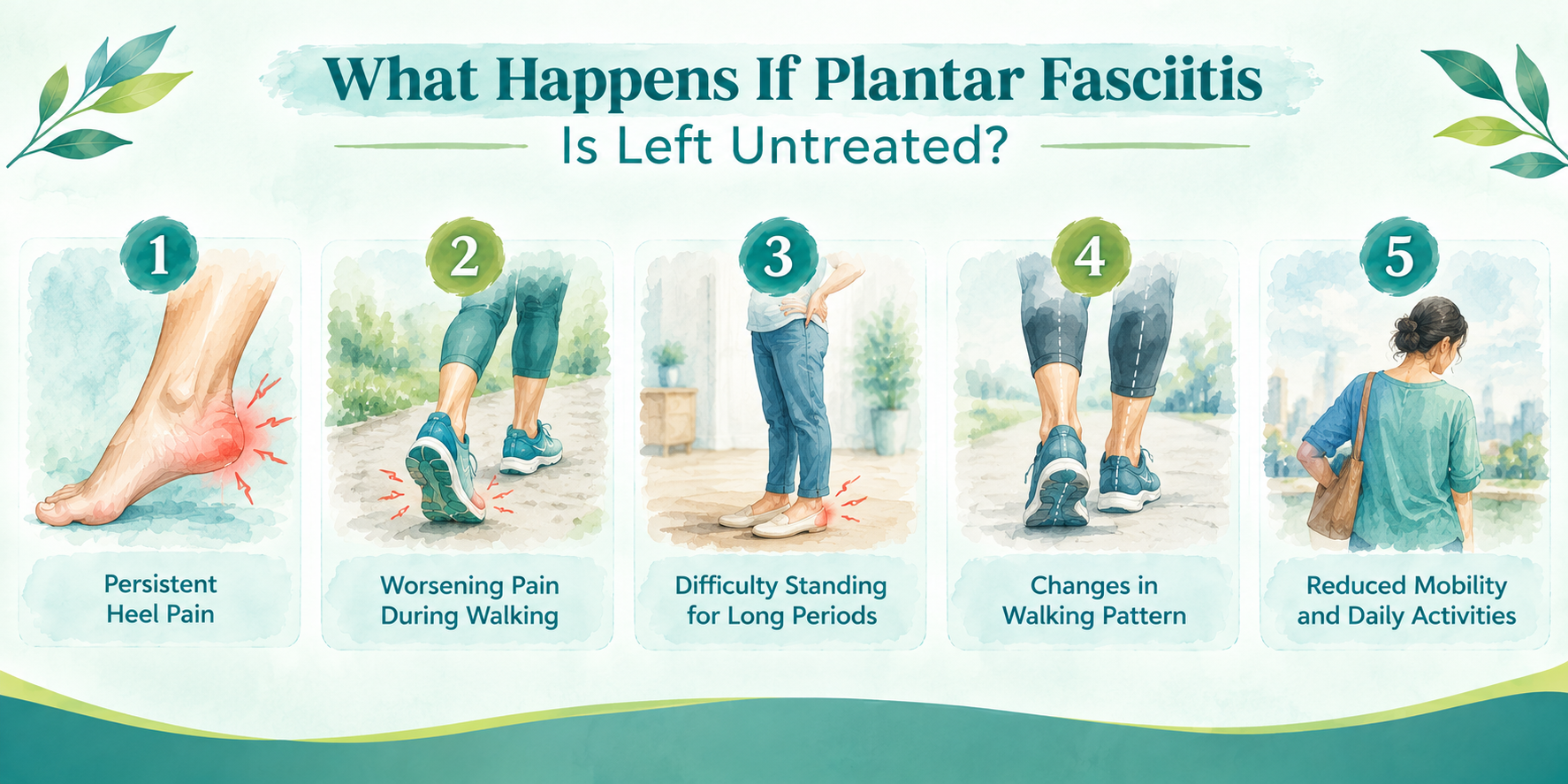
Does your heel hurt when you take your first steps in the morning? Or does it start aching after a long day at work, a walk, or a run?
These can be common signs of plantar fasciitis, a condition that affects the thick band of tissue running along the bottom of your foot.
The pain can make everyday activities uncomfortable, especially if you spend a lot of time standing or walking. So, what is the best plantar fasciitis treatment, and can you manage it at home?
The right approach depends on your symptoms, activity levels, and how long the pain has been there.
Here are 11 treatment options that may help you manage heel pain and get back to your usual routine.
11 Plantar Fasciitis Treatments That May Help
1 Modify Activities That Trigger the Pain
You do not necessarily need to stop moving altogether. However, temporarily reducing activities that aggravate your heel, such as running, long walks, or prolonged standing, can help.
Try shorter walks or lower-impact activities while your symptoms settle. Gradually return to your usual routine rather than doing too much as soon as the pain improves.
2 Apply Ice to the Painful Area
Ice may help ease discomfort after a busy day on your feet.
Wrap an ice pack or a bag of frozen peas in a towel and apply it to the painful area for up to 15–20 minutes. Never put ice directly on your skin.
This may provide temporary relief, but it does not address every factor contributing to plantar fasciitis.
3 Wear Supportive Footwear
Your choice of footwear can make a difference to how comfortable your feet feel throughout the day.
Look for shoes that fit well, offer cushioning, and support your feet comfortably. Avoid spending long periods barefoot on hard floors or wearing footwear that consistently makes your heel pain worse.
There is no single shoe that works for everyone, so choose something that feels supportive and comfortable for your needs.
4 Consider Heel Pads or Insoles
Heel pads and insoles may improve comfort by cushioning the heel and helping distribute pressure across the foot.
Some people find off-the-shelf options helpful, while others may benefit from individual advice about suitable footwear or orthoses.
Insoles are not a guaranteed fix, though. They generally work best as part of a wider treatment plan rather than as the only solution.
5 Try Gentle Plantar Fascia and Calf Stretches
Tightness in the calf muscles and stiffness around the foot can contribute to discomfort for some people.
Gentle calf stretches and plantar fascia stretches may help improve flexibility and ease stiffness, particularly when taking those first steps in the morning.
Start slowly and avoid forcing a stretch. If an exercise causes significant pain, stop and seek advice about whether it is appropriate for you.
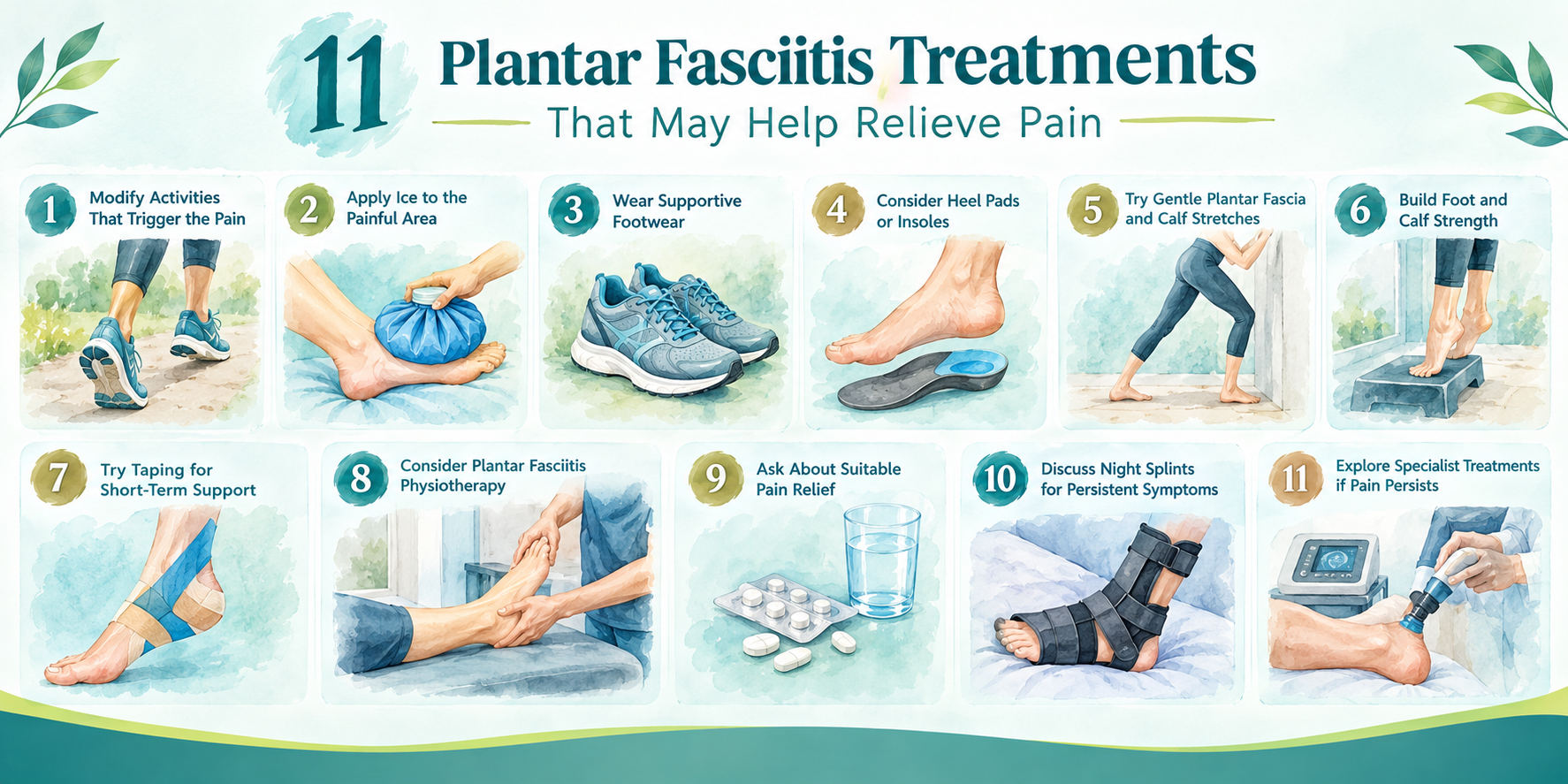
6 Build Foot and Calf Strength
Stretching is only one part of rehabilitation. Progressive strengthening exercises may also help your foot and calf muscles cope better with everyday demands.
A physiotherapist may recommend exercises such as calf raises or other foot-strengthening movements, depending on your symptoms and current ability.
The important part is progression. Starting with exercises that are too difficult or increasing activity too quickly may aggravate your heel.
7 Try Taping for Short-Term Support
Foot taping may provide additional support and help reduce pain during walking or other activities for some people.
It can be particularly useful as a short-term measure while you work on footwear, exercises and activity modification.
Taping needs to be applied correctly, and it is not suitable for everyone. If you have sensitive skin or problems with circulation or sensation, ask a healthcare professional before trying it.
8 Consider Plantar Fasciitis Physiotherapy
If your heel pain keeps returning or is affecting your everyday activities, physiotherapy may help you understand what is contributing to the problem.
A physiotherapist can assess your foot and ankle movement, calf flexibility, strength, walking pattern, and activity levels. They can then develop a treatment plan around your needs.
Plantar fasciitis physiotherapy may include:
- Tailored stretching and strengthening exercises.
- Advice on footwear and activity modification.
- Taping or other short-term measures where appropriate.
- A gradual plan for returning to walking, running or exercise.
The aim is to improve your ability to manage everyday activities, not simply to provide temporary pain relief.
9 Ask About Suitable Pain Relief
If heel pain is making daily activities difficult, a pharmacist or GP can advise whether pain relief may be appropriate for you.
Anti-inflammatory medicines, including ibuprofen, are not suitable for everyone and can cause side effects. Check with a healthcare professional before using them, particularly if you have other medical conditions or take regular medication.
Pain relief may help manage symptoms, but it does not replace a suitable rehabilitation plan.
10 Discuss Night Splints for Persistent Symptoms
Some people experience their worst pain during their first steps in the morning. Night splints are designed to keep the foot in a stretched position while you sleep.
They may be considered when symptoms persist, particularly if morning pain is a major problem. However, they can feel uncomfortable and are not necessary for everyone.
A healthcare professional can help you decide whether a night splint is worth trying.
11 Explore Specialist Treatments if Pain Persists
If symptoms continue despite an appropriate course of conservative treatment, a clinician may discuss additional options.
One option is extracorporeal shockwave therapy (ESWT), which uses sound waves directed at the affected area. It may be considered for persistent plantar fasciitis, although results vary and it is not suitable for everyone.
Other interventions may occasionally be discussed by a specialist, depending on the circumstances. These are not usually the first step, and the potential benefits and risks should be explained before proceeding.
Which Plantar Fasciitis Treatment Should You Try First?
There is no single treatment that works for everyone. Your starting point will depend on the severity of your symptoms, your daily routine, and how long you have been experiencing pain.
| Treatment option | When it may be useful |
|---|---|
| Activity modification and ice | When activities aggravate your heel |
| Supportive shoes and heel pads | When footwear or prolonged standing causes discomfort |
| Stretching and strengthening | As part of a gradual recovery programme |
| Taping or night splints | When additional support may be helpful |
| Physiotherapy | When you need an individual assessment and rehabilitation plan |
| Medication or specialist treatment | When further advice or treatment is needed |
For many people, starting with appropriate self-care and gradually building up activity is a sensible approach. If the pain persists, a tailored assessment can help identify what to try next.
Conclusion
The key to managing plantar fasciitis is finding the right combination of treatments for your symptoms and staying consistent with your recovery plan. If heel pain is affecting your daily routine, professional guidance can help you take the next step towards moving more comfortably.
Frequently Asked Questions
What is the best treatment for plantar fasciitis?
There is no single best treatment for everyone. A combination of activity modification, supportive footwear and suitable stretching and strengthening exercises may help. Physiotherapy can provide a more individualised approach if symptoms persist.
Can I treat plantar fasciitis at home?
Yes, many people begin with home care. This can include reducing aggravating activities, applying ice safely, wearing supportive shoes and trying appropriate exercises. Seek professional advice if symptoms worsen or do not improve.
Is walking good or bad for plantar fasciitis?
Walking may still be possible, but you may need to reduce the distance, pace or time spent on your feet. Avoid repeatedly pushing through significant pain and gradually increase activity as your symptoms allow.
Should I stretch if I have plantar fasciitis?
Gentle plantar fascia and calf stretches may help some people. However, the exercises should suit your symptoms and ability. Stop if they cause significant pain and ask a physiotherapist for guidance if you are unsure.
When should I see a physiotherapist for heel pain?
Consider physiotherapy if your heel pain persists, keeps returning, or interferes with walking, work, or exercise. A physiotherapist can assess your movement and help you plan an appropriate rehabilitation programme.
Heel Pain Affecting Your Daily Routine?
If heel pain persists, keeps returning, or interferes with walking, work or exercise, an individual assessment can help you plan your next steps.
Book an Assessment