

Acupuncture and Physiotherapy: Supporting Pain Management and Rehabilitation
How acupuncture may help manage pain, support movement, and form part of a personalised physiotherapy rehabilitation plan.
Living with pain can affect many aspects of everyday life, from walking, working and exercising to sleeping comfortably and enjoying time with family. When pain persists, it can also affect confidence in movement and make it harder to return to normal activities.
Acupuncture is one treatment option that may help some people manage pain. When used appropriately, it can form part of a wider physiotherapy approach that focuses not only on symptoms, but also on improving movement, physical function and quality of life.
At Heliora Rehab in Aylesbury, Buckinghamshire, our approach is centred on understanding your individual needs and helping you work towards meaningful goals.
Where clinically appropriate, acupuncture may be considered alongside physiotherapy rehabilitation or, in selected cases, as a standalone intervention for pain relief.
In this article, we explain how acupuncture works, what the evidence says, how it may fit into rehabilitation and what you can expect from an appointment.
What Is Acupuncture in Physiotherapy?
Acupuncture involves inserting very fine, sterile, single-use needles into selected points in the body.
In physiotherapy, it is used by appropriately trained practitioners as one possible approach to managing certain types of pain.
Western medical acupuncture uses knowledge of anatomy, physiology and pain mechanisms to inform treatment. The areas selected for needling depend on your assessment, symptoms, medical history and treatment goals.
Acupuncture is not suitable for everyone, and it is not necessary for every musculoskeletal problem. It should be considered alongside other available treatments, taking into account the evidence for your condition, your preferences and any potential risks.
For some people, acupuncture may be used as one component of a rehabilitation programme. For others, it may be considered as a standalone intervention for pain relief when clinically appropriate.
How Does Acupuncture Work?
Pain is a complex experience involving the nervous system, the body’s tissues and a range of biological, psychological and social factors.
Acupuncture stimulates sensory nerves, which may influence how the nervous system processes pain signals. Researchers have investigated possible effects on pain-modulating pathways in the spinal cord and brain, as well as the body’s own pain-modulating chemicals.
However, the precise mechanisms are not fully understood, and a proposed mechanism does not necessarily mean that a treatment will be effective for every condition.
Some people report reduced pain or muscle sensitivity after acupuncture, while others notice little or no improvement. The response varies between individuals and may depend on the condition being treated.
The aim of acupuncture is not to cure every cause of pain or repair damaged tissue directly.
Where it is appropriate, it may offer an additional way of managing symptoms as part of a broader treatment plan.
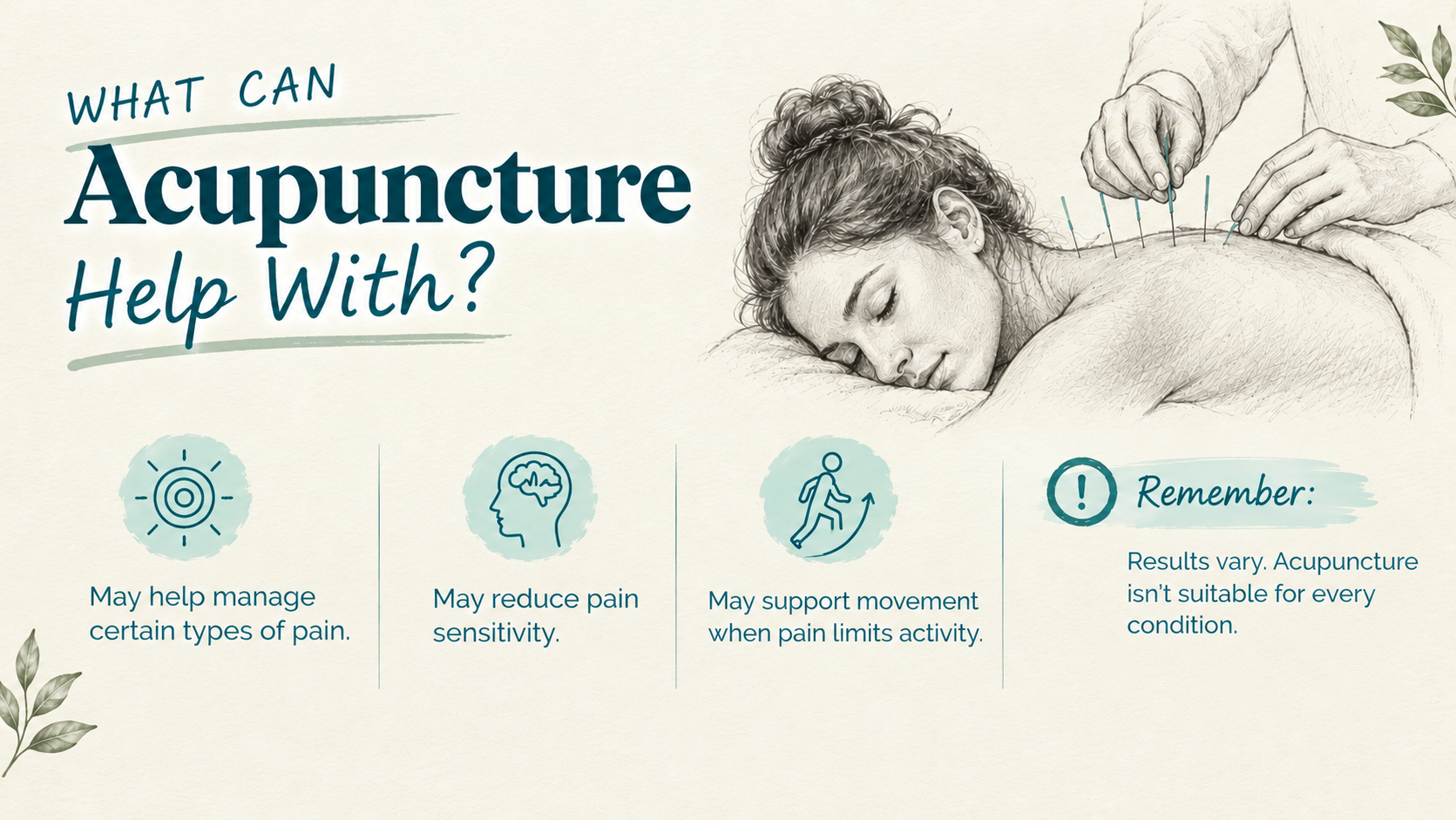
How Can Acupuncture Support Physiotherapy Rehabilitation?
Physiotherapy rehabilitation aims to help you improve your movement, strength, physical capacity and ability to manage everyday activities.
Depending on your needs, your rehabilitation may include:
- Tailored exercises to improve strength, mobility and endurance.
- Gradual progression towards activities that are important to you.
- Advice on managing symptoms and adjusting activity levels.
- Education to help you understand your condition and pain.
- Strategies to build movement confidence and support long-term self-management.
Pain can sometimes make it difficult to begin or progress these activities. If acupuncture helps an individual manage their symptoms, it may make movement or exercise feel more manageable.
For example, someone experiencing persistent muscle pain may find it easier to participate in a graded exercise programme if their symptoms become less intrusive.
Another person may find that reducing discomfort helps them work towards a particular functional goal.
These outcomes are possible, not guaranteed. Acupuncture does not automatically improve strength, restore function or lead to lasting pain relief.
At Heliora Rehab, the focus is on how treatment supports your overall progress. If acupuncture is appropriate, it can be combined with rehabilitation strategies designed around your goals rather than used in isolation from the wider picture.
Acupuncture and Chronic or Persistent Pain
Pain is generally described as chronic or persistent when it continues or recurs for more than three months. Persistent pain can be complicated.
It may continue even after an injury has healed, or occur alongside an ongoing health condition. It can affect sleep, mood, activity levels, relationships and confidence in movement.
The experience of pain is individual. A person may need support with physical activity, understanding their symptoms, managing flare-ups and gradually returning to activities they have reduced or avoided.
For some people, acupuncture may be one option to consider as part of a wider pain-management plan.
Other important elements may include:
- Gradually increasing physical activity within manageable limits.
- Building strength and movement tolerance.
- Understanding pain and the factors that can influence it.
- Developing strategies for managing flare-ups.
- Improving confidence with everyday tasks.
- Establishing sustainable self-management habits.
The aim is not simply to reduce pain for a short time during treatment. It is to help you work towards goals that matter to you, whether that means walking further, returning to exercise, managing work more comfortably or taking part in daily activities with greater confidence.
What Does NICE Say About Acupuncture for Chronic Pain?
The National Institute for Health and Care Excellence (NICE) makes different recommendations depending on the type of pain and the condition being treated.
For adults aged 16 and over with chronic primary pain, NICE advises considering a single course of acupuncture or dry needling, subject to specific conditions concerning the setting, practitioner training and total treatment time.
Chronic primary pain is a particular category of pain; it does not mean every type of long-term pain.
NICE also recommends supervised exercise programmes for managing chronic primary pain, highlighting the importance of considering the wider management of pain rather than relying on one intervention alone.
Recommendations Depend on the Condition
For chronic primary pain, NICE advises considering a single course of acupuncture or dry needling under specified conditions.
For other conditions, the recommendations differ. NICE advises against offering acupuncture for low back pain with or without sciatica, and against acupuncture or dry needling to manage osteoarthritis.
Read the relevant recommendations for chronic pain, low back pain and sciatica, and osteoarthritis.
This is why a personalised assessment and an honest discussion of the evidence are important. Acupuncture should not be presented as an effective treatment for every type of chronic pain.
You can read the relevant guidance in the NICE recommendations for chronic pain.
Is Acupuncture Effective for Back, Neck and Muscle Pain?
There is no single answer that applies to every condition.
Research has explored acupuncture for various musculoskeletal and persistent pain conditions, but the strength of evidence and the recommendations for treatment vary.
Results for one condition should not automatically be applied to another.
For example, NICE advises against acupuncture for low back pain with or without sciatica and against acupuncture or dry needling for osteoarthritis.
This differs from its recommendation to consider a limited course for chronic primary pain under specified conditions.
If you are considering acupuncture, your physiotherapist should explain the evidence relevant to your presentation, discuss other available options and help you decide whether treatment is appropriate.
The decision should be based on your individual circumstances, rather than a promise that acupuncture will relieve a particular type of pain.
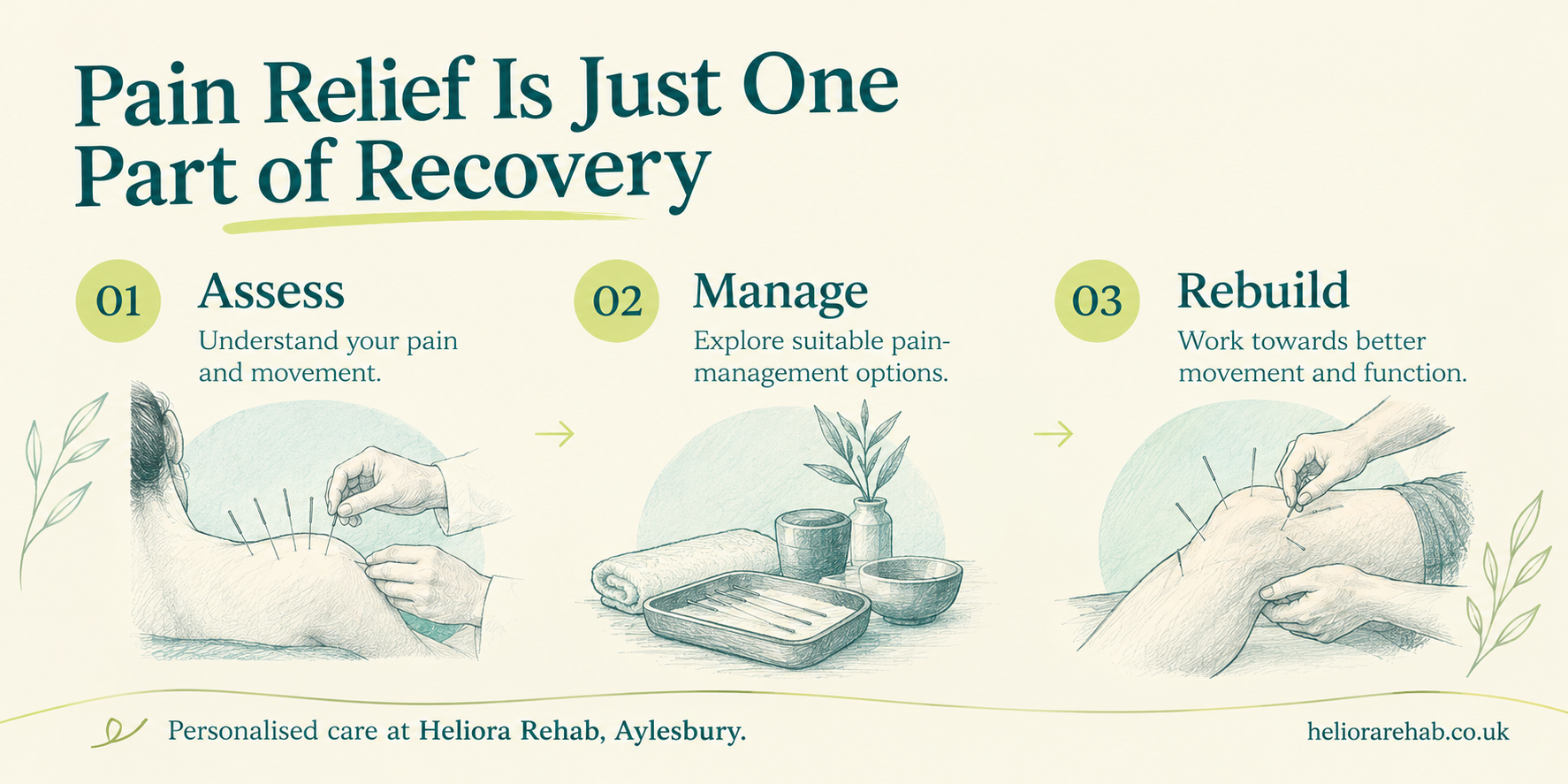
What Happens During Your First Acupuncture Appointment at Heliora Rehab?
Your safety, comfort and understanding of the treatment are important. Your initial appointment will begin with an assessment to help establish whether acupuncture is appropriate for you.
Initial Physiotherapy Assessment
Your physiotherapist will discuss your symptoms, medical history, medication, previous treatments and personal goals.
Depending on your presentation, the assessment may also include examining your movement and physical function. This helps identify possible contributing factors and determine which treatment options are suitable.
Safety Screening and Risk Assessment
A risk assessment will be completed during your initial assessment to identify any factors that could affect the suitability or safety of acupuncture.
You will be asked relevant questions about your health, allergies, medication and medical history.
It is particularly important to disclose blood-thinning medication, bleeding disorders, pregnancy, reduced sensation, current infection or any other relevant health concerns.
Your physiotherapist will use this information to determine whether acupuncture is appropriate, whether additional precautions are needed or whether an alternative treatment would be safer.
Explanation and Informed Consent
Before any needling takes place, your physiotherapist will explain the proposed treatment, its intended purpose, potential benefits, limitations and possible side effects.
You will have time to ask questions and decide whether you wish to proceed. Consent is ongoing, and you can decline treatment or ask for it to stop at any time.
A Possible Brief Trial of Acupuncture
Where clinically appropriate, and with your agreement, your initial assessment may include a brief trial of acupuncture lasting approximately 10–15 minutes.
This allows you to experience the treatment and discuss your response with your physiotherapist. It is not suitable in every case, will not be offered automatically, and does not guarantee that further acupuncture will be beneficial.
Review and Treatment Planning
Following treatment, your physiotherapist will discuss how you feel and whether acupuncture is worth considering as part of your ongoing care.
Depending on your needs, the plan may include exercise, movement training, education, activity modification and self-management strategies.
Progress will be reviewed against agreed goals, and treatment can be adjusted if it is not helping.
Who Provides Acupuncture at Heliora Rehab?
At Heliora Rehab, acupuncture is provided by an experienced, HCPC-registered physiotherapist with accreditation from the Acupuncture Association of Chartered Physiotherapists (AACP) and appropriate professional insurance for acupuncture treatment.
Appropriate training, anatomical knowledge, safe needling practice, risk assessment and informed consent are essential aspects of responsible acupuncture care.
Your treatment will be guided by your individual assessment and goals. If acupuncture is not appropriate for your condition, alternative physiotherapy approaches can be discussed.
Is Acupuncture Safe?
Acupuncture is generally associated with a low risk of side effects when carried out by a suitably trained practitioner following appropriate safety procedures. However, it is not completely risk-free.
Possible side effects include:
- Temporary soreness or discomfort around the needle site.
- Minor bleeding or bruising.
- Light-headedness or fainting.
- A temporary increase in symptoms.
Serious complications are rare but possible. Appropriate training, knowledge of anatomy, hygiene, safe needling technique and careful assessment help reduce risk.
Before Treatment
Always tell your physiotherapist about relevant health conditions and medication before treatment. If you are unsure whether acupuncture is suitable for you, discuss your concerns before proceeding.
Frequently Asked Questions About Acupuncture
Does acupuncture hurt?
Acupuncture needles are very fine. You may feel a brief prick, mild aching, tingling or pressure. Experiences vary, so tell your physiotherapist if you feel uncomfortable or unwell.
How many acupuncture sessions will I need?
The number of acupuncture sessions depends on your condition, goals and response to treatment. Your physiotherapist will recommend a suitable plan and review your progress. More sessions are not always better.
Will I feel better after one acupuncture session?
Some people notice improvement after one session, while others experience little or no change. Your response, treatment goals, and the potential benefits and limitations of acupuncture will help guide decisions about further treatment.
Can acupuncture be used on its own?
Acupuncture may be used alone for pain relief in selected cases, but it is often combined with physiotherapy and rehabilitation. Suitability depends on your condition, clinical evidence and treatment goals.
Can I have acupuncture while taking blood-thinning medication?
Blood-thinning medication may increase the risk of bleeding or bruising. Tell your physiotherapist about your medication so they can assess whether acupuncture is suitable. Never stop prescribed medication without advice from the clinician responsible for it.
Is acupuncture suitable for everyone?
No. Your symptoms, medical history, medication and individual circumstances must be considered. If acupuncture is unsuitable, your physiotherapist can discuss alternative pain management options.
Considering Acupuncture at Heliora Rehab in Aylesbury?
If pain affects your movement or daily activities, a physiotherapy assessment can help you explore suitable treatment options.
At Heliora Rehab in Aylesbury, Buckinghamshire, acupuncture may be recommended for pain relief alongside physiotherapy and rehabilitation, or as a standalone intervention in selected cases.
Contact Heliora Rehab to discuss your needs and arrange an assessment.
Acupuncture is not suitable for every condition and does not guarantee pain relief. Treatment recommendations depend on individual assessment, clinical judgement and relevant guidance.
Book an Assessment