

World Arthritis Day 2026: How Physiotherapy Can Help With Arthritis
Struggling with arthritis pain or joint stiffness? Discover how physiotherapy, tailored exercises and everyday changes can help you stay active.
Arthritis can make everyday activities — such as walking, climbing stairs, dressing and getting moving in the morning — increasingly difficult. Understanding your condition and knowing what may help can make managing symptoms more manageable.
Have you ever avoided a walk, struggled to climb the stairs, or found it difficult to get moving in the morning because of joint pain or stiffness?
For many people living with arthritis, these everyday challenges can become frustratingly familiar.
World Arthritis Day, observed on 12 October each year, raises awareness of arthritis and the support available to people living with joint conditions. It is an opportunity to understand how the right treatment, physical activity and everyday adjustments can help you maintain your mobility and independence.
The good news is that arthritis does not have to mean giving up the activities you enjoy.
With the right approach, physiotherapy for arthritis can help you improve movement, strengthen the muscles supporting your joints and manage symptoms more confidently.
Whether you experience knee pain, hip stiffness or discomfort in your hands, a personalised physiotherapy programme can help you find ways to stay active.

What Causes Arthritis Pain and Stiffness?
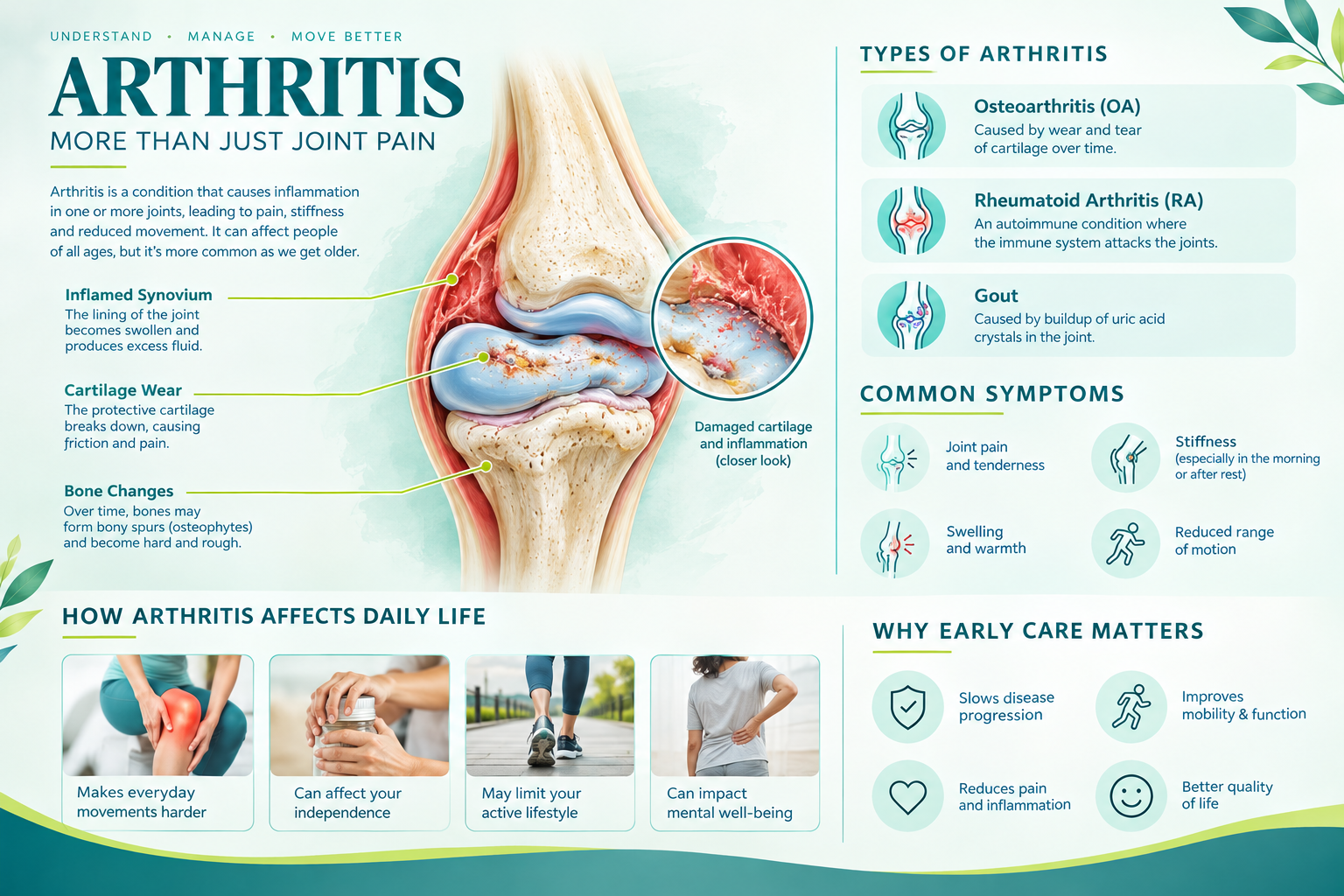
Arthritis is a general term for conditions that affect the joints. Different types of arthritis can cause pain, swelling, stiffness and reduced movement, although their underlying causes vary.
Two common types are osteoarthritis and rheumatoid arthritis.
Osteoarthritis occurs when changes develop in the whole joint, including the cartilage and surrounding bone and tissues. It commonly affects the knees, hips and hands, and can make walking, climbing stairs or gripping objects uncomfortable.
Rheumatoid arthritis is an autoimmune condition in which the immune system mistakenly attacks the lining of the joints. This can cause inflammation, swelling, pain, fatigue and prolonged morning stiffness.
Although these conditions differ, both can affect your ability to carry out everyday activities.
When movement becomes uncomfortable, it is natural to want to rest. However, avoiding physical activity altogether can lead to reduced muscle strength, lower fitness and greater difficulty with everyday tasks.
Understanding your condition and learning how to move safely are important steps towards managing arthritis pain.
Important
If you have persistent joint pain, swelling or stiffness, speak to your GP or another appropriate healthcare professional to establish the cause and discuss suitable treatment.
How Can Physiotherapy Help With Arthritis?
Physiotherapy for arthritis focuses on improving physical function, maintaining joint movement, strengthening supporting muscles and helping you manage your symptoms.
For osteoarthritis, exercise is a key part of treatment. The National Institute for Health and Care Excellence (NICE), in its guideline Osteoarthritis in over 16s: diagnosis and management (NG226), recommends tailored therapeutic exercise for everyone with osteoarthritis.
This can include exercises to strengthen the muscles around affected joints and activities that improve general aerobic fitness. NICE also advises that exercise may initially cause some discomfort, but regular, consistent exercise can help reduce pain and improve physical function and quality of life over time.
You can read the recommendations in the NICE osteoarthritis guideline.
What UK Guidance Recommends
For people with osteoarthritis, NICE recommends tailored therapeutic exercise as a core part of management. This may include strengthening exercises for muscles around affected joints and activities that improve aerobic fitness.
Exercise may cause some temporary discomfort when starting a new programme, but regular and consistent activity can help reduce pain and improve physical function over time.
For hip or knee osteoarthritis, manual therapy should only be considered alongside therapeutic exercise, rather than as a treatment on its own.
Your physiotherapist will consider your symptoms, mobility, medical history, activity levels and personal goals before recommending an appropriate treatment plan.
Here are some of the key benefits of physiotherapy for arthritis.
Improve Movement and Flexibility
Joint pain and stiffness can make simple activities, such as getting out of bed, standing up from a chair or walking to the shops, feel more difficult.
Gentle mobility exercises can help maintain your available range of movement and make everyday tasks more manageable. Your physiotherapist may recommend movements suited to the joints affected and your current level of ability.
For example, someone with knee osteoarthritis may benefit from exercises that improve knee movement and make bending and straightening the leg more comfortable.
The aim is not to force a joint through painful movements, but to help you move within a suitable range and build confidence gradually.
Strengthen the Muscles Around Your Joints
The muscles surrounding your joints help support them during everyday activities.
When these muscles become weaker, tasks such as climbing stairs, walking longer distances or getting up from a chair may become more challenging.
A personalised strengthening programme can help improve muscle strength, balance and physical function.
Physiotherapy for osteoarthritis often includes exercises that target the affected joints, alongside activities that improve general fitness.
Depending on your needs, your physiotherapist may recommend exercises using your body weight, resistance bands, light weights or controlled movements performed while seated or standing.
NICE recommends tailoring therapeutic exercise to the individual rather than relying on a single programme for everyone.
Find a Suitable Approach to Arthritis Pain Relief
There is no single treatment that works for everyone with arthritis. However, physiotherapy can form an important part of a broader plan for arthritis pain relief.
Your physiotherapist can help you understand how activity affects your symptoms, adjust your exercise routine, and pace demanding tasks throughout the day.
Your treatment may include:
- Advice on managing joint stiffness and maintaining movement.
- Exercises to improve strength, flexibility and physical function.
- Guidance on gradually increasing your activity levels.
- Strategies for adapting activities that aggravate your symptoms.
- Advice on balancing activity and recovery during symptom flare-ups.
For osteoarthritis affecting the hip or knee, NICE advises that manual therapy should only be considered alongside therapeutic exercise, rather than as a treatment on its own.
Physiotherapy is not a cure for arthritis, but a tailored programme may help you manage symptoms and maintain your ability to carry out everyday activities.
Maintain Independence and Confidence
Arthritis can affect more than your joints. You may find yourself avoiding social activities, worrying about walking longer distances or becoming less confident about managing household tasks.
A physiotherapy programme can help you work towards meaningful personal goals, whether that means walking the dog, returning to gardening, keeping up with family activities or moving around your home more comfortably.
Your physiotherapist can also suggest practical ways to modify activities and build your confidence as your strength and mobility improve.
Progress will vary depending on your condition, symptoms and general health, but even small improvements in everyday function can be valuable.
What Are the Best Exercises for Arthritis?
If you have arthritis, you might worry that exercise will make your joints worse.
However, appropriate, regular physical activity is one of the main recommended approaches to managing osteoarthritis.
According to NICE, tailored therapeutic exercise can help reduce symptoms and improve or maintain physical function. Versus Arthritis, a UK charity supporting people affected by arthritis, also provides practical advice on staying active and exercising with joint conditions.
The most suitable exercises depend on your type of arthritis, the joints affected, your fitness and how your symptoms respond to activity.
Examples of activities that may be suitable include:
- Walking: A low-impact activity that can help maintain fitness and support everyday mobility.
- Swimming or exercising in water: Water-based exercise may make movement more comfortable for some people.
- Gentle mobility exercises: Controlled movements can help maintain the available range of movement in affected joints.
- Strengthening exercises: Targeted exercises can help strengthen the muscles supporting your joints.
- Balance and functional exercises: Where appropriate, these can help with activities such as standing from a chair and moving around safely.
You do not need to start with a demanding exercise routine. Begin at a manageable level and increase the duration or intensity gradually as your ability allows.
Some temporary discomfort can occur when starting a new exercise programme.
However, severe pain, significant swelling or symptoms that continue to worsen should not be ignored. Reduce or modify the activity and seek professional advice if needed.
If you are unsure which exercises are appropriate, a physiotherapist can help you choose a programme that reflects your needs and abilities.

Simple Ways to Manage Arthritis Pain Every Day
Alongside physiotherapy, small changes to your daily routine may help you manage arthritis pain and stay active.
Keep Moving Throughout the Day
Long periods of sitting can make stiffness more noticeable. Where possible, break up extended periods of sitting with gentle movement or a short walk.
Choose activities that feel manageable and that you can incorporate into your routine consistently.
Pace Your Activities
Try spreading demanding tasks throughout the day instead of completing everything at once.
For example, you could divide household chores into shorter sessions, take breaks between activities or alternate more demanding tasks with lighter ones.
Pacing can help you stay active without repeatedly overdoing things.
Build Strength Gradually
Consistency is generally more helpful than attempting too much in a single session.
Follow an exercise programme suited to your symptoms and increase your activity gradually. If you find an exercise difficult, ask your physiotherapist whether it can be adapted.
Adapt Your Daily Activities
Simple adjustments may make everyday tasks easier.
Depending on your symptoms, you could use supportive footwear, choose a comfortable chair that is easier to stand up from, or arrange frequently used items within easy reach.
A physiotherapist or occupational therapist may be able to suggest additional adaptations where needed.
Consider Weight Management if Appropriate
For people with osteoarthritis who are living with overweight or obesity, NICE recommends support to achieve and maintain a healthy weight.
Weight management can help reduce pain and improve physical function, particularly for knee osteoarthritis.
Advice should be realistic, individualised and focused on supporting your overall health rather than placing unnecessary pressure on you.
When Should You Seek Medical Advice?
Do not assume that every episode of joint pain is caused by arthritis.
If you develop a suddenly painful, hot or swollen joint, particularly if you also have a fever or feel generally unwell, seek urgent medical assessment.
A hot, swollen joint can have causes that need prompt treatment.
If you experience persistent or worsening symptoms, unexplained swelling or prolonged morning stiffness, speak to your GP. These symptoms may require further investigation or a review of your treatment.
Key Takeaways
- Arthritis is a general term for conditions that affect the joints and can cause pain, stiffness, swelling and reduced movement.
- Osteoarthritis and rheumatoid arthritis are common types of arthritis, but they have different underlying causes.
- Avoiding activity altogether can lead to reduced strength, lower fitness and greater difficulty with everyday tasks.
- Physiotherapy for arthritis focuses on improving movement, strengthening supporting muscles and helping you manage symptoms.
- NICE recommends tailored therapeutic exercise for everyone with osteoarthritis.
- Walking, water-based exercise, mobility work, strengthening and functional exercises may be suitable, depending on your needs.
- Pacing activity, adapting daily tasks and building strength gradually can support day-to-day management.
- A suddenly hot, swollen and painful joint, particularly with fever or feeling unwell, needs urgent medical assessment.
Frequently Asked Questions
Can physiotherapy help with arthritis?
Yes. Physiotherapy can help improve strength, mobility and physical function while supporting you in managing arthritis symptoms. For osteoarthritis, NICE recommends tailored therapeutic exercise as a core part of treatment. The most suitable programme depends on your condition, symptoms and individual needs.
What exercises are best for arthritis?
Walking, water-based exercise, gentle mobility work and strengthening exercises may be suitable for some people with arthritis. The best options depend on which joints are affected, your physical abilities and your symptoms. A physiotherapist can help you develop a suitable exercise plan.
Can physiotherapy cure osteoarthritis?
No. Physiotherapy cannot cure osteoarthritis or reverse all the changes that occur within a joint. However, tailored exercise, education and practical advice can help reduce symptoms and improve or maintain physical function.
Can exercise make arthritis worse?
Exercise may cause some initial discomfort, particularly when you begin a new programme. NICE advises people with osteoarthritis that regular, consistent therapeutic exercise can benefit their joints and help reduce symptoms over time.
Exercises should be appropriate to your abilities and adjusted if symptoms worsen significantly.
When should I see a physiotherapist for joint pain?
Consider seeing a physiotherapist if joint pain or stiffness affects your walking, mobility, exercise or everyday activities. A physiotherapist can assess your movement and advise on appropriate exercises and management strategies.
If you are unsure what is causing your symptoms, or you have new, unexplained or worsening joint problems, consult your GP. Seek urgent medical assessment for a suddenly hot, swollen and painful joint, particularly if you have a fever or feel unwell.
Looking for Arthritis Physiotherapy in Aylesbury?
At Heliora Rehab, we understand that joint pain can affect much more than your physical movement. It can change how you work, spend time with your family and enjoy everyday life.
Led by Naresh Naidu, an HCPC-registered Chartered Physiotherapist with over 20 years of NHS and private practice experience, Heliora Rehab provides personalised, evidence-based physiotherapy and rehabilitation.
If arthritis or joint stiffness is affecting your daily routine, we can assess your movement, discuss your goals, and help you understand which physiotherapy options may be appropriate for your needs.
Our approach focuses on identifying the factors contributing to your symptoms and helping you work towards better mobility, strength and physical function.
Whether you are struggling with knee osteoarthritis, hip stiffness or difficulty moving comfortably, getting professional advice can help you make informed decisions about managing your condition.
If you are looking for a physiotherapist for joint pain in Aylesbury, contact Heliora Rehab to discuss your needs and available appointments.
Call 07403 958 436 or visit the Heliora Rehab website to enquire about an appointment.
You do not have to work out how to manage your pain alone.
Book an Appointment