

Post-Diwali Body Pain - 7 Common Musculoskeletal Problems and How Physiotherapy Can Help
Diwali is a time for celebrations, family gatherings, festive cooking, and getting the house ready for guests. But once the celebrations are over, you might notice something unexpected: your body feels more tired and achy than usual.
A stiff lower back, painful knees, aching feet, or tight shoulders can make it difficult to return to your normal routine.
These discomforts can sometimes be linked to the physical demands of festive preparations. Hours spent cooking, cleaning, decorating, lifting heavy objects, and standing for prolonged periods can place additional stress on your muscles and joints.
Let's look at seven common musculoskeletal problems that can develop or flare up after Diwali and how physiotherapy can help.
Why Does Your Body Hurt After Diwali?
During Diwali preparations, you may spend more time doing physical activities than you normally would.
Think about your routine:
- Standing in the kitchen for several hours preparing festive meals.
- Bending repeatedly while cleaning floors and furniture.
- Squatting or kneeling while decorating your home.
- Carrying shopping bags, groceries, and household items.
- Climbing stairs to clean or decorate different areas.
- Staying up late and getting less time to recover.
When your body is suddenly exposed to more repetitive movements and physical activity than usual, certain muscles and joints may become irritated or overloaded.
This doesn't necessarily mean you've sustained an injury. However, if discomfort persists, it is worth understanding what's causing it.
7 Common Musculoskeletal Problems After Diwali
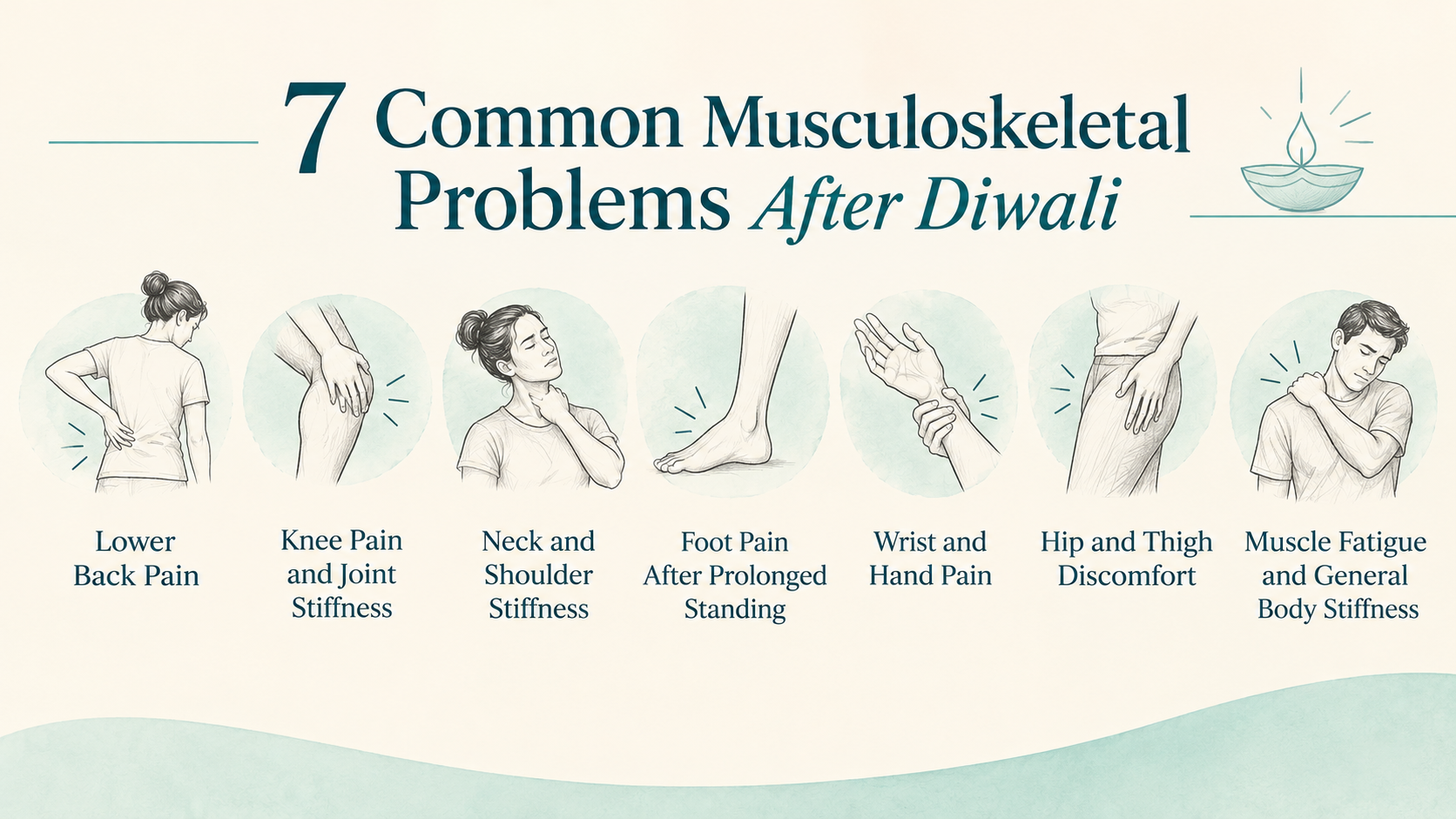
1 Lower Back Pain
Lower back pain is one of the common complaints following physically demanding household activities.
Repeated bending while cleaning, lifting heavy containers, moving furniture and standing for long periods can place additional demands on the muscles supporting your lower back.
You might experience:
- Stiffness when getting out of bed.
- Discomfort when bending forward.
- Pain when getting up after sitting.
- Difficulty standing for prolonged periods.
How physiotherapy helps A physiotherapist can assess your movement, identify contributing factors and recommend appropriate mobility exercises, strengthening activities and movement modifications.
2 Knee Pain and Joint Stiffness
Cleaning low-level surfaces, sitting cross-legged, squatting and repeatedly climbing stairs can increase the demands placed on your knees.
This can be particularly uncomfortable if you already have knee problems or conditions such as osteoarthritis.
You may notice:
- Pain while climbing or descending stairs.
- Discomfort when getting up from the floor.
- Knee stiffness after sitting for a long time.
- Swelling or tenderness around the joint.
How physiotherapy helps Physiotherapy can include targeted strengthening of the quadriceps, hamstrings and hip muscles, alongside appropriate movement and activity modifications.
3 Neck and Shoulder Stiffness
Hours spent chopping vegetables, preparing sweets, decorating and cleaning overhead surfaces can place repetitive demands on your neck and shoulders.
You may notice tightness around your upper back, shoulders or neck.
Common symptoms include:
- Difficulty turning your head comfortably.
- Tightness around the shoulder blades.
- Shoulder discomfort when lifting your arms.
- Headaches associated with neck tension.
How physiotherapy helps A physiotherapist can assess neck and shoulder movement, recommend suitable mobility exercises, and work on improving strength and movement control.
4 Foot Pain After Prolonged Standing
Your feet carry your body weight throughout the day. Spending several hours standing in the kitchen, shopping or attending festive gatherings can leave them feeling sore and tired.
Some people may also experience a flare-up of existing conditions such as plantar fasciitis.
Look out for:
- Heel pain, especially during your first few steps in the morning.
- Discomfort around the arches of your feet.
- Pain after standing for extended periods.
- Tenderness when walking.
How physiotherapy helps Treatment may include assessing foot and ankle movement, calf flexibility, strength, footwear and activity levels. Appropriate exercises can help improve foot function.
5 Wrist and Hand Pain
Preparing festive food, kneading dough, chopping vegetables, carrying shopping bags and repetitive household tasks can increase the workload on your wrists and hands.
You might experience:
- Wrist soreness.
- Pain while gripping objects.
- Discomfort when lifting utensils.
- Stiffness in your fingers.
How physiotherapy helps Depending on the cause, treatment may involve strengthening exercises, mobility work and advice on modifying repetitive activities.
6 Hip and Thigh Discomfort
Sitting on the floor, squatting repeatedly and getting up and down during household activities can place additional demands on your hips and thigh muscles.
This may lead to stiffness or discomfort, particularly if you are not accustomed to these movements.
How physiotherapy helps A tailored programme may include hip mobility exercises, gluteal strengthening and movement retraining.
7 Muscle Fatigue and General Body Stiffness
Sometimes, the discomfort isn't limited to one particular area.
After several days of increased physical activity, you may experience general muscle soreness, tiredness and stiffness.
This can happen when your muscles are exposed to activities they aren't regularly accustomed to.
How physiotherapy helps A physiotherapist can help you gradually return to your normal activity levels with suitable mobility and strengthening exercises, depending on your symptoms.
How Can Physiotherapy Help With Post-Diwali Pain?
Physiotherapy isn't just about relieving pain. It also focuses on understanding why the discomfort developed and helping you return to your everyday activities.
Depending on your assessment, your physiotherapy programme may include:
| Physiotherapy approach | How it helps |
|---|---|
| Movement assessment | Identifies movement limitations and contributing factors. |
| Mobility exercises | Helps improve joint movement and flexibility. |
| Strengthening exercises | Improves muscle capacity and joint support. |
| Manual therapy | May help manage pain and movement restrictions. |
| Activity modification | Helps you manage daily activities without overloading your body. |
| Rehabilitation planning | Supports a gradual return to normal activities. |
Your treatment plan should be based on your symptoms, medical history, and individual needs.
5 Ways to Help Your Body Recover After Diwali
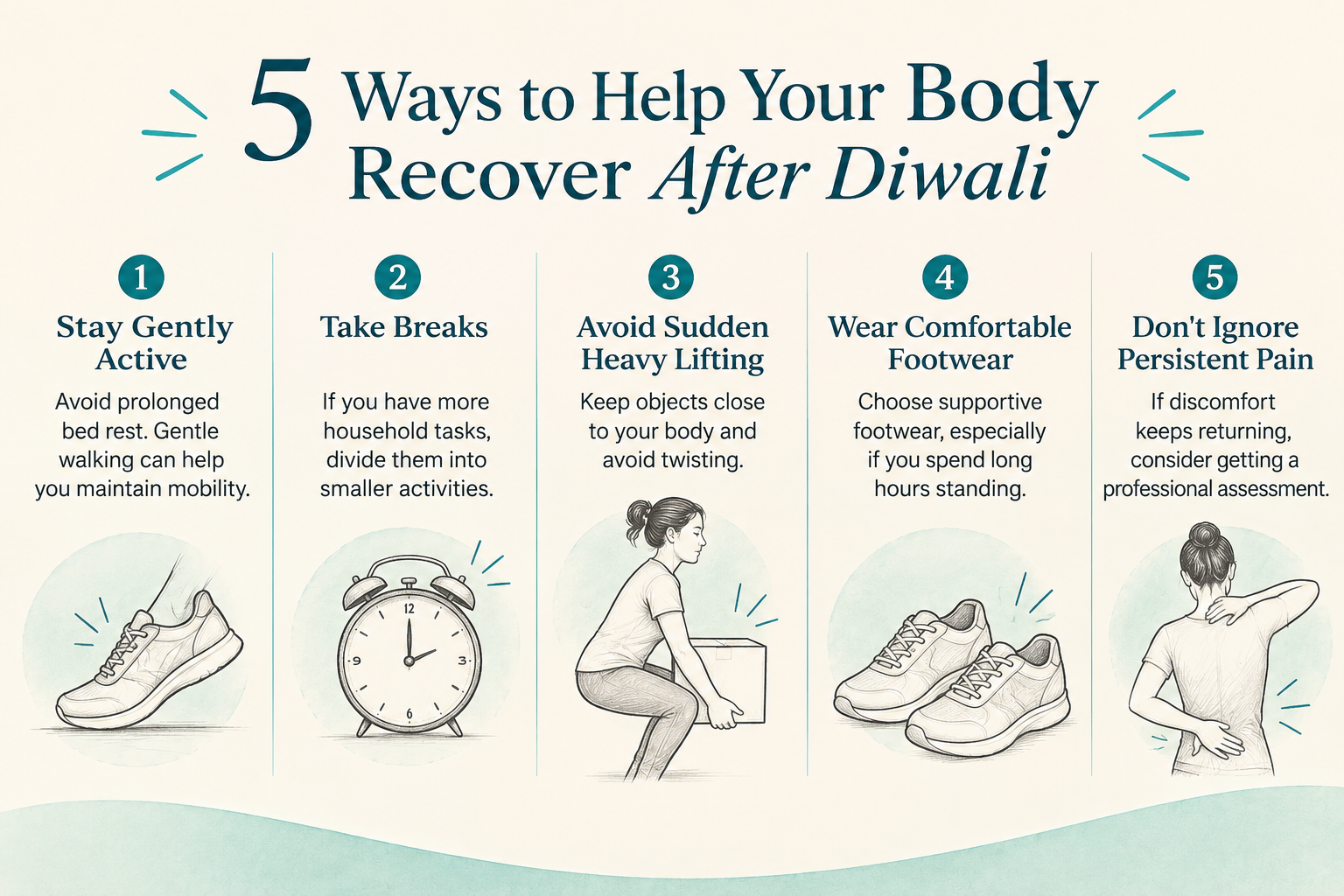
You don't necessarily need to stop all your activities to recover. A few sensible changes can help.
- Stay gently active: Avoid prolonged bed rest. Gentle walking and comfortable movement can help you maintain mobility.
- Take breaks: If you have more household tasks to complete, divide them into smaller activities rather than doing everything at once.
- Avoid sudden heavy lifting: When lifting objects, keep them close to your body and avoid combining heavy lifting with twisting.
- Wear comfortable footwear: Choose supportive footwear, particularly if you spend several hours standing.
- Don't ignore persistent pain: If discomfort keeps returning or affects your daily routine, consider getting a professional assessment.
When Should You See a Physiotherapist?
Mild muscle soreness may settle with appropriate recovery. However, pain that persists, worsens, or interferes with everyday activities deserves attention.
Consider seeking a professional assessment if:
- Your back or joint pain keeps returning.
- You struggle with walking, bending or climbing stairs.
- Joint stiffness is affecting your daily routine.
- You experience recurring foot or heel pain.
- Your symptoms are not improving with self-care.
Conclusion
Don't dismiss recurring pain as simply the result of being busy during the festive season. Understanding what is causing your discomfort can help you recover more effectively.
At Heliora Rehab, we offer personalised physiotherapy and rehabilitation to help you manage pain, improve movement and get back to the activities that matter.
If you're experiencing persistent back, knee, foot or joint pain after Diwali, get in touch with Heliora Rehab in Aylesbury to discuss your physiotherapy needs.
Support for Your Recovery After Diwali
Book a physiotherapy assessment to discuss your symptoms, movement and individual rehabilitation needs.
Book an AppointmentMedical Disclaimer: This blog is for general information and educational purposes only. It is not a substitute for professional medical advice, diagnosis or treatment. Always consult a qualified healthcare professional for personalised advice, especially if you experience persistent pain, worsening symptoms or other health concerns.
Frequently Asked Questions
Why does my body ache after Diwali?
Your body may ache after Diwali because of increased physical activity, repetitive household chores, prolonged standing, bending and lifting. These activities can cause muscle fatigue or aggravate existing joint problems.
How long does post-Diwali body pain last?
Mild muscle soreness may improve over a few days. However, the recovery time depends on the cause and severity of the discomfort. Persistent or worsening pain should be assessed by a healthcare professional.
Why does my lower back hurt after cleaning the house?
Repeated bending, twisting, lifting and prolonged standing during cleaning can place additional demands on your lower back. If the pain continues or affects your daily activities, a physiotherapy assessment may help identify contributing factors.
Can physiotherapy help with knee pain after prolonged squatting?
Yes. Physiotherapy can help assess the cause of knee pain and may include strengthening exercises, mobility work and advice on modifying activities that aggravate your symptoms.
Should I rest completely when I have muscle pain after Diwali?
Not necessarily. For many uncomplicated muscle and joint problems, gentle movement and gradually returning to normal activities are preferable to prolonged bed rest. However, the appropriate level of activity depends on the nature of your symptoms.