

Your Post-Diwali To-Do List vs. Your Body: How to Avoid Back, Knee and Foot Pain
Diwali is over, the guests have left, the decorations are coming down, and the house needs another round of cleaning.
Now comes the post-Diwali to-do list: organising cupboards, washing clothes, putting away decorations, cleaning the kitchen and getting back to work.
But before you start ticking everything off your list, spare a thought for your body.
After several days of cooking, cleaning, shopping and standing for long hours, your muscles and joints may already be feeling the strain. Jumping straight back into physically demanding activities can aggravate existing discomfort or leave you dealing with back, knee and foot pain.
Here's how to get back to your routine without putting unnecessary stress on your body.
Why Does Your Body Need a Break After Diwali?
Your daily routine during Diwali may look very different from your usual schedule.
You might have spent hours standing in the kitchen, bending to clean floors, lifting heavy shopping bags, and climbing stairs to decorate your home.
These activities can increase the physical demands placed on your muscles and joints.
When you return to your usual household responsibilities without allowing enough time for recovery, certain movements may become uncomfortable.
The solution isn't to avoid all physical activity. It's to manage your workload, take breaks and gradually build up your activity levels.
Your Post-Diwali To-Do List vs. Your Body
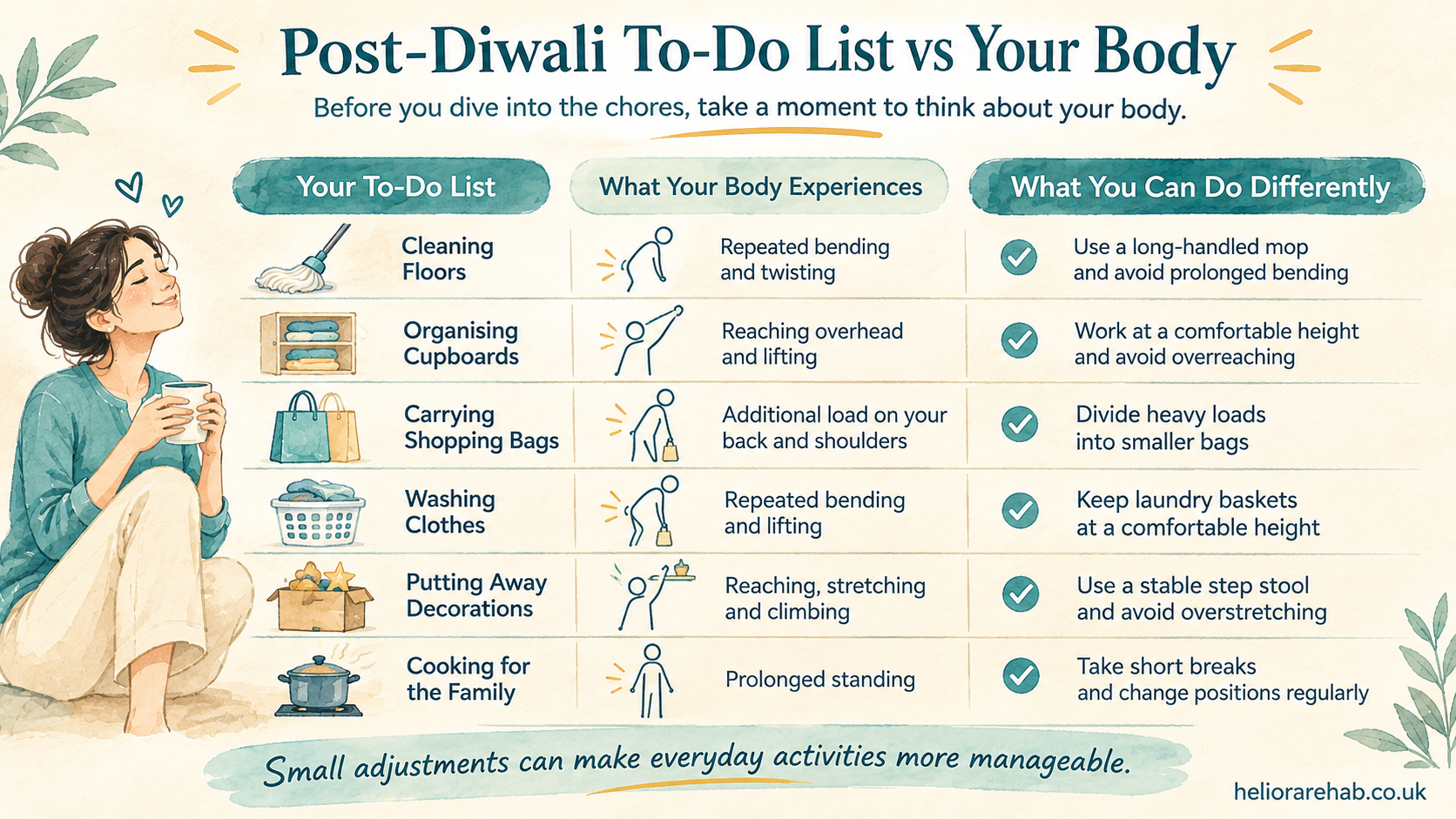
Before starting your pending chores, consider how different activities affect your body.
| Your to-do list | What your body experiences | What you can do differently |
|---|---|---|
| Cleaning floors | Repeated bending and twisting | Use a long-handled mop and avoid prolonged bending |
| Organising cupboards | Reaching overhead and lifting | Work at a comfortable height and avoid overreaching |
| Carrying shopping bags | Additional load on your back and shoulders | Divide heavy loads into smaller bags |
| Washing clothes | Repeated bending and lifting | Keep laundry baskets at a comfortable height |
| Putting away decorations | Reaching, stretching and climbing | Use a stable step stool and avoid overstretching |
| Cooking for the family | Prolonged standing | Take short breaks and change positions regularly |
Small adjustments can make everyday activities more manageable.
7 Practical Ways to Prevent Back, Knee and Foot Pain
1 Avoid Doing Everything in One Day
You may want to finish all your pending chores immediately, but completing several hours of physical activity without breaks can overload your muscles.
Instead:
- Divide large tasks into smaller activities.
- Alternate between physically demanding and lighter chores.
- Take short breaks between activities.
- Increase your workload gradually.
Pacing your activities is particularly important if you have existing back or joint pain.
2 Protect Your Lower Back While Cleaning
Bending repeatedly while sweeping, mopping or organising cupboards can aggravate lower back discomfort.
Try these adjustments:
- Use cleaning equipment with handles that allow you to stand comfortably.
- Keep objects close to your body when lifting.
- Bend your hips and knees when picking something up.
- Avoid twisting while carrying heavy objects.
- Change positions regularly.
Remember, there is no single perfect posture for every task. Moving regularly and avoiding prolonged uncomfortable positions can be more helpful than trying to hold one rigid posture.
3 Take Care of Your Knees
If your knees are already uncomfortable, repeated squatting, kneeling and climbing stairs may make the symptoms worse.
To reduce unnecessary strain:
- Avoid prolonged deep squatting.
- Use a stable chair when sorting or organising items.
- Hold the handrail when using stairs.
- Avoid repeatedly getting up and down from the floor.
- Gradually return to activities that involve bending your knees.
If you experience recurring knee pain, strengthening the muscles around your hips and knees may also help.
4 Don't Ignore Your Feet
Your feet support your body throughout the day. After several days of prolonged standing and walking, they may need some attention.
Try:
- Wearing comfortable, supportive footwear.
- Avoiding prolonged standing in one position.
- Taking short walking or sitting breaks.
- Gently moving your ankles throughout the day.
- Gradually increasing walking duration if you've been less active.
If you experience heel pain, particularly during your first steps in the morning, it is worth getting assessed for possible causes such as plantar fasciitis.
5 Stretch and Move Between Tasks
Sitting or standing in one position for extended periods can leave your muscles feeling stiff.
Include gentle movement breaks between household tasks.
For example:
- Shoulder rolls.
- Gentle neck movements.
- Ankle circles.
- Comfortable hip movements.
- Short walks around the house.
These movements can help you avoid staying in one position for too long.
6 Don't Rush Back Into Exercise
If you reduced your usual physical activity during the festive season, avoid suddenly returning to intense workouts.
Start with manageable activities such as walking and gentle mobility exercises.
Gradually increase the duration and intensity as your body adapts.
If you already have pain or an existing musculoskeletal condition, seek appropriate advice before starting a new exercise programme.
7 Listen to What Your Body Is Telling You
A little tiredness after a busy day is not unusual. However, recurring pain, swelling or discomfort that interferes with daily activities should not be ignored.
If a particular movement repeatedly aggravates your symptoms, modify the activity and consider getting it assessed.
Simple Exercises to Get Your Body Moving Again
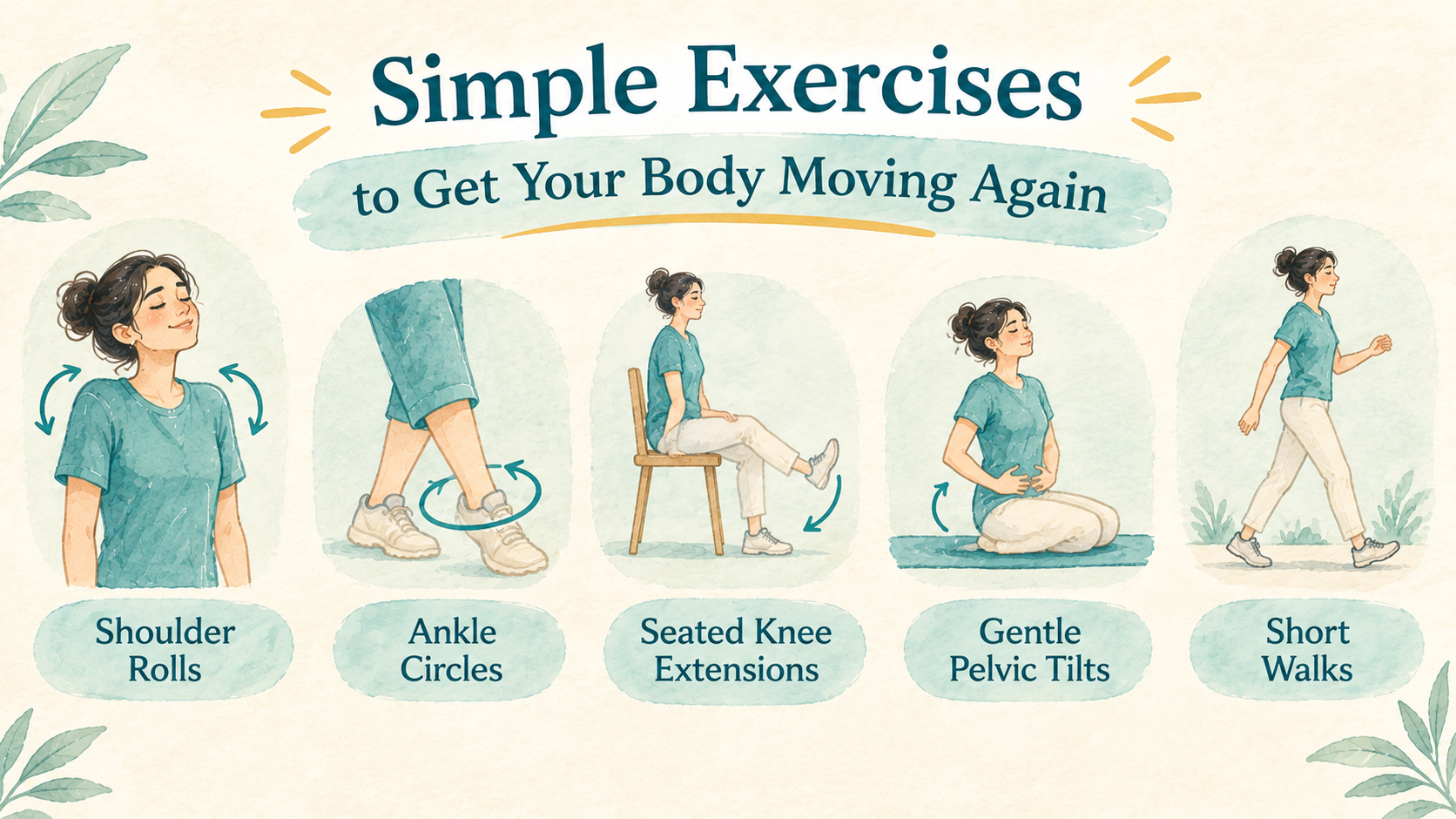
Here are a few gentle movements you can incorporate into your daily routine, provided they are comfortable and appropriate for you.
| Exercise | How to perform it | Benefit |
|---|---|---|
| Shoulder rolls | Slowly roll your shoulders forwards and backwards | Encourages shoulder mobility |
| Ankle circles | Rotate each ankle gently in both directions | Maintains ankle movement |
| Seated knee extensions | Straighten one knee while sitting, then lower it | Encourages knee movement |
| Gentle pelvic tilts | Lie on your back with knees bent and gently tilt your pelvis | Encourages lower back movement |
| Short walks | Walk at a comfortable pace for a few minutes | Helps you return to regular activity |
Start gently and avoid movements that increase your pain. These are general mobility suggestions, not a treatment programme for a specific injury.
If you are unsure which exercises are suitable, a physiotherapist can guide you.
When Should You Seek Physiotherapy?
Sometimes, discomfort settles as you return to your usual routine. But if your pain keeps coming back, it may be worth looking beyond temporary muscle fatigue.
Consider a physiotherapy assessment if:
- Your lower back hurts whenever you bend or lift.
- Knee pain makes climbing stairs difficult.
- Foot pain affects how long you can stand or walk.
- Joint stiffness is interfering with everyday activities.
- You find yourself avoiding movements because of pain.
Physiotherapy can help identify contributing factors and develop a personalised plan involving movement, strengthening and rehabilitation.
Your health deserves a place on your to-do list, too.
You don't have to finish every household task in one day. Give your body time to adjust, keep moving comfortably, and address recurring discomfort before it starts affecting your everyday life.
At Heliora Rehab, we believe physiotherapy should help you understand your body, manage pain and return to the activities that matter.
If you're experiencing recurring back, knee or foot pain, contact Heliora Rehab in Aylesbury to explore personalised physiotherapy and rehabilitation support.
Put Your Recovery on the To-Do List
If recurring back, knee or foot pain is affecting your daily routine, a physiotherapy assessment can help you plan your next steps.
Book an AppointmentMedical Disclaimer - This blog is for general information and educational purposes only. It is not a substitute for professional medical advice, diagnosis or treatment. Always consult a qualified healthcare professional for personalised advice, especially if you experience persistent pain, worsening symptoms or other health concerns.
Frequently Asked Questions
How can I prevent back pain when doing household chores?
Avoid prolonged bending, use long-handled cleaning equipment, keep heavy objects close to your body when lifting and divide household tasks into smaller activities. Change positions regularly rather than remaining in one posture for too long.
Why do my knees hurt when climbing stairs after Diwali?
Repeated squatting, kneeling and increased activity can aggravate existing knee problems or contribute to discomfort. Stair climbing places additional demands on the knee joint. Persistent pain should be assessed rather than automatically attributed to overuse.
Why do my feet hurt after standing in the kitchen for hours?
Prolonged standing can increase the demands on your feet and surrounding tissues. Footwear, activity levels and existing conditions such as plantar fasciitis can also contribute to discomfort.
Is walking good for back pain after prolonged household work?
Gentle walking can help maintain movement and is often encouraged for uncomplicated back pain. Start at a comfortable pace and gradually increase your activity. If walking significantly worsens your symptoms, seek professional advice.
What exercises can help prevent back and knee pain?
Exercises targeting the core, hip, thigh and leg muscles can help improve strength and movement capacity. Examples include pelvic tilts, seated knee extensions and appropriately prescribed strengthening exercises. The right exercises depend on your individual needs.
When should I see a physiotherapist for back or knee pain?
Consider seeing a physiotherapist if your pain persists, keeps returning, limits your movement or interferes with daily activities. An assessment can help identify contributing factors and guide your rehabilitation.