

Movember: Understanding Men's Health, Prostate Cancer Awareness and the Importance of Staying Active
Every November, you might notice more moustaches than usual. But Movember is about much more than growing facial hair.
It is a global men's health awareness movement that encourages men to talk openly about their health, recognise potential warning signs and take steps towards living healthier lives.
From prostate cancer and testicular cancer to mental health and suicide prevention, Movember brings attention to health concerns that deserve year-round conversations.
It also reminds us of something important: looking after your health isn't just about visiting a doctor when something feels wrong. It's about taking care of your body, staying active and making movement part of your everyday routine.
Let's understand what Movember represents and how you can take a more active approach to your health.
What Is Movember & Why Is It Celebrated?
Movember is an annual men's health campaign that takes place from 1 November to 30 November.
It started in Australia in 2003 when a group of friends decided to grow moustaches to raise awareness and funds for men's health. What began as a simple idea has grown into a global movement.
The name combines 'Mo', an Australian term for moustache, and 'November'.
The campaign focuses on four important areas:
| Area of focus | Why it matters |
|---|---|
| Prostate cancer | Encourages awareness, early conversations and access to appropriate medical advice. |
| Testicular cancer | Promotes awareness of changes and the importance of seeking medical assessment. |
| Mental health | Encourages men to talk about emotional wellbeing and seek support. |
| Suicide prevention | Promotes connection, support and access to mental health resources. |
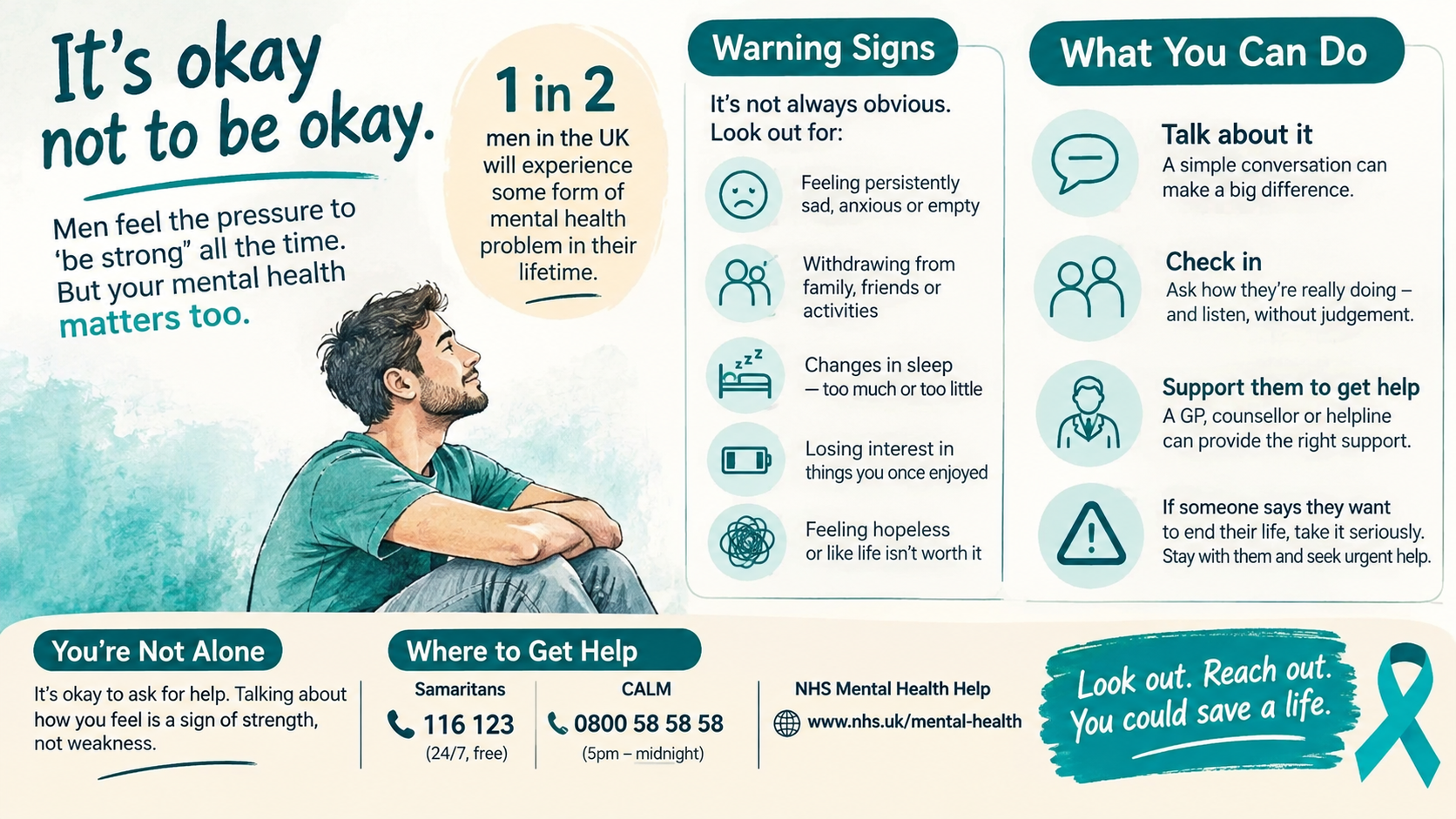
Movember encourages people to grow a moustache, take part in physical challenges, raise funds and start conversations about men's health.
But the real message goes beyond November: men's health deserves attention throughout the year.
Why Is Prostate Cancer Awareness Important?
Prostate cancer is one of the most common cancers affecting men in the UK.
The prostate is a small gland located below the bladder and in front of the rectum. It produces fluid that forms part of semen.
The risk of developing prostate cancer increases with age, and it is more common in men over 50.
Some factors that can increase the risk include:
- Age: The likelihood of developing prostate cancer increases as you get older.
- Family history: Having close relatives with prostate cancer, or certain other cancers, can increase your risk.
- Ethnicity: Men of Black African or Black Caribbean backgrounds have a higher risk of developing prostate cancer.
Understanding these risk factors can help men have informed conversations with their GP about their individual risk and whether further assessment is appropriate.
What Are the Warning Signs of Prostate Cancer?
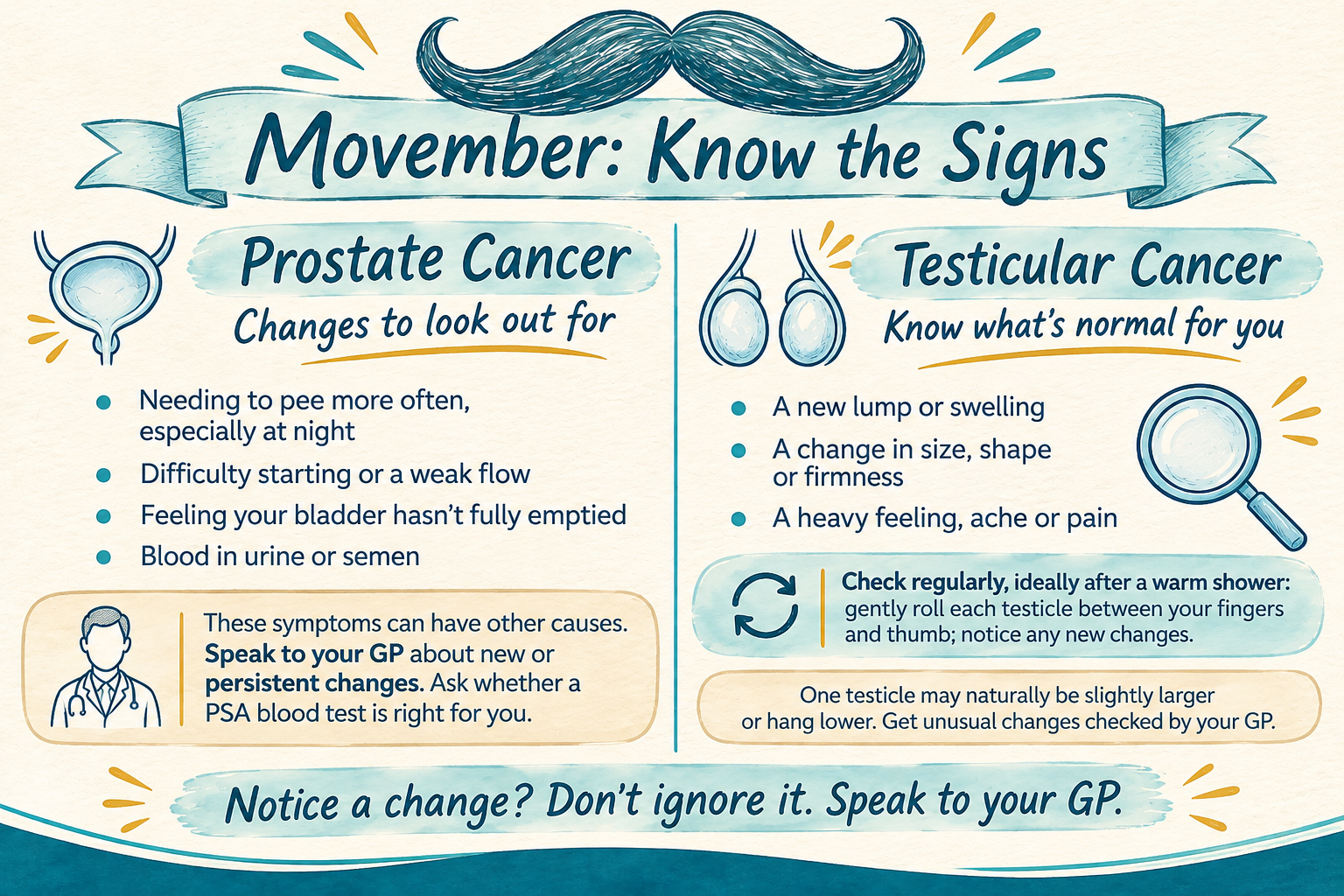
One of the challenges with prostate cancer is that it may not cause noticeable symptoms in its early stages.
When symptoms do appear, they can include:
- Difficulty starting to urinate.
- A weaker or interrupted urine flow.
- Needing to urinate more frequently, particularly at night.
- Feeling that your bladder hasn't emptied completely.
- Blood in your urine or semen.
- Difficulty getting or maintaining an erection.
These symptoms do not automatically mean you have prostate cancer. Other conditions, including an enlarged prostate, can cause similar problems.
However, if you notice any of these changes, speak to your GP rather than ignoring them. A PSA blood test may be discussed as part of an assessment, depending on your symptoms and individual risk.
Remember: Don't wait for symptoms to appear before thinking about your health. Understanding your risk and speaking to a healthcare professional are important steps.
How Can Movement Support Men's Health?
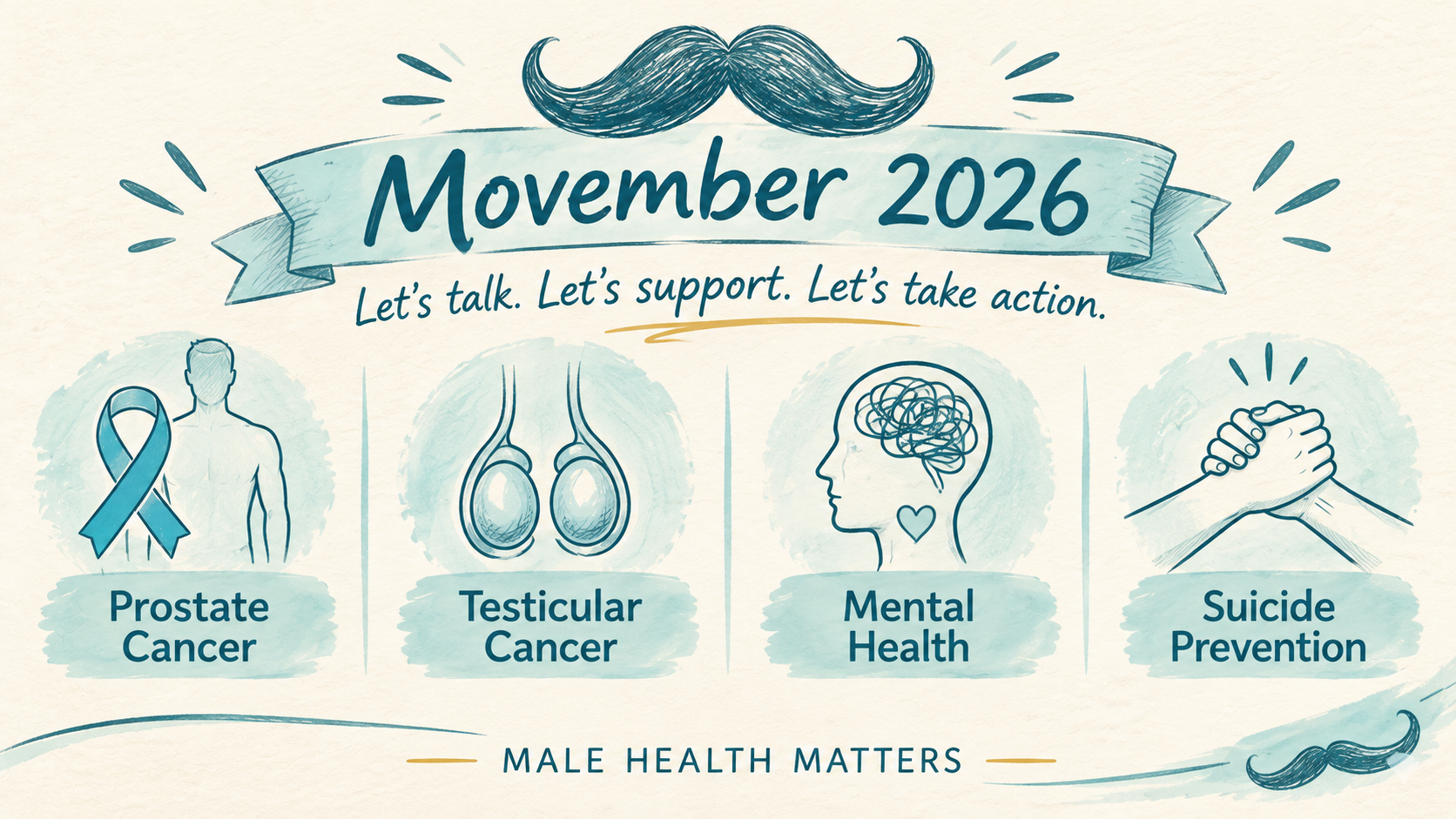
While Movember encourages men to be more proactive about their health, one simple habit deserves attention: regular physical activity.
Movement is not just about losing weight or building muscle. It supports several aspects of physical and mental wellbeing.
Here's how staying active can help.
Supports Cardiovascular Health
Activities such as walking, cycling and swimming help improve cardiovascular fitness. Regular physical activity also supports heart health and helps maintain a healthy weight.
Helps Maintain Muscle Strength
As we get older, maintaining muscle strength becomes increasingly important.
Strength training helps support everyday movements such as climbing stairs, carrying shopping, getting up from a chair, and maintaining balance.
Supports Mental Wellbeing
Physical activity can improve mood, sleep quality and energy levels. Walking, exercising with friends or participating in sports can also create opportunities for social connection.
Helps Maintain Mobility and Flexibility
Regular movement helps maintain joint mobility, flexibility and physical independence.
This becomes particularly important as we age or when recovering from an injury or illness.
Supports Men Living With Prostate Cancer
Physical activity can also play an important role for men who have been diagnosed with prostate cancer.
Research suggests that men with prostate cancer who exercise may experience better health outcomes. Appropriate activity can also help manage some treatment-related effects and support recovery.
The type and intensity of exercise should be discussed with the treating healthcare team, particularly during or following cancer treatment.
5 Ways Men Can Stay Active and Improve Their Fitness
You don't need an expensive gym membership or an intense workout routine to start looking after your physical health.
Small, consistent changes can make a difference.
| Activity | How it helps |
|---|---|
| Brisk walking | Improves cardiovascular fitness and endurance |
| Cycling | Builds leg strength and supports cardiovascular health |
| Swimming | Provides a low-impact way to improve fitness |
| Strength training | Helps maintain muscle strength and physical function |
| Mobility exercises | Helps maintain comfortable joint movement and flexibility |
How Much Exercise Should Men Aim For?
According to NHS physical activity guidelines, adults aged 19-64 should aim for:
- At least 150 minutes of moderate-intensity activity each week, or 75 minutes of vigorous activity.
- Muscle-strengthening activities involving all major muscle groups on at least two days each week.
- Less prolonged sitting and more movement throughout the day.
Moderate-intensity activity includes brisk walking, cycling and swimming. A simple way to recognise it is that you should be able to talk but not comfortably sing while exercising.
If you are currently inactive, start with shorter sessions and gradually increase your activity.
How Can Physiotherapy Help Men Stay Active?
Staying active is important, but knowing how to move safely and effectively matters too.
You might want to become more physically active but struggle with recurring lower back pain, knee stiffness, muscle weakness or reduced mobility.
This is where physiotherapy can help.
A physiotherapist can assess your movement, identify physical limitations and develop an exercise programme suited to your needs.
Depending on your individual requirements, physiotherapy may include:
- Strengthening exercises: To improve muscle strength and support everyday movement.
- Mobility exercises: To maintain joint movement and flexibility.
- Balance training: To improve stability and confidence during daily activities.
- Rehabilitation: To help you gradually return to physical activities following an injury, illness or medical treatment.
- Activity guidance: To help you build a sustainable exercise routine.
For men recovering from prostate cancer treatment, specialist rehabilitation may also be appropriate. For example, pelvic floor physiotherapy can help address urinary continence problems following certain prostate treatments. This should be guided by an appropriately trained professional.
At Heliora Rehab, we believe physiotherapy should focus on helping people understand their bodies, manage physical limitations and return to the activities that matter to them.
Make Your Health a Priority This Movember
Movember gives us an opportunity to start conversations that often get postponed.
Whether it's speaking to your GP about prostate cancer risk, paying attention to changes in your body, checking in on your mental health, or becoming more physically active, every positive step matters.
You don't have to change your entire lifestyle overnight.
Start with a walk. Make time for strength exercises. Address recurring pain instead of ignoring it. And most importantly, don't wait until something goes wrong to prioritise your health.
This Movember, grow your moustache if you like. But make sure you're growing healthier habits, too.
If back pain, joint stiffness or reduced mobility is stopping you from staying active, Heliora Rehab in Aylesbury can help you explore personalised physiotherapy and rehabilitation.
Make Your Health a Priority This Movember
If back pain, joint stiffness or reduced mobility is affecting your ability to stay active, a physiotherapy assessment can help you plan your next steps.
Book an AppointmentDisclaimer - The blog deliberately separates prostate cancer awareness from general fitness advice. Movement supports health and rehabilitation, but it should never be presented as a substitute for prostate cancer assessment, screening discussions or medical treatment.
Frequently Asked Questions
What is the purpose of Movember?
Movember raises awareness and funds for men's health, particularly prostate cancer, testicular cancer, mental health and suicide prevention. It encourages men to have conversations about their health and seek support when needed.
Why is prostate cancer awareness important?
Prostate cancer is common, particularly among older men, and may not cause symptoms in its early stages. Awareness helps men understand their risk factors, recognise possible symptoms and discuss appropriate medical assessments with their GP.
At what age should men start thinking about prostate cancer?
Men should understand their individual risk, particularly as they get older. Prostate cancer is more common after 50, while men with certain family histories or genetic risk factors may need to discuss it with their GP earlier.
Can exercise reduce the risk of prostate cancer?
There is currently no established evidence that exercise alone prevents prostate cancer. However, regular physical activity supports general health, cardiovascular fitness and weight management. Research also suggests benefits for men living with prostate cancer.
What is the best exercise for men's health?
There is no single best exercise. A combination of aerobic activities such as walking, swimming or cycling, alongside regular strength training, can support overall fitness and physical wellbeing.
Can physiotherapy help men recovering from prostate cancer treatment?
Yes. Depending on the treatment and individual needs, physiotherapy may support physical rehabilitation, muscle strength, mobility and exercise tolerance. Pelvic health physiotherapy can also help with urinary continence problems following certain treatments.
How can men stay active as they get older?
Men can maintain physical activity through regular walking, cycling, swimming, strength training and mobility exercises. Starting gradually, choosing enjoyable activities, and maintaining consistency can help build a sustainable routine.